How To Use Email Nurture Sequences To Close More Sales

You want more sales from your email campaigns, but your leads stop opening or clicking your messages. Studies show that using email nurture sequences can help boost your conversion rates throughout the sales funnel.
This guide will show you how to use automation, personalization, and strong calls to action to close more sales and reach your target audience. Keep reading to discover steps that can change your sales process.
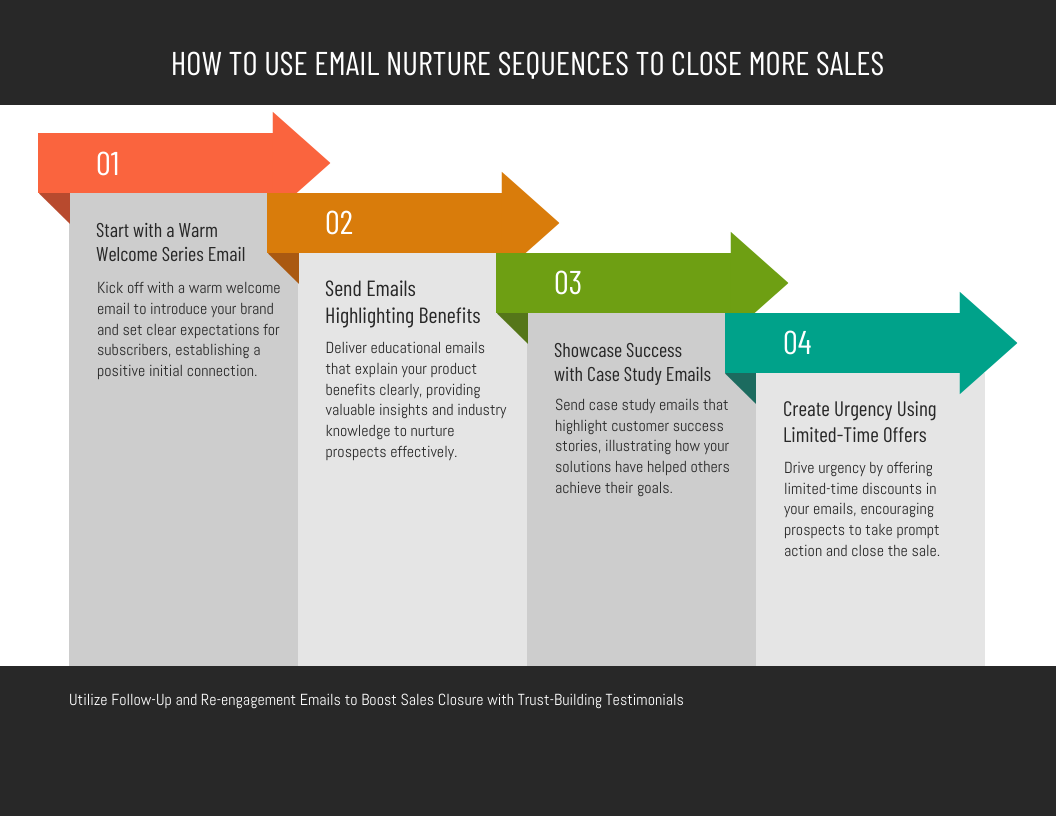
What Are Email Nurture Sequences?

Email nurture sequences are a series of automated messages sent to your contacts over time. These emails guide people step by step through the sales funnel. Each message speaks to their pain points and needs, offering useful content or answers along their customer journey.
For example, you might send onboarding emails after someone grabs your lead magnet or starts a free trial.
Tools like marketing automation software handle these email campaigns for you, keeping every follow-up timely and relevant. Lead segmentation lets you group buyers by interests so each email feels personal and direct.
An effective sequence boosts open rates, click-through rates, and conversions because it builds trust with your target audience in small steps instead of pushing them too fast.
Next up is how to make each part of an email nurture sequence work even better for sales results…
Key Components of a High-Converting Email Nurture Sequence
Every strong email nurture sequence starts with understanding your audience’s needs. Using tools like CRM software and marketing automation helps you send the right message, at the right time, to move leads through your sales funnel.
Personalization
Personalization makes email nurture sequences more effective. People appreciate receiving messages that speak directly to them. Use their names and tailor content based on their interests or past actions.
This approach can target pain points and motivations, making your emails feel relevant and engaging.
Segment your audience into groups based on behaviors or preferences. Doing this helps you send the right message at the right time. Using marketing automation tools can streamline this process, allowing for quick adjustments as you learn what works best.
Next up is understanding the clear call-to-action in your emails.
Clear Call-to-Action
A clear call-to-action (CTA) is vital for your email nurture sequences. It guides the reader on what to do next. This could be signing up for a free trial, downloading a lead magnet, or booking a meeting with a sales rep.
Make it simple and direct. Use action words like “Get Started” or “Join Now.” Position your CTA where it’s easy to see, often at the end of your message.
Engaging CTAs can boost click-through rates and conversion rates in your email marketing campaigns. They help drive customers through the sales funnel smoothly. A strong CTA shows how your offer solves their pain points and encourages immediate action.
Knowing this helps you create effective messages that connect with your target audience nicely.
Next up are the types of email nurture sequences you can use!
Timely Follow-Ups
Timely follow-ups are key to a successful email nurture sequence. They keep your audience engaged and show you care. Send follow-up emails shortly after initial contact. This helps remind them of your offer or information.
Use automation tools to streamline these processes. Set reminders or schedule emails for specific times. Always aim to provide value in each message. Highlight pain points, share case studies, or offer helpful resources like free trials.
These tactics boost engagement and improve click-through rates, guiding prospects further down the sales funnel.
Types of Email Nurture Sequences
Email nurture sequences come in different types. Each type targets a specific need. You have welcome sequences for new subscribers, lead nurturing sequences to engage potential buyers, re-engagement sequences to win back old customers, and upsell or cross-sell sequences to boost sales with existing clients…
Curious about how each one can help you? Keep reading!
Welcome Sequences
A welcome sequence is your first chance to connect with new leads. It sets the tone for your relationship. This series of emails greets them and explains what they can expect from you.
Personalization is key here; use their name and mention their interests. Make it feel friendly and inviting.
Include a clear call-to-action in each email. This guides them, so they know what steps to take next—like signing up for a free trial or checking out a lead magnet. Timely follow-ups help keep their interest alive; send these emails when they’re most eager to engage.
By doing this right, you boost conversion rates as you guide leads smoothly into your sales funnel.
Lead Nurturing Sequences
Welcome sequences help you greet new customers. Now, let’s talk about lead nurturing sequences. These emails guide leads through the sales funnel. They address pain points and keep your audience engaged.
Lead nurturing sequences use targeted content to build trust. You want to keep sending helpful information that speaks to their needs. Use clear calls-to-action to direct them. Each email should invite them to take a next step, like signing up for a free trial or checking out a landing page.
The goal is to move leads closer to conversion rates you desire in your email campaigns and sales process.
Re-engagement Sequences
Re-engagement sequences help bring back lost leads. These emails target those who have not interacted with your brand for some time. You can remind them of your value and reconnect on their terms.
Use a clear call to action in these emails. Offer incentives like discounts or free trials to spark interest. Personalization is key, too; use data from your CRM systems to make the content relevant.
Always track click-through rates and unsubscribe rates to gauge success in restoring engagement with your audience.
Upsell and Cross-Sell Sequences
Upsell and cross-sell sequences help you boost sales. These emails show customers more options that fit their needs. For instance, if someone buys a phone, suggest accessories like cases or earbuds.
This strategy helps them find what they want and increases your conversion rates.
Using these sequences can turn a one-time buyer into a loyal customer. Personalization makes your offers stand out. Mentioning specific products related to their past purchases grabs attention.
With dynamic content, you can keep the messaging fresh for each person on your email list. It’s all about enhancing the customer journey and guiding them to buy more from you. Now, let’s explore best practices for crafting effective email nurture sequences.
Best Practices for Crafting Effective Email Nurture Sequences
When you craft email nurture sequences, think automation tools. They make your work easier and save time. Also, keep your audience in mind. Segmenting them helps tailor the message for better results.
Use data to guide your decisions too. Check open rates and click-through rates often. This will help you see what works best… and what doesn’t!
Use Automation Tools
Automation tools can make email marketing easier and more effective. They help you send emails at the right time without manual work. For instance, tools like Mailchimp or HubSpot allow you to set up drip campaigns.
This way, your audience receives messages based on their actions.
Timely follow-ups are crucial for closing sales. Automation assists with that too! You can send reminders or offer free trials automatically. By using these tools, you save time and improve conversion rates in your email nurture sequences.
Additionally, CRM integration allows you to track leads better and understand their needs.
Segment Your Audience
Segmenting your audience is key to successful email nurturing. It helps you send the right message to the right people. Not every lead has the same needs or interests, so grouping them by traits can boost engagement.
For example, you might have leads interested in free trials or those looking for specific solutions to their pain points.
Use data analytics and buyer personas to create these groups. This way, you can tailor your content marketing efforts more effectively. High click-through rates often come from targeted messages that speak directly to each segment’s wants.
Next up is leveraging automation tools for better email follow-up strategies.
Leverage Data and Analytics
Segmenting your audience helps you understand their needs. This is where data and analytics come into play. Use tools to collect data on your email campaigns, like click-through rates or unsubscribe rates.
These numbers show what works and what doesn’t.
Analyze patterns in customer behavior too. Look at how often people engage with your emails, and which subject lines grab their attention. Adjust your content based on this feedback.
Learning about buyer personas can drive better results in lead nurturing efforts. With data-driven insights, you can create targeted emails that truly speak to your audience’s pain points, boosting conversion rates along the sales funnel.
Measuring the Success of Your Email Nurture Campaigns
Measuring the success of your email nurture campaigns is key to closing more sales. Focus on conversion rates and click-through rates. Track how many people open your emails and click on links.
Use tools like CRM software, which can help you see these numbers easily.
Lead scoring shows you which leads are most interested in buying. This helps target your follow-up efforts better. Pay attention to unsubscribe rates; a high rate means something might be wrong with your emails or content.
Analyze data regularly, as this will help you refine your approach over time and boost brand loyalty among your audience.
Conclusion
Email nurture sequences can help you close more sales. They guide your leads through their journey. With smart targeting, personal messages, and clear calls to action, you keep interest high.
Use automation tools to make this easier. Keep an eye on the results; adjust as needed for better success. Embrace email marketing as a way to grow your business!