How to Create Sales Funnels with ClickFunnels
Ever wonder how a casual browser becomes a loyal customer? It’s not magic. It’s a carefully planned journey called a sales funnel, and a tool called ClickFunnels can help you build one.
Whether you’re new to online marketing or a seasoned pro, understanding how to create sales funnels with ClickFunnels can completely change how you do business. It’s a total game-changer for turning leads into sales.
How to Create Sales Funnels with ClickFunnels
In the digital world, businesses need smart ways to improve their marketing and get more customers. One of the most powerful methods is using sales funnels, and ClickFunnels has become the leader in this space. This article will show you what ClickFunnels is, why sales funnels are so important, and how you can build your own successful funnels using the platform.
What is ClickFunnels?
ClickFunnels is an all-in-one marketing software designed to help businesses create effective, high-converting sales funnels. Co-founded by Russell Brunson, it gives you a user-friendly platform to build every step of the sales journey, from landing pages to payment processing. With ClickFunnels, you can bring all your marketing efforts under one roof, guiding customers from initial interest to final purchase and boosting your revenue along the way.
The newest version, ClickFunnels 2.0, has expanded to be an all-in-one business platform. It now includes tools for building entire websites, blogs, online courses, and even managing your customer relationships (CRM).
Key features and benefits
ClickFunnels stands out because it packs so many powerful features into one platform. Here are some of the highlights:
- Funnel templates: You don’t need to be a designer to create something beautiful. ClickFunnels offers a huge library of professionally designed templates for different goals, like generating leads or launching a product.
- Drag-and-drop editor: The intuitive editor lets you customize every page to match your brand. You can easily add images, videos, countdown timers, and customer testimonials to make your pages more persuasive.
- Email marketing automation: The platform integrates smoothly with popular email services like ConvertKit, AWeber, and GetResponse. This connection lets you automate your email sequences to nurture leads as they move through your funnel.
- Payment gateway integration: ClickFunnels works with major payment processors like Stripe and PayPal, allowing you to securely accept payments directly within your funnel. It also supports gateways like NMI and Recurly.
- Split testing: The A/B testing feature lets you test different versions of your pages. You can experiment with headlines, images, or buttons to see what converts best and make data-driven decisions.
- Analytics and tracking: With built-in analytics, you can monitor how your funnels are performing. Track conversion rates and other key metrics to find and fix any weak spots.
Using these features can streamline your marketing and help you get the most out of every visitor.
Disclosure: I am an independent ClickFunnels Affiliate, not an employee. I receive referral payments from ClickFunnels. The opinions expressed here are my own and are not official statements of ClickFunnels or its parent company, Etison LLC.
How it can help businesses
ClickFunnels is built to help businesses grow by optimizing their marketing and sales process. While it’s a powerful tool, it’s worth knowing there are alternatives like Kartra, Leadpages, and HubSpot that offer similar features.
Here’s how ClickFunnels can benefit your business:
- Streamlined marketing processes: Instead of juggling multiple tools for landing pages, email, and payments, you can manage everything in one place. This saves you time and simplifies your workflow.
- Increased conversion rates: A well-designed sales funnel guides potential customers step-by-step, addressing their questions and building trust along the way. This structured journey makes them more likely to buy.
- Enhanced customer experience: You can create a personalized and engaging journey for your leads. By delivering the right message at the right time, you build stronger relationships and encourage customer loyalty.
Now that you know what ClickFunnels can do, let’s explore what a sales funnel really is.
Understanding Sales Funnels
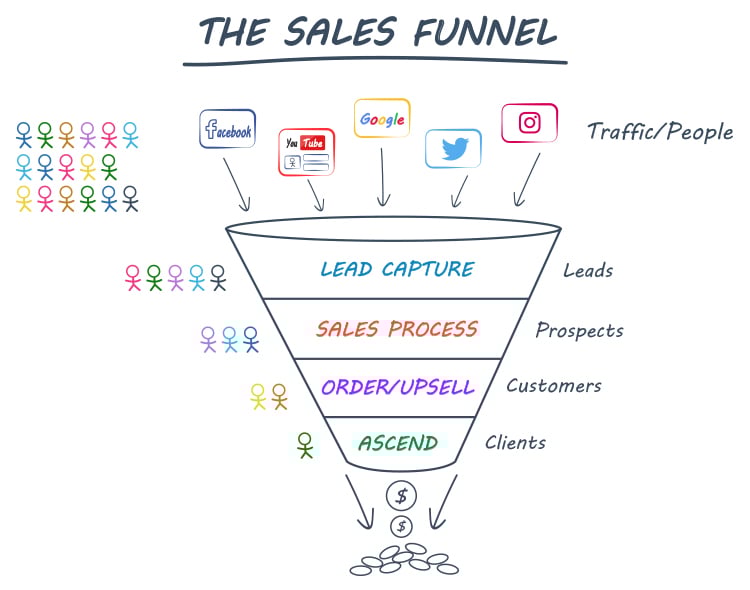
A sales funnel is a model that maps out the journey a potential customer goes through on their way to a purchase. It’s called a funnel because you start with a large number of prospects at the top, and a smaller number emerge as customers at the bottom.
Definition of a sales funnel
Think of a sales funnel as a visual representation of the customer journey. This journey is often explained using the AIDA model, which stands for Awareness, Interest, Desire, and Action. It breaks down how a person becomes a paying customer.
The main stages are:
- Awareness: This is the first touchpoint, where people discover your brand. They might find you through a social media post, a Google search, or a referral.
- Interest: Once they are aware of you, the goal is to capture their interest. They might start engaging with your content, like reading a blog post or signing up for your newsletter.
- Desire: In this stage, you build a connection and show them why your product is the best solution for their problem. This is where testimonials, case studies, and product demos become very powerful.
- Action: The final step is getting them to make a purchase. A clear call-to-action, like a “Buy Now” button, prompts them to take the final step.
Importance of sales funnels in marketing
Sales funnels are essential to any good marketing strategy for a few key reasons.
Here’s why they matter:
- Lead generation: Funnels give you a structured way to capture leads. By offering something valuable upfront, like a free ebook, you can attract the right audience and start building your email list.
- Nurturing leads: Not everyone is ready to buy right away. In fact, research shows that 79% of leads never convert into sales because they aren’t properly nurtured. A sales funnel allows you to build a relationship by providing helpful content over time, establishing trust and keeping your brand top-of-mind.
- Maximizing conversions: A sales funnel lets you tailor your messaging to people at different stages of their journey. This ensures you deliver the right information at the right time, which significantly increases conversion rates.
Different stages of a sales funnel
A typical sales funnel guides a potential customer through several key stages.
Each stage has a specific goal:
- Awareness: Prospects first become aware of your brand through marketing channels like social media, ads, or search engine results.
- Interest: They show interest by engaging with your brand, like visiting your website, reading your blog, or following you on social media.
- Consideration: In this stage, they are actively evaluating their options. They might sign up for a webinar or download a guide to learn more about how you can solve their problem.
- Conversion: This is the moment of purchase. Special offers, discounts, or free trials can be the final push they need to become a customer.
ClickFunnels gives you the tools to build and customize pages for every single stage of this journey.
Setting up Sales Funnels with ClickFunnels
Now that we’ve covered the basics, let’s get into the practical steps of building your first sales funnel in ClickFunnels.
Signing up for a ClickFunnels account
Getting started is straightforward. Just head over to the ClickFunnels website and look for the sign-up button to start your trial. You’ll need to enter your email and create a password to create your account.
Navigating the ClickFunnels dashboard
Once you log in, you’ll land on the main dashboard. This is your control center for everything. From here, you can access all the tools you need to build, manage, and analyze your funnels.
Creating and customizing your funnel
To start a new funnel, click the “Create Funnel” button. ClickFunnels 2.0 even has an AI Funnel Builder that can create a custom funnel for you based on your industry and goals. You can choose a pre-built funnel template for a specific goal, like a product launch or lead capture, or you can build one from scratch.
After you select a funnel type, you’ll enter the editor. This is where you can add or remove pages, edit the text and images, and change the design to fit your brand. The drag-and-drop interface makes it simple to move elements around until everything looks perfect.
Choosing and designing landing pages
Your landing page is the first thing your leads will see, so it needs to make a great impression. ClickFunnels offers tons of professionally designed templates that are already optimized for conversions.
To add a new page, just click “Add New Step” inside the funnel editor. You can browse templates based on the funnel stage, pick one you like, and then customize it with your own content.
Setting up email marketing integrations
Email is crucial for nurturing leads. ClickFunnels integrates with many popular email marketing platforms, including ActiveCampaign, ConvertKit, Mailchimp, and AWeber.
To connect your email service, go to the “Integrations” section in your account settings. Find your provider, follow the on-screen instructions to link it, and you’ll be ready to create automated email campaigns that work seamlessly with your funnel.
Defining your funnel goals and metrics
To know if your funnel is successful, you need clear goals. ClickFunnels provides analytics tools that let you track key metrics like conversion rates and average order value.
You can find these reports under the “Stats” tab. Regularly checking your stats will help you see what’s working and what isn’t, so you can make smart, data-driven decisions to improve your results.
Optimizing Sales Funnels for Conversions
Building a funnel is just the first step. To get the best results, you need to focus on conversion optimization.
Understanding conversion optimization
Conversion optimization is the process of fine-tuning your sales funnel to turn more visitors into customers. It involves analyzing user behavior, finding sticking points, and testing changes to improve your conversion rates.
The average conversion rate for a sales funnel is around 2.35%, but top performers can reach over 5%. Small tweaks can lead to big improvements.
Analyzing and measuring funnel performance
To optimize your funnel, you have to know your numbers. ClickFunnels provides detailed analytics that show you key metrics for each step of your funnel.
By looking at these numbers, you can spot where people are dropping off. For example, if a lot of visitors leave on your order page, you might need to simplify the form or add more trust signals like customer testimonials.
Implementing A/B testing for landing pages
A/B testing, or split testing, is a game-changer for optimization. It allows you to create two versions of a page and see which one performs better.
With ClickFunnels, you can easily duplicate a page, make a change to one element, like the headline or call-to-action button, and then split your traffic between the two versions. The platform will show you which version gets more conversions, taking the guesswork out of your decisions.
Optimizing copy and visuals for higher conversions
The words and images you use have a huge impact on conversions. Your copy should be compelling and clearly communicate the benefits of your offer.
High-quality visuals, like product photos and videos, can also make your pages more engaging. A pro-tip is to use a tool like Hotjar to see heatmaps of where users are clicking. This can give you incredible insight into what’s capturing their attention.
Integrating Payment Gateways and Sales Tools
To sell anything, you need a way to accept payments. ClickFunnels makes this easy by integrating with popular payment gateways.
Connecting ClickFunnels with payment gateways
ClickFunnels integrates directly with major payment processors like Stripe and PayPal, which are trusted by millions of businesses. You can also connect to other gateways like NMI or Keap (formerly Infusionsoft).
To connect your payment gateway, go to your “Account Settings” and find the “Payment Gateways” section. Choose your provider and follow the steps to link your accounts. Once it’s set up, you can start accepting payments securely.
Setting up product and pricing options
Once your payment gateway is connected, you can add products to your funnels. In the funnel editor, simply add a product element to your order page.
You can then enter your product details, including the name, price, and description. ClickFunnels will automatically handle the checkout process, making it a seamless experience for your customers.
Managing orders and tracking sales
ClickFunnels gives you a central dashboard to manage all of your orders. You can see a complete list of your sales, filter them by date or product, and track your revenue.
This makes it easy to keep an eye on your sales performance and see which products are your bestsellers.
Integrating CRM and sales tools with ClickFunnels
You can also connect ClickFunnels to your favorite CRM and sales tools. This allows you to automate your workflow and keep all your customer data in sync.
For example, you can use a tool like Zapier to automatically add new ClickFunnels contacts to a CRM like HubSpot or Salesforce. This kind of automation saves you time and ensures that your leads never fall through the cracks.
Driving Traffic to Sales Funnels
A great funnel won’t make you any money if no one sees it. Driving targeted traffic is key to your success.
Exploring different traffic generation methods
There are many ways to get people into your sales funnels. Some of the most effective methods include:
- Paid advertising: Platforms like Google Ads and Facebook Ads allow you to reach a huge, targeted audience quickly.
- Social media marketing: Building a presence on platforms like Instagram, Facebook, and Twitter can help you engage with potential customers and drive them to your funnels.
- Content marketing: Creating valuable content like blog posts and videos can attract organic traffic and position you as an expert in your field.
- Search engine optimization (SEO): Optimizing your funnel pages for search engines can help you rank higher in Google and get a steady stream of free, organic traffic.
Utilizing social media marketing
Social media is a powerful tool for driving traffic. The key is to know where your target audience hangs out online.
Create engaging content that provides value, and always include a clear call-to-action that directs people to your funnel. You can put links in your bio, posts, and stories to make it easy for people to find you.
Implementing SEO strategies for organic traffic
SEO is a long-term strategy that can pay off big time. Start by doing keyword research to find out what your target audience is searching for.
Then, optimize your funnel pages by including those keywords in your headlines, descriptions, and content. Building high-quality backlinks from other reputable websites will also help improve your search engine rankings.
Running paid advertising campaigns
Paid ads are one of the fastest ways to get targeted traffic. Before you start, make sure you have a clear goal and a budget in mind.
Platforms like Facebook and Google have powerful targeting options that let you show your ads to a very specific audience. Create compelling ad copy and visuals, and be sure to monitor your campaigns closely to see what’s working.
Monitoring and Analyzing Funnel Performance
To build a truly successful funnel, you have to track your performance and make adjustments based on data.
Utilizing ClickFunnels analytics tools
ClickFunnels has built-in analytics that give you valuable insights into how your funnels are performing. You can access these tools from the “Stats” tab on your dashboard.
You can see detailed reports on metrics like conversion rates, average order value, and customer lifetime value. This data helps you understand what’s working and where you can improve.
Identifying bottlenecks and areas of improvement
By regularly reviewing your funnel stats, you can spot bottlenecks where you’re losing potential customers. Common issues include high drop-off rates on a specific page or low conversion rates.
Once you identify a problem area, you can make changes to fix it. For example, if your order page has a high bounce rate, you could try simplifying the form or adding a money-back guarantee to build trust.
Tracking conversion rates and lead quality
Tracking your conversion rate at each stage of the funnel is crucial. It shows you how effectively you’re moving people from one step to the next.
It’s also important to look at the quality of your leads. Are they opening your emails and engaging with your content? Tracking these key performance indicators (KPIs) like Customer Lifetime Value (CLV) and Customer Acquisition Cost (CAC) will give you a full picture of your funnel’s health.
Scaling and Growing Sales Funnels
Once you have a profitable funnel, it’s time to think about scaling.
Expanding your funnel to reach new audiences
There are several ways to expand your reach and grow your business.
You can target new demographics with your ads or explore new marketing channels. You could also launch new products or services that appeal to a wider audience.
Implementing upsells and cross-sells
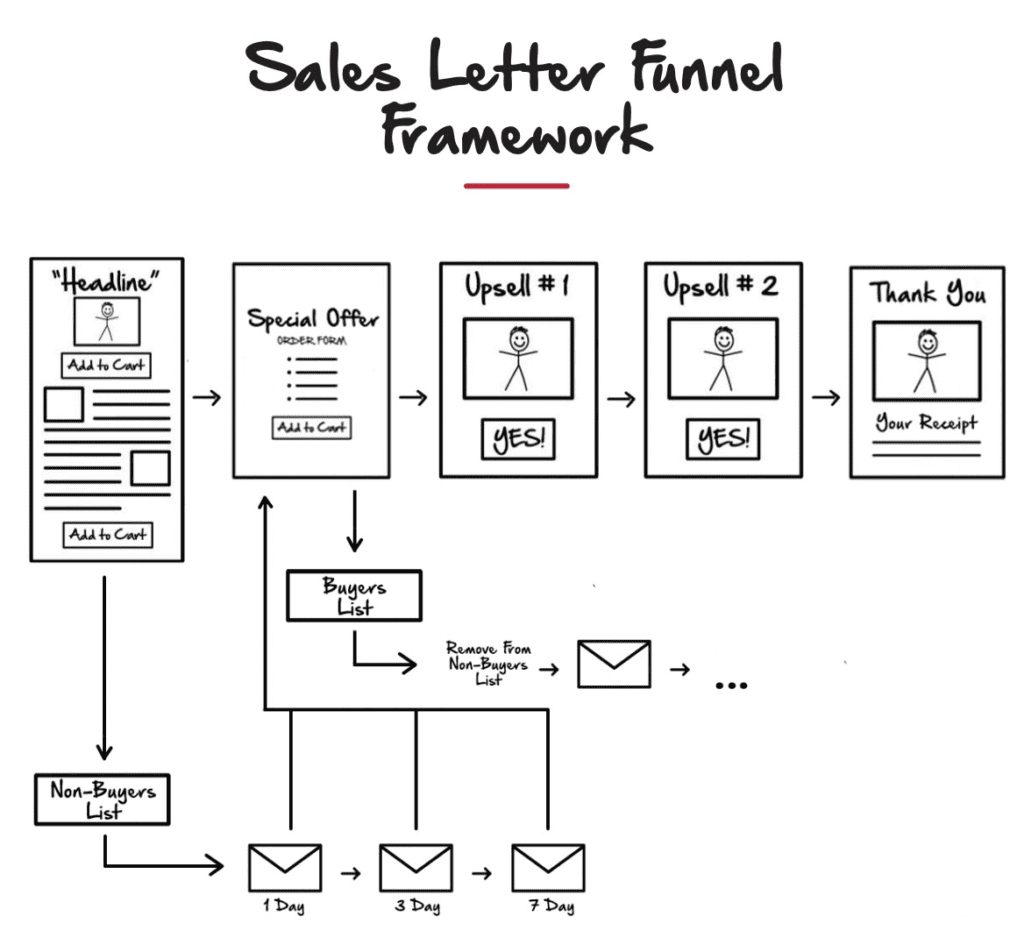
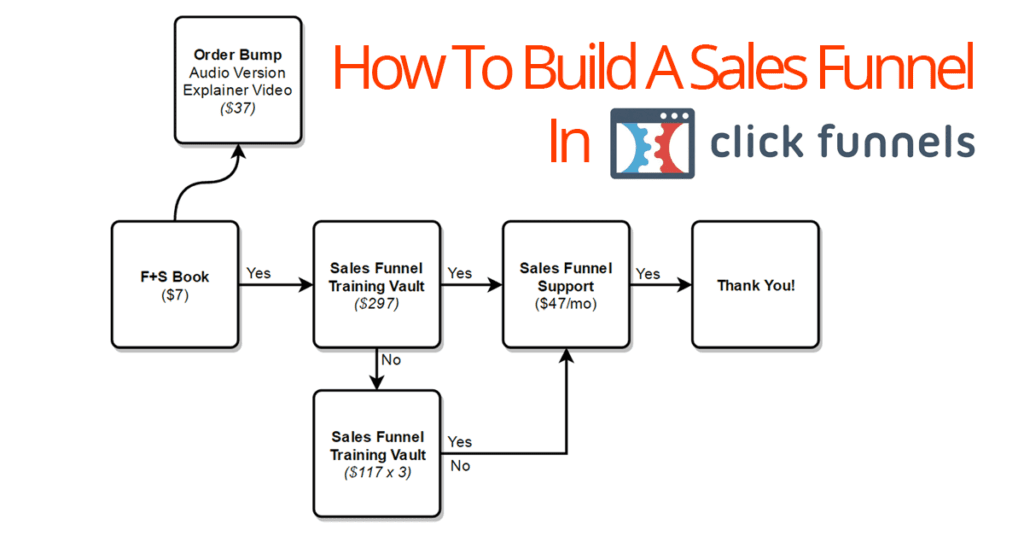
Upsells and cross-sells are powerful strategies for increasing your average order value. Upselling is when you offer a customer a more expensive version of a product, while cross-selling involves offering a related product.
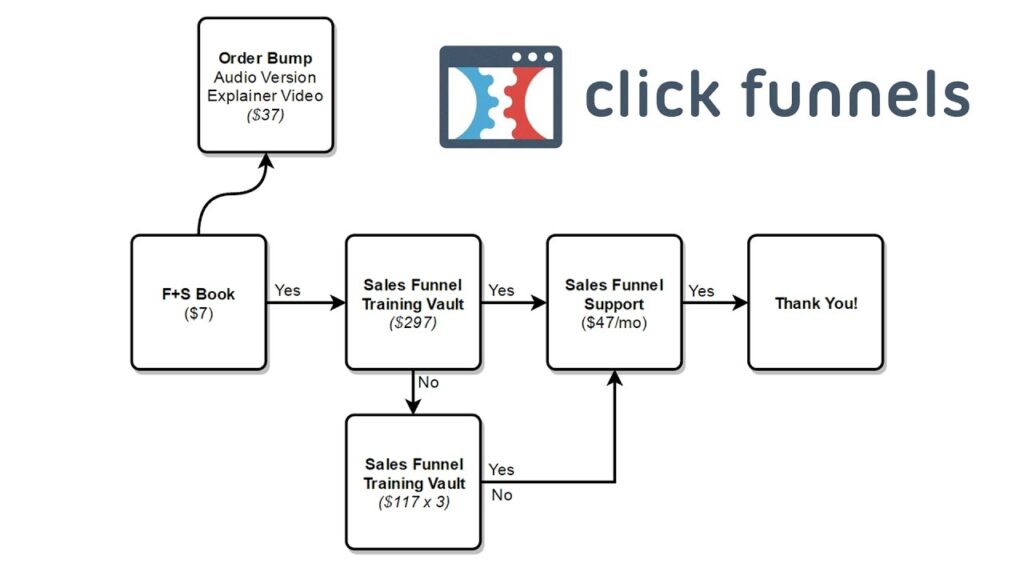
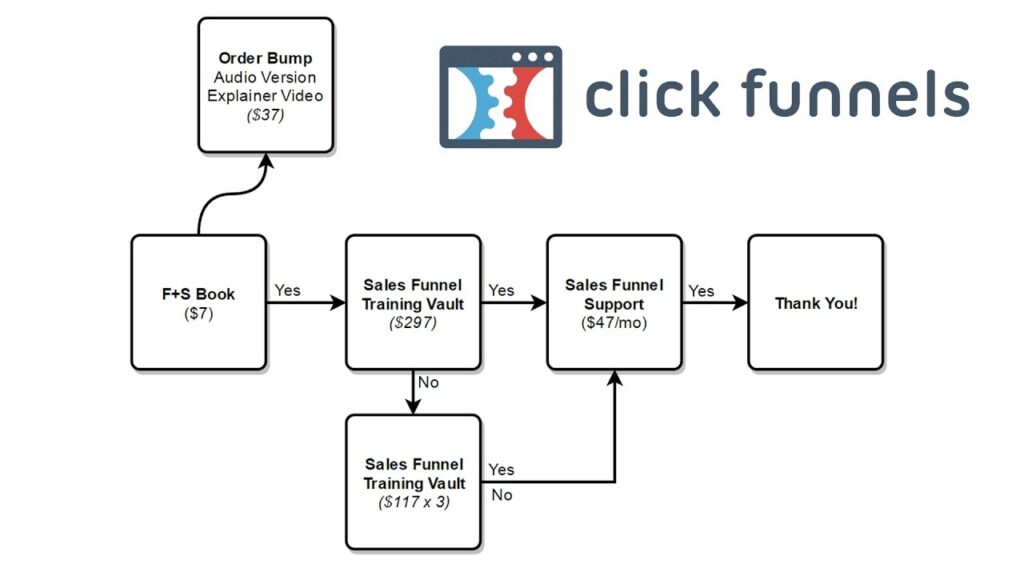
A core concept taught by ClickFunnels co-founder Russell Brunson is the “Value Ladder.” This framework involves mapping out a series of offers that increase in value and price, guiding customers from an initial low-cost purchase to your premium offerings.
Automating processes with ClickFunnels
Automation can save you a ton of time and effort. ClickFunnels allows you to automate many parts of your marketing and sales process.
You can set up automated email sequences to nurture leads or use integrations to automate lead management in your CRM. This frees you up to focus on the bigger picture of growing your business.
Analyzing and optimizing revenue streams
To ensure long-term growth, you need to constantly analyze and optimize your revenue. Identify which products or services are generating the most income and focus your marketing efforts there.
Don’t be afraid to test different pricing strategies to see what works best. Continuously testing and optimizing your funnels is the key to sustainable success.
Troubleshooting Common Issues
Even with the best tools, you might run into a few bumps in the road. Here’s how to handle some common issues.
Identifying and resolving technical issues
Sometimes, technical glitches can happen. If your pages are loading slowly, make sure your images are optimized for the web.
It’s also a good idea to regularly check for broken links. If you run into a problem you can’t solve, the ClickFunnels support team is there to help.
Handling payment and order-related problems
If a customer has a problem with a payment, reach out to them right away to help resolve it. Offering great customer service can turn a negative experience into a positive one.
Have a clear policy for refunds and cancellations, and make sure you communicate it clearly to your customers.
Troubleshooting integration and email marketing challenges
If you’re having trouble with an integration, start by double-checking your settings. Make sure you’ve entered the correct API keys and that your software versions are compatible.
If you’re still stuck, don’t hesitate to contact customer support for either ClickFunnels or the third-party tool you’re using. They can help you troubleshoot the problem and get things running smoothly.
Conclusion
ClickFunnels is an incredibly powerful tool that gives businesses everything they need to create and optimize their online sales funnels. Its user-friendly platform and extensive features make it easier than ever to turn visitors into customers.
By understanding the principles of sales funnels, you can use ClickFunnels to drive targeted traffic, analyze performance, and scale your business to new heights. Whether you’re just starting or looking to grow, ClickFunnels provides the resources to help you succeed.
Disclosure: I am an independent ClickFunnels Affiliate, not an employee. I receive referral payments from ClickFunnels. The opinions expressed here are my own and are not official statements of ClickFunnels or its parent company, Etison LLC.