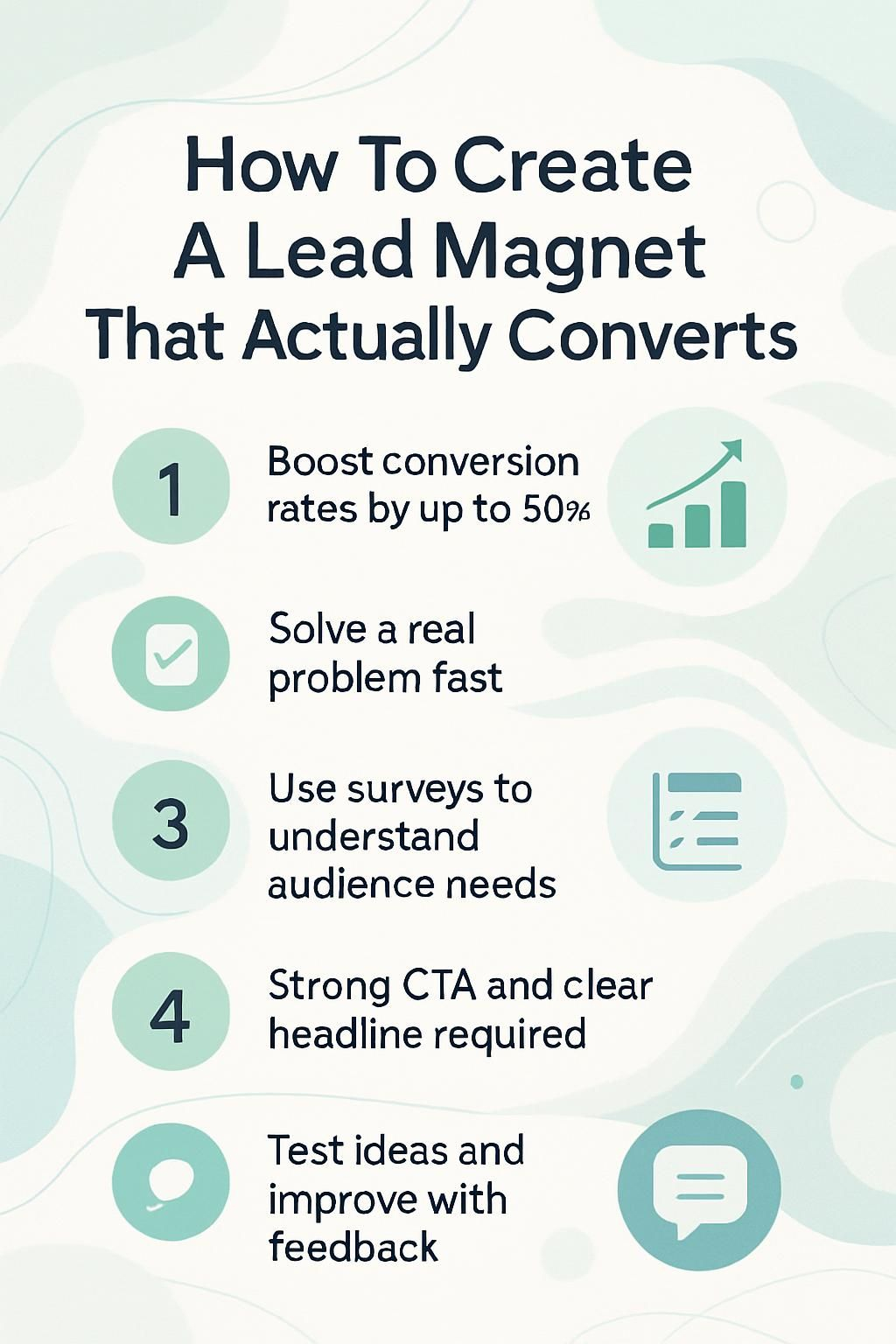
How To Create A Lead Magnet That Actually Converts

You want more people to join your email list, but your lead magnet is not getting enough sign-ups. Most marketers agree that a good lead magnet can boost conversion rates and help grow your audience quickly.
This guide will show you simple steps to create a lead magnet that actually gets results using tools like landing pages and clear calls to action. Keep reading for tips you can use today.
What is a Lead Magnet?
After exploring how to get more leads, you need tools that turn visitors into subscribers. A lead magnet does this for you in digital marketing. It is a free offer, like an e-book or cheat sheet, given to your target audience in exchange for their email address.
Lead magnets work best when they solve a real pain point, speak directly to your market segment, and have a clear call to action (CTA). Marketers use landing pages and email marketing platforms to collect contact information and grow their lists fast.
A great lead magnet gives instant value—so people want it now.
Simple examples include checklists, printable planners, templates or swipe files. Using the right content upgrades can boost conversion rates by up to 50 percent according to several recent case studies shared on top social media channels since 2021.
Steps to Create a Lead Magnet That Converts
You want your lead magnet to stand out and drive real results—every step, from idea to delivery, matters. Use email marketing tools, landing page builders, and smart content planning for a smooth process that grows your subscriber list fast.
Step 1: Define your target audience
Defining your target audience is the first step in creating a lead magnet. This group includes people who need what you offer. Think about their age, location, interests, and problems they face.
Knowing these details helps you tailor your content to meet their needs.
Use tools like surveys or social media to gather insights on your audience. Look for pain points that your lead magnet can address. When you understand what matters most to them, it becomes easier to create something valuable that they want to opt-in for.
Your email list will grow as more people see the benefits of your lead magnet.
Step 2: Identify the problem you’re solving
Finding the problem you are solving is key for your lead magnet. Your target audience has specific pain points they want to fix. Think about what keeps them awake at night or what challenges they face daily.
A clear value proposition can help here. It shows how your lead magnet offers a solution. Make it relatable and direct, so people see its worth right away. Use tools like email marketing platforms to reach out and gather insights on their needs, making it easier to craft effective content that speaks directly to their concerns.
Step 3: Craft a compelling value proposition
A strong value proposition shows your audience why they should care. It explains the main benefits of your lead magnet clearly and quickly. Focus on solving a pain point for your target audience.
What problem does it fix? Your readers want to know how it can help them.
Use simple language that speaks directly to their needs. Highlight what makes your offer unique, whether it’s a free cheat sheet or an exciting online course. Make sure to connect with potential subscribers through email marketing and social media promotion as well.
This will boost engagement and encourage more people to opt in!
Step 4: Choose the right type of lead magnet

Choosing the right type of lead magnet is key to your success. Different types work better for different audiences. For example, if your audience loves quick tips, offer cheat sheets or checklists.
If they like detailed guides, consider e-books or whitepapers.
Think about what solves their problems best. Mini-courses or video trainings can be great for teaching skills. Quizzes and assessments engage users while giving insights into their needs.
Pick a format that fits your content and audience preferences to boost conversion rates effectively.
Step 5: Design and write your lead magnet
Design your lead magnet with care. A good layout grabs attention and makes it easy to read. Use colors that match your brand image, but keep it simple. Add images or graphs if they help convey your message better.
Write clearly and concisely. Use short sentences that get straight to the point. Make sure each section of your lead magnet addresses pain points for your target audience. Include a strong call to action (CTA) at the end.
This encourages readers to join your email list or engage further with you, enhancing their experience and improving conversion rates.
Step 6: Build a high-converting landing page
A high-converting landing page is key for your lead magnet. Start with a clear headline. It should grab attention and explain what you offer right away. Use simple words that speak to your target audience’s needs.
Showcase the benefits of your lead magnet in short bullet points. Add a strong call to action (CTA) that tells visitors what to do next, like “Sign Up Now.” Make sure your landing page looks good on mobile devices too, as many people use their phones for browsing.
Tools like email marketing platforms and landing page builders can help you create this page easily and effectively.
Step 7: Create an engaging thank you page
A thank you page is your chance to connect with new subscribers. Make it warm and friendly. Thank them for their interest in your lead magnet. Use a strong call to action, like asking them to check their inbox for the freebie.
This step keeps your audience engaged.
Add more value on this page too. Share links to related blog posts or social media platforms where they can follow you for updates. You could even offer a discount on your services or products as a bonus.
Create an engaging thank you page, and you’ll help grow your email list while keeping subscribers happy!
Step 8: Develop a seamless delivery system
Building a smooth delivery system is key for your lead magnet. You want to make sure that once someone opts in, they get what they signed up for right away. Use email marketing platforms like Mailchimp or ConvertKit to send your lead magnet automatically.
This way, you can connect with your audience quickly.
Make it easy for users to access their lead magnets. A simple thank-you page should confirm their subscription and provide the content instantly. If something goes wrong, offer support through FAQ sections or contact forms.
Keep everything user-friendly and efficient; this helps improve conversion rates and keeps people engaged with your brand.
Types of Lead Magnets That Work
Lead magnets come in many forms. You can use short guides, templates, or even fun quizzes to grab attention. These tools help you connect with your audience and grow your email list.
Each type serves a unique purpose that can lead to better engagement and higher conversion rates….
Cheat sheets and checklists
Cheat sheets and checklists are great lead magnets. They help your audience quickly solve problems or learn something new. A cheat sheet gives short tips or key points on a specific topic.
It saves time and makes information easy to grasp.
Checklists keep tasks organized step by step. Users can tick off items as they complete them, which is satisfying and useful. Both tools work well in content marketing because they provide value right away, helping you grow your email list and engage with your target audience effectively.
Templates and swipe files
Templates and swipe files are great lead magnets. They save time and help users get organized. You can create templates for emails, social media posts, or reports. These tools give your audience a clear path to follow.
Swipe files work the same way. They are collections of examples that inspire new ideas. Your audience can use them as models for their own projects. Both options engage your target audience and show value right away, helping improve conversion rates in email marketing campaigns and more.
Mini-courses or video trainings
Mini-courses and video trainings are great lead magnets. They offer valuable knowledge in a short time. You can teach skills or share insights related to your target audience’s pain points.
Video content is engaging, and it keeps viewers interested.
These formats work well for digital marketing. Use platforms like social media or email marketing to reach out to your audience. Create lessons that are easy to follow and visually appealing.
This way, you draw people in and boost subscriber growth while solving their problems through actionable content.
Quizzes and assessments
Quizzes and assessments can be great lead magnets. They attract interest and engage your target audience. People love to test their knowledge, learn something new, or get personalized results.
Create quizzes that relate to their pain points or interests. This way, they feel connected to what you offer.
You can use tools like online quiz makers to build fun quizzes quickly. Promote them through social media marketing or email campaigns for maximum reach. As users interact with your content, you’ll gather valuable data about your audience’s needs.
These insights help improve your marketing strategy and boost conversion rates over time.
Printable planners and worksheets
Quizzes and assessments help engage your audience. Now, let’s talk about printable planners and worksheets. These tools are great for lead generation. They offer value by helping users stay organized or learn new skills.
Printable planners can simplify tasks. They guide your audience through their goals step by step. Worksheets encourage active participation, making the learning process fun. Use graphic design tools to make them eye-catching and easy to use on mobile devices, too.
These printable resources boost conversions as people love free items that solve their pain points. By adding a call to action (CTA), you can grow your email list fast!
E-books and whitepapers

Moving on from printable planners and worksheets, e-books and whitepapers are great lead magnets. They provide in-depth information on a subject. E-books often cover topics in detail, making them useful for your audience.
Whitepapers are more formal reports. They focus on specific problems and offer solutions. Both can help you build trust with your target audience. You share knowledge while guiding readers through their buyer’s journey.
This builds engagement and nurtures leads for your email list. Quality content grabs attention and boosts conversion rates too!
Best Practices for Lead Magnet Success
To make your lead magnet succeed, keep it clear and focused. Use strong visuals to grab attention. Ensure it’s easy to read on mobile devices. Test different ideas with A/B testing for the best results.
Get insights from user feedback to improve your lead generation efforts. Curious about more tips? Keep reading!
Keep it specific and actionable
A lead magnet must be specific and actionable. This means it should solve a clear problem for your target audience. Focus on their pain points. What keeps them up at night? When you answer this, you create value.
Use cheat sheets or checklists to make tasks easier for them. Offer tips they can apply right away. This helps build trust and grow your email list quickly. A strong call to action will guide users on what to do next, leading them through the marketing funnel smoothly.
Make it visually appealing
After you keep your lead magnet specific and actionable, the next step is to make it visually appealing. Visual elements grab attention. Use colors, images, and fonts that match your brand.
Good design makes your content easier to read.
Images like graphics or charts can help explain complex ideas quickly. Tools like Canva or Adobe Spark are great for designing engaging visuals. A clean layout also helps users find information fast.
This boosts engagement levels as well as conversion rates for your lead magnets!
Ensure mobile-friendliness
Your lead magnet must look good on all devices. Many people use their phones to browse the internet. If your content is hard to read on a small screen, they will leave. This means you lose leads and potential customers.
Make sure your design is user-friendly for mobile users. Use simple layouts and clear text that fits well on smaller screens. You can use graphic design tools like Canva or Adobe Spark to create appealing visuals that work across devices.
A well-designed landing page can boost your conversion rates and help grow your email list effectively.
Test and optimize continuously
Testing and optimizing is key to improving your lead magnet. Track conversion rates closely. This helps you see what works best for your audience. Use A/B testing on different elements, like headlines or images, to understand preferences.
Check the data often and make changes based on it. If a specific type of lead magnet resonates better, focus there. Listen to user feedback too; it provides great insights into pain points and how you can solve them effectively.
Keep trying new ideas and refining your approach with each update; this will help grow your email list over time!
Tools for Creating Lead Magnets
You need the right tools to create lead magnets. Graphic design apps help you make eye-catching visuals. Email marketing platforms allow you to reach your audience easily. Landing page builders let you set up pages that attract visitors and turn them into leads fast.
Graphic design tools

Graphic design tools help you create eye-catching lead magnets. These tools make it easy to design elements like images, layouts, and colors. Popular options include Canva, Adobe Spark, and Visme.
They offer templates that suit your needs. You can use them to craft cheat sheets, e-books, or checklists. Good design attracts attention and keeps people interested in what you offer.
Make sure your designs are clear and appealing on all devices; this is key for effective lead generation. With great visuals in place, it’s time to move on to landing pages that convert visitors into leads.
Email marketing platforms
Email marketing platforms help you connect with your audience easily. These tools let you design emails, manage your subscriber list, and track campaign results all in one place. Popular platforms like Mailchimp or Constant Contact can be user-friendly for beginners.
You can create beautiful landing pages to capture leads and grow your email list. Most of these platforms offer templates that make it easy to get started. They also allow you to segment your audience so you can send the right message at the right time, boosting conversion rates along the way.
Landing page builders
Landing page builders make your job easier. They help you create high-converting landing pages without needing to code. Many tools let you drag and drop elements where you want them.
This saves time and keeps things simple.
Using a landing page builder can boost your lead generation efforts. You can design pages that match your brand and engage visitors, turning them into subscribers on your email list.
Some popular options include Unbounce, Leadpages, and ClickFunnels. These platforms come with templates that are easy to customize for your target audience’s needs, all while focusing on optimizing conversion rates effectively.
Next up are the types of lead magnets that work best!
Measuring and Improving Lead Magnet Performance
To know how well your lead magnet is doing, track conversion rates and watch user feedback closely. Use A/B testing to see what works best for your audience. This way, you can make changes that boost engagement and grow your email list.
Want tips on improving even more? Keep reading!
Track conversion rates
Tracking conversion rates is key to your lead magnet’s success. It shows how many visitors take the action you want, like signing up for your email list. Use tools like Google Analytics or email marketing platforms to get this data.
Look for patterns in the numbers. Are certain types of lead magnets working better? Do some call-to-action buttons grab more attention? This helps you understand your audience and improve your efforts.
A small change can often lead to big results in conversion rates. Keep testing new ideas to find what truly resonates with your target audience.
Use A/B testing for optimization
A/B testing helps you find out what works best. It compares two versions of your lead magnet, like different landing pages or emails. You send one version to half your audience and the other version to the rest.
This way, you can see which one gets more clicks or sign-ups.
This method boosts conversion rates by showing you what people like. Use tools like email marketing platforms or landing page builders for easy testing. Keep changing things based on results.
Analyze data from each test to make informed choices for lead generation and improve your strategy easily!
Analyze user feedback
User feedback is vital. It helps you understand how your lead magnet performs. Ask your audience what they think. Use surveys or direct messages to gather their thoughts.
Pay attention to comments and ratings, too. These insights reveal pain points in your content. You can use this information to improve your lead magnet and boost conversion rates. A user-friendly design keeps people engaged longer, making them more likely to join your email list or take action on a landing page.
Keep testing and optimizing based on what users say; this will make your digital marketing efforts even stronger!
Conclusion
Creating a lead magnet that converts takes thought and effort. Focus on your audience’s needs. Solve their problems with clear value. Use tools like graphic design platforms and email marketing services to make it appealing.
Track your results to see what works best, then keep improving. With the right approach, you can build trust, grow your email list, and boost engagement in no time!