ClickFunnels Vs. WordPress: Do You Still Need A Website?

You might be wondering if you still need a website for your online business. ClickFunnels and WordPress are two popular tools people use to build their online presence. This blog will help you understand the strengths and weaknesses of each platform, so you can choose what works best for you.
Keep reading to make the right decision!
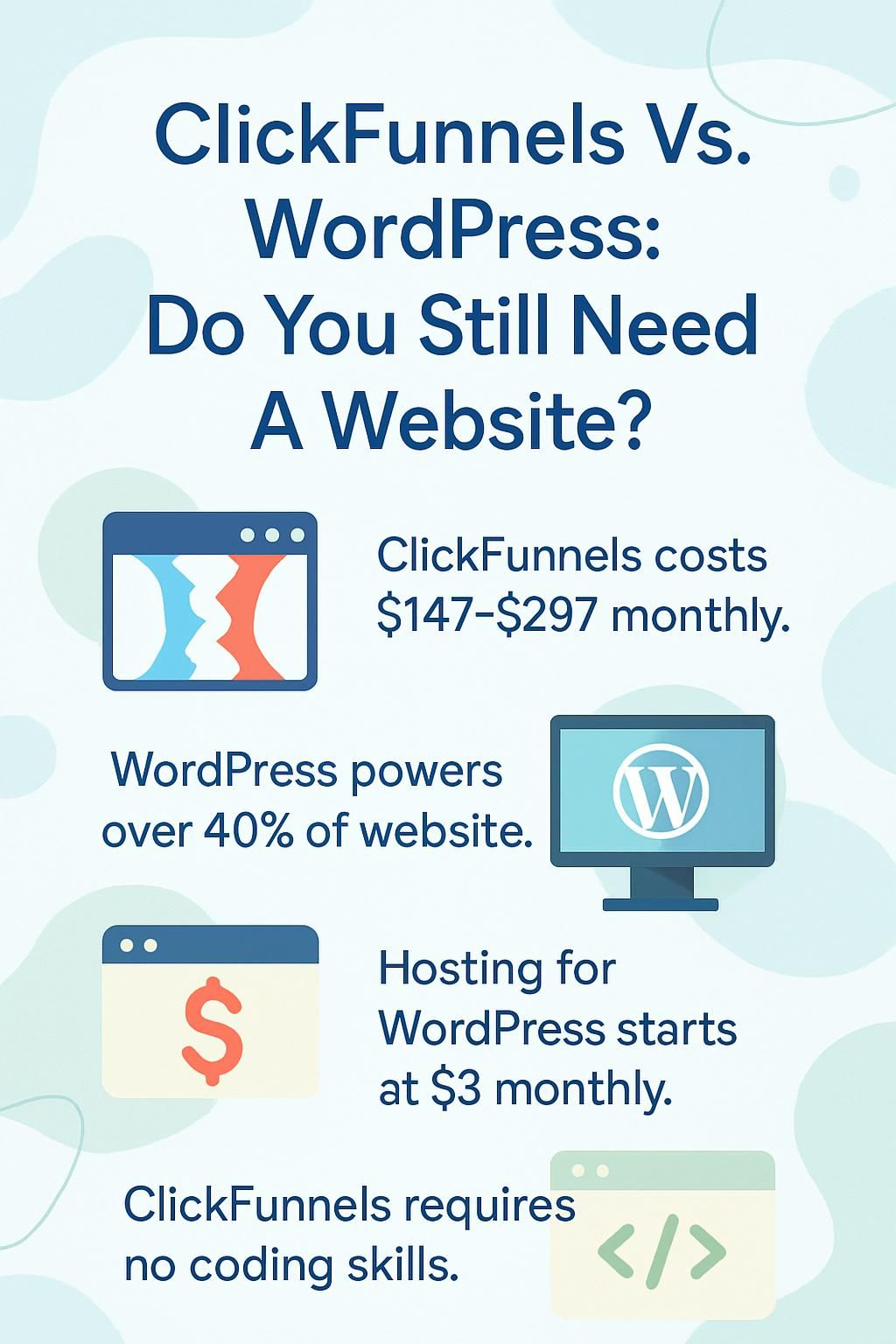
Understanding ClickFunnels and WordPress
ClickFunnels and WordPress are popular tools for building an online presence. Each serves different needs, depending on your goals.
What is ClickFunnels?
ClickFunnels is an online tool to create sales funnels. It helps you guide visitors step by step toward making a purchase or taking action.
You don’t need coding skills to use it. It includes features like landing pages, payment gateways, and email marketing tools. This makes it great for selling products, collecting leads, or running campaigns easily.
What is WordPress?
Unlike ClickFunnels, WordPress gives you full control of your website. It is a content management system (CMS) used for building and managing websites. This platform lets you create anything from blogs to complex business sites.
WordPress is open-source and free to use, but hosting costs extra. You can add plugins to improve features like SEO or e-commerce functionality. With thousands of themes available, customization becomes easy even without technical knowledge.
Over 40% of all websites use WordPress today because it balances flexibility with ease of use.
WordPress powers over one-third of the web.
Key Differences Between ClickFunnels and WordPress
ClickFunnels is built for creating sales funnels, while WordPress handles full websites and blogs. They serve different goals, making each better for specific needs.
Ownership and Hosting
You control your website with WordPress. You host it on servers of your choice, which means more flexibility and ownership. This also requires managing updates, backups, and security yourself.
ClickFunnels handles hosting for you as a Software as a Service platform. You don’t worry about server management or technical issues. But you won’t fully own the platform or have access to its code.
Purpose and Use Cases
ClickFunnels is perfect for building sales funnels and landing pages. It helps you guide customers through buying steps with ease. It suits online businesses focused on quick conversions, like selling courses or products.
WordPress works best as a content management system (CMS) for full websites. This platform allows blogs, e-commerce stores, and even portfolio sites. You can customize your site deeply and use it to grow your brand long-term.
ClickFunnels vs WordPress: Features Comparison
ClickFunnels and WordPress offer different tools to help your business grow online. Each platform shines in unique areas, depending on your goals.
Customization Capabilities
WordPress offers high flexibility. You can customize layouts, colors, fonts, and more using themes and plugins. Coding knowledge allows even deeper changes.
ClickFunnels is less flexible but easier to use. It provides pre-designed templates you can tweak without coding skills. This simplicity works well for building sales funnels quickly.
Marketing and SEO Tools
ClickFunnels focuses on marketing tools like sales funnels, A/B testing, and email automation. These help you drive conversions and manage leads easily. It integrates with many platforms to track customer activity.
WordPress offers strong SEO options through plugins like Yoast. You can optimize meta tags, URLs, and images for search engines. Its blogging features also improve visibility in search results over time.
E-Commerce Functionality
Both platforms support e-commerce, but they work differently. WordPress works well for building full online stores with plugins like WooCommerce. It gives you control over product listings, payments, and shipping options.
ClickFunnels focuses on sales funnels aimed at conversions. It’s great for selling single products or upselling items in a sequence. You might miss advanced store features though since it prioritizes simplicity over range.
Ease of Use: ClickFunnels vs WordPress
ClickFunnels offers a straightforward setup for building sales funnels. WordPress provides more flexibility but may take time to learn.
Learning Curve
ClickFunnels is easy to use. It offers pre-made templates and drag-and-drop tools. You can set up sales funnels quickly without much technical knowledge.
WordPress takes longer to learn. It gives more control but needs plugins and some coding skills. You may need extra time or help to build a website with advanced features.
User Interface
The user interface differs a lot between these two platforms. ClickFunnels offers a drag-and-drop editor, making it simple for you to build landing pages and sales funnels quickly.
It is geared toward beginners who want ease of use without needing coding skills.
WordPress provides more customization but can feel overwhelming at first. You manage themes, plugins, and widgets yourself. This requires some technical knowledge but gives you greater control over your website’s design and functions.
Move on to pricing next to see which fits your budget better!
Pricing and Cost Comparison
Pricing differs greatly between ClickFunnels and WordPress. Each platform offers unique plans to fit various budgets.
ClickFunnels Pricing
ClickFunnels has different pricing plans for businesses. The Basic plan costs $147 per month. This includes one website, 20 funnels, and basic tools. For more features like unlimited websites and advanced analytics, the Pro plan is available at $197 per month.
If you need extra tools or training, there’s an Elite plan for $297 monthly. ClickFunnels also gives a free trial to test before paying anything. These prices may feel high but include hosting and sales funnel templates already set up for you.
WordPress Pricing
WordPress.org is free to use. You only pay for hosting, themes, and plugins. Hosting can cost $3 to $40 per month, depending on the provider.
You may buy premium themes or plugins for extra features. Themes range from $20 to $100 or more. Plugins can cost between $15 and $200 annually. These costs let you scale based on your needs and budget.
Pros and Cons of Each Platform
Each platform has its strengths, but they cater to different needs. Understanding their pros and cons can help you choose the right one for your business.
ClickFunnels: Pros and Cons
ClickFunnels can help you build sales funnels and drive conversions. It focuses on marketing tools, but it also has some limits.
Pros:
- You can create sales funnels quickly with its drag-and-drop tools.
- It includes built-in templates for landing pages that save time.
- You get ready-to-use email marketing tools to follow up with leads.
- No coding is needed, so it’s great for people without tech skills.
- Hosting is included, meaning you don’t need a separate web hosting plan.
- Analytics are easy to view, letting you track your funnel performance at any time.
- Payment gateways like Stripe and PayPal integrate smoothly for e-commerce.
- Customer service offers quick support through chat and emails.
Cons:
- Pricing starts high, making it expensive for small businesses or beginners.
- Customization options are limited compared to other platforms like WordPress.
- You cannot fully control your site because ClickFunnels hosts everything on their servers.
- SEO tools are basic, which makes ranking in search engines harder.
- It works best for simple projects, not large or content-heavy websites.
- The membership site feature lacks advanced functions found in other platforms.
- Learning its features might take time if you’re new to online business software.
WordPress: Pros and Cons
WordPress is a powerful platform built for websites. It offers flexibility and control but has its challenges.
Pros:
- You own the website and content fully.
- It is free to use, though hosting may cost extra.
- Offers thousands of plugins for added features like SEO or e-commerce.
- Supports full customization with themes and coding options.
- Works well for blogs, portfolios, or online shops.
Cons:
- Requires some technical knowledge to set up and manage.
- Updates and maintenance can be time-consuming.
- Plugins can slow the site if not chosen carefully.
- Hosting fees vary depending on the provider you pick.
- May feel overwhelming for beginners due to too many options.
Best Use Cases for ClickFunnels and WordPress
ClickFunnels works best for creating sales funnels and driving conversions quickly. WordPress shines when you need a versatile platform for content management and advanced features.
Scenarios Where ClickFunnels Excels
ClickFunnels is great for businesses focused on sales and conversions. It helps you turn visitors into paying customers without needing technical skills.
- It works well for creating sales funnels quickly. You can set up landing pages, upsells, and checkout processes in a few clicks.
- It is perfect for online businesses selling one or two products. The platform focuses on guiding buyers through the sales process easily.
- It suits marketers who want pre-designed templates. These save time and remove the hassle of building pages from scratch.
- Subscription-based services thrive using ClickFunnels tools. You can manage recurring payments efficiently with its setup.
- Small teams or solo entrepreneurs benefit from it. Its all-in-one marketing tools reduce the need to juggle multiple platforms.
- Businesses that rely heavily on webinars find it helpful. Features like automated webinar funnels make it simple to host events.
- You don’t need much coding knowledge to use it. Its drag-and-drop builder makes customization simple for anyone.
This platform fits any business aiming to drive quick results with minimal effort.
Scenarios Where WordPress Excels
WordPress is a powerful content management system. It works best for certain needs and industries.
- Use WordPress if you need a blog-focused website. It started as a blogging platform, so it has great tools for writers and creators.
- Choose WordPress for full website ownership. With self-hosting options, you control your site’s files and data completely.
- Build with WordPress if customization is key. Thousands of plugins, themes, and design tools let you create unique layouts easily.
- Try WordPress for SEO purposes. Its built-in features and SEO plugins help boost visibility on search engines.
- Pick WordPress if selling products online matters to you. WooCommerce lets you set up an online store without much effort.
- Use it for big websites needing scalability. Enterprise-level businesses trust it thanks to its ability to handle traffic spikes smoothly.
- Consider WordPress for multilingual sites or global audiences. Many addons support translations to help engage users worldwide.
Conclusion
You have options based on your needs. ClickFunnels is great for sales funnels and quick marketing setups. WordPress offers flexibility for full websites with more control. Think about your goals, budget, and time before choosing.
Either way, you can build a strong online presence!
Disclosure: I am an independent ClickFunnels Affiliate, not an employee. I receive referral payments from ClickFunnels. The opinions expressed here are my own and are not official statements of ClickFunnels or its parent company, Etison LLC.