ClickFunnels Vs. Shopify: Which Platform Should You Use To Sell Products?

Choosing between ClickFunnels and Shopify can feel complicated. Shopify is built for creating a full online store with large product catalogs, while ClickFunnels is designed for creating high-converting sales funnels.
Shopify powers over 4.8 million active stores and is a leader in building a brand with organic search traffic. ClickFunnels is a specialized tool for guiding customers through a direct sales path, often for a single product or service.
This guide will break down the differences to help you choose the right platform. Let’s get started.
Key Differences Between ClickFunnels and Shopify
ClickFunnels is a tool for building focused sales funnels that guide a customer to a specific action. Shopify is a complete e-commerce platform for running online stores with product catalogs and inventory management.
Both platforms use payment processing tools and allow third-party integrations, but they shape the customer journey in different ways.
Overview of ClickFunnels
ClickFunnels helps you create high-converting sales funnels for digital products, coaching programs, or online courses. Its drag-and-drop editor lets you quickly design funnels that guide customers from the first click to payment.
The platform excels at marketing automation and optimizing each step of the customer journey. A/B testing is built-in, making conversion optimization simple. Russell Brunson created ClickFunnels in 2014 to help marketers grow leads and automate sales processes like upsells and order bumps.
With the release of ClickFunnels 2.0, the platform has expanded to include a blog builder, CRM capabilities, and improved e-commerce features. Most users still choose it for limited-time offers or single-product pages. It works best if you sell exclusive services or a few digital items rather than running a large online store.
Overview of Shopify
Shopify is a leading e-commerce platform for building and scaling an online store. As of 2025, it holds a 20% share of the global e-commerce software market, making it the most used platform worldwide. It’s ideal for selling both physical and digital products.
Shopify provides robust inventory management tools, product catalogs, and shipping solutions. Its built-in Shopify Payments system accepts credit card payments globally, supporting multiple currencies and gateways like PayPal Zettle.
You can choose from thousands of Shopify themes or customize your site with CSS. The user-friendly dashboard simplifies content management and adding new products. Powerful SEO features help improve search results, driving more organic traffic to your brand. Major brands like Gymshark use Shopify to manage large inventories and global sales.
Core distinction: Sales funnels vs. eCommerce stores
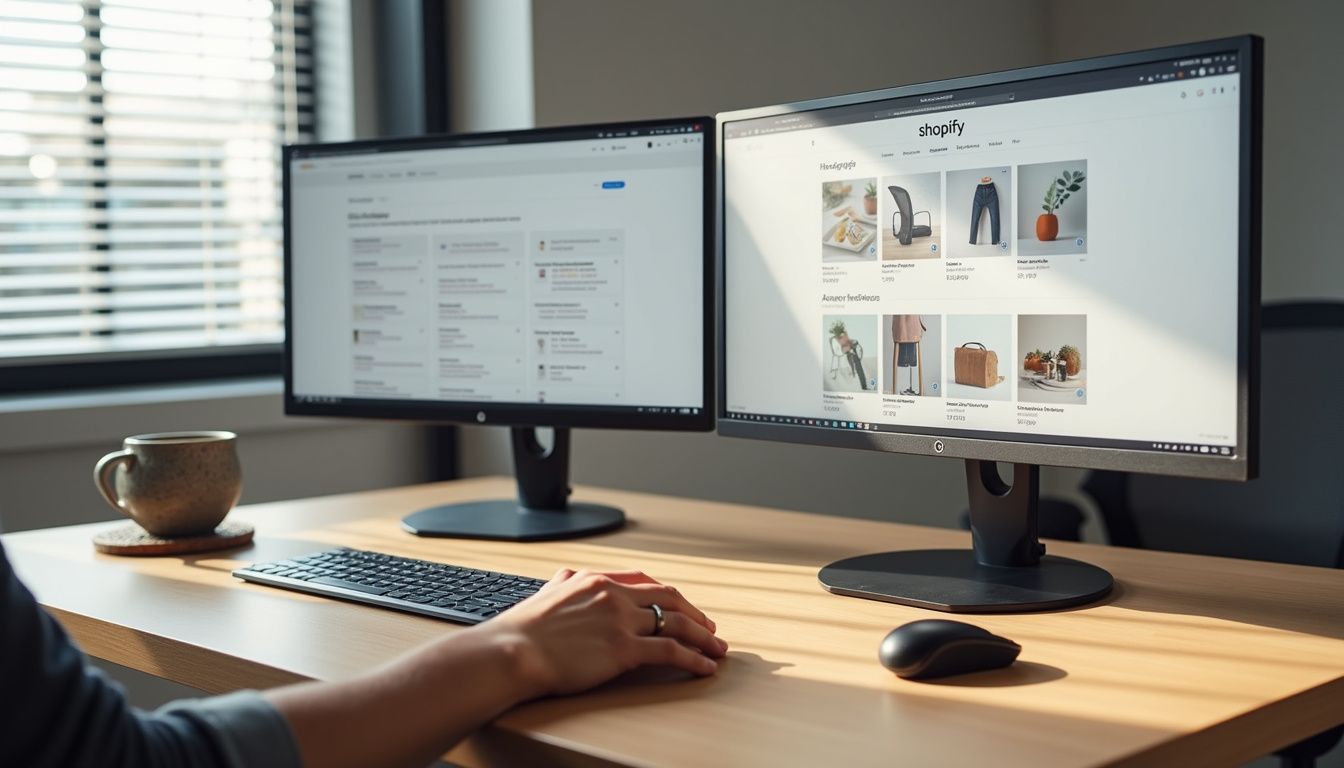
Shopify offers a complete e-commerce platform for building a digital storefront. It’s designed for browsing, allowing customers to explore categories and discover products, making it ideal for large online stores with many items.
ClickFunnels focuses on creating a linear, guided path for the customer. Instead of an open store, you build marketing funnels that lead a visitor step-by-step toward a single offer. The average e-commerce conversion rate is just 1.84%, a problem ClickFunnels aims to solve by optimizing every step of the sales process.
A typical e-commerce website has a conversion rate of 2-3%, meaning over 97% of visitors leave without purchasing. ClickFunnels is designed to increase that number through a focused customer journey.
Tools like funnel templates, order bumps, and A/B testing help optimize this journey. This approach is best for digital products, coaching, or single-product launches where conversion matters more than managing a large product catalog.
Sales Funnel Capabilities
Sales funnels guide your customers from their first click to the final checkout. ClickFunnels provides specialized tools like funnel templates and a drag-and-drop editor to boost conversion rates, while Shopify relies more on third-party apps for similar functions.
ClickFunnels: Funnel creation and optimization tools
ClickFunnels is built specifically for creating high-converting sales funnels. You can use its drag-and-drop editor to design pages with upsells, downsells, and order bumps in minutes.
The platform includes pre-built funnel templates to help you launch quickly. Built-in marketing automation sends email sequences and tracks customer behavior throughout the journey. You can also run A/B testing on your funnel pages to optimize for higher conversions.
ClickFunnels provides detailed analytics, and you can integrate Google Analytics to measure every part of your customer journey. This makes it a popular choice for solopreneurs selling digital products or membership sites, as it simplifies lead generation and the sales process.
Shopify: Limited funnel-building features
Shopify functions as a traditional online store and has limited built-in sales funnel features. While you can create a storefront with its themes and editor, it doesn’t automatically guide visitors through a step-by-step funnel with upsells and order bumps.
To create advanced funnels, you need third-party apps from the Shopify App Store. Popular options for funnel building include:
- Zipify Pages Builder & Editor: A powerful tool for creating custom landing pages and sales funnels.
- UFE Cross Sell & Upsell Funnel: Focuses on adding one-click upsells and post-purchase offers to increase order value.
- ReConvert: Specializes in optimizing the thank-you page with post-purchase funnels to boost revenue.
Shopify’s core focus is on its product catalogs, inventory management, and payment gateways like Shopify Payments. For detailed funnel optimization, you’ll need to rely on these external apps.
E-commerce Features
Shopify provides powerful catalog and inventory management tools designed for physical products. ClickFunnels is streamlined to increase sales for single items or digital products through simple funnel templates.
Shopify: Inventory management and product catalog
Shopify makes it easy to manage large product catalogs. From a single dashboard, you can add, edit, and organize thousands of physical or digital products. You can also quickly update product variants like size and color.
The platform tracks stock levels in real-time to prevent overselling. Shopify Shipping simplifies order fulfillment by allowing you to print labels and manage shipments. For businesses with physical locations, Shopify POS unifies online and in-person sales and inventory.
The Shopify App Store offers integrations for multi-channel selling on social media platforms, advanced analytics, and more detailed content management. Its SEO-friendly templates help attract organic traffic from the start.
ClickFunnels: Focus on single-product or service sales
ClickFunnels is designed for selling a single product or service at a time. It uses high-converting sales funnels with built-in upsells, downsells, and order bumps to guide visitors from a landing page to checkout.
This approach simplifies selling offers like coaching programs or online courses without the need for a large product catalog. The platform’s marketing automation tools handle lead generation and email follow-ups.
Digital entrepreneurs often use ClickFunnels’ funnel templates for quick setup and split testing, which helps optimize conversion rates for each campaign. This is a key difference from Shopify’s broader inventory and catalog management system.
Dropshipping and print-on-demand capabilities
Shopify is a strong platform for dropshipping and print-on-demand businesses. The Shopify App Store connects you with leading apps for product sourcing and order fulfillment.
Top print-on-demand apps like Printful and Printify integrate directly with your store, automating the entire process from order to shipment. For dropshipping, apps like DSers and Spocket let you source products from global suppliers without holding physical inventory.
ClickFunnels is not designed for large-scale dropshipping. While it can sell products, it lacks the inventory and order management features needed to run a dropshipping business efficiently. For long-term growth through branding and SEO, Shopify’s multi-channel selling support is a better fit.
Marketing and SEO Tools
Both ClickFunnels and Shopify provide marketing automation features and support for Google Analytics. However, Shopify has more advanced SEO tools for driving organic traffic, while ClickFunnels focuses on built-in automation for its funnels.
ClickFunnels: Built-in marketing automation tools
ClickFunnels offers built-in marketing automation to run sales funnels with less manual effort. You can use email automation for lead generation, event reminders, and follow-ups for online courses.
You can set up upsells and payment plans directly within the funnel builder to increase customer lifetime value. The platform also includes features for split testing, CRM, and managing affiliate links from one dashboard.
This allows you to control each step of the customer journey without needing multiple external apps. These tools are effective for both digital products and physical items within a focused sales funnel.
Shopify: Advanced SEO and organic traffic tools
Shopify is designed to help your online store grow through organic traffic. The platform is built for search engines, allowing you to create keyword-rich product catalogs and customize meta descriptions for every page.
It automatically generates sitemaps and provides a built-in blogging platform to support your content marketing efforts. You can integrate Google Analytics or use Shopify’s native analytics to track how customers find your store.
The Shopify App Store offers additional apps to enhance your SEO and content management. Tools like SEO Booster and Plug in SEO help you optimize your site to improve its ranking. This makes Shopify a better choice if long-term organic growth is a key part of your strategy.
Payment Processing Options

Shopify offers its own integrated payment gateway, Shopify Payments, along with support for numerous third-party options. ClickFunnels relies entirely on third-party processors like Stripe and PayPal for transactions.
Shopify: Integrated payment gateway options
Shopify provides a seamless payment experience with its native solution, Shopify Payments. It allows you to accept credit cards, Apple Pay, and Google Pay without needing a third-party account. Online transaction fees for the Basic plan are typically 2.9% + 30¢.
Shopify also supports over 100 other payment gateways, including PayPal and Stripe. The platform includes fraud analysis tools to protect your store from chargebacks and two-factor authentication for added security.
This integrated setup saves administrative time and provides a smooth checkout experience for your customers. If you use a third-party gateway, Shopify charges an additional transaction fee, which you can avoid by using Shopify Payments.
ClickFunnels: Reliance on third-party payment processors
ClickFunnels does not have a native payment processing system. To accept payments, you must connect to a third-party payment gateway like Stripe or PayPal.
While integration is straightforward, you are subject to the transaction fees charged by your chosen processor. This also means that tasks like managing refunds or disputes are handled through the third-party service.
Multi-currency support depends on the capabilities of your connected gateway. Using a reliable third-party processor ensures secure checkouts but adds an extra step compared to an all-in-one solution like Shopify Payments.
Integrations and Apps
Both platforms can connect with other tools like Google Analytics and marketing automation apps. Shopify has a vast app marketplace, while ClickFunnels focuses on built-in features for its sales funnels.
ClickFunnels: Tools for upsells, downsells, and order bumps
ClickFunnels includes built-in tools for upsells, downsells, and order bumps. These features are designed to increase the average order value during checkout.
With the drag-and-drop editor, you can add an order bump directly to your sales funnel pages. After a customer purchases a main product, you can present a special offer as an upsell. If they decline, you can offer a different deal as a downsell.
You do not need external apps to create these high-converting sales funnels, as everything is managed from a single dashboard. This is ideal for marketing strategies that rely on paid ads and rapid funnel optimization.
Shopify: Vast app marketplace and third-party integrations
The Shopify App Store gives you access to thousands of apps and third-party integrations to customize your online store. As of 2024, the store has over 16,000 apps available.
You can add tools for inventory management, email marketing automation, customer engagement, and dropshipping. Popular apps like Klaviyo for email marketing or LoyaltyLion for rewards programs can enhance your store’s functionality.
The marketplace covers nearly every business need, from shipping solutions like ShipStation to print-on-demand services like Printful. This gives you complete control over your product catalogs and customer management systems.
Pricing Comparison
Pricing plans can be a deciding factor. ClickFunnels generally has a higher starting price, while Shopify offers more scalable plans. Here is a breakdown of what to expect.
ClickFunnels pricing tiers
ClickFunnels 2.0 offers three main pricing tiers, with discounts for annual billing. The plans are structured to support businesses at different stages of growth.
| Plan | Monthly Price | Annual Price (per month) | Key Features |
|---|---|---|---|
| Basic | $147 | $127 | 1 website, 20 funnels, 10,000 contacts |
| Pro | $197 | $157 | 1 website, 100 funnels, 25,000 contacts |
| Funnel Hacker | $297 | $208 | 3 websites, unlimited funnels, 200,000 contacts |
Pricing is based on data from early 2025 and may be subject to change.
Higher-tier plans unlock more funnels, contacts, and advanced features like an affiliate management center. These plans are designed for businesses that rely heavily on sales funnels for revenue.
Shopify pricing plans and additional costs
Shopify offers several pricing plans designed to scale with your business, starting at a lower price point than ClickFunnels. There are also additional costs to consider, such as apps and themes.
| Plan | Monthly Price | Annual Price (per month) | Online Transaction Fee |
|---|---|---|---|
| Basic | $39 | $29 | 2.9% + 30¢ |
| Shopify (Grow) | $105 | $79 | 2.7% + 30¢ |
| Advanced | $399 | $299 | 2.5% + 30¢ |
Pricing is based on data from early 2025 and may be subject to change.
Shopify Plus, for enterprise-level businesses, starts at around $2,300 per month. Additional costs may include premium Shopify themes, apps from the Shopify App Store, and domain registration.
User Experience and Ease of Use
Both ClickFunnels and Shopify offer user-friendly interfaces, but they are designed for different tasks. ClickFunnels simplifies funnel building, while Shopify provides a comprehensive dashboard for store management.
ClickFunnels: Simplified interface for sales funnels
ClickFunnels uses a drag-and-drop editor that makes building high-converting sales funnels fast and easy, even without coding skills. The interface is focused on guiding a buyer step-by-step through funnel templates.
Tools for order bumps, upsells, and split testing are integrated directly into the workflow, which simplifies the process of conversion optimization. The platform also includes built-in marketing automation for email and lead generation.
Most users find that its design is ideal for mapping out the customer journey for specific campaigns, rather than managing a full online store with a large product catalog like Shopify.
Shopify: Comprehensive dashboard for store management
Shopify offers a feature-rich dashboard for managing your entire online store. You can handle product catalogs, track inventory, manage shipping, and set up Shopify Payments all in one place.
Real-time analytics provide insights into your sales and customer behavior. The platform also includes built-in SEO tools to help you attract organic traffic. You can use the Shopify App Store to add new features without leaving the dashboard.
The platform supports multi-channel selling across social media and in-person with its POS tools. This makes it easy to scale your business, whether you are selling a few items or thousands.
Customer Support and Resources
Both platforms offer extensive resources to help you succeed. ClickFunnels has strong community spaces and training materials, while Shopify provides comprehensive support and documentation.
ClickFunnels: Training and community spaces
ClickFunnels provides a wealth of training videos and guides to help you build high-converting sales funnels. You can learn about funnel templates, email marketing integration, A/B testing, and order bumps through step-by-step tutorials.
The platform also offers access to active community spaces, such as the “Funnel Hacker” community. In these private groups, users share advice on pricing, drag-and-drop editor tips, and split testing strategies.
This community support makes it easier to ask questions and connect with other entrepreneurs who use the platform to grow their businesses through digital product sales and funnel optimization.
Shopify: Extensive support and documentation
Shopify offers a large help center that covers every aspect of building and managing an online store. You can find clear guides on setup, product catalogs, inventory management, and Shopify Payments.
The platform provides 24/7 live chat support, so you can get help whenever you need it. You can also join community forums to discuss solutions with other users. Platforms like Shopify Learn offer free courses and tutorials.
The Shopify App Store also includes tutorials for the apps you integrate, which helps you add new features like marketing automation or content management at your own pace.
Ideal Use Cases for Each Platform

Disclosure: I am an independent ClickFunnels Affiliate, not an employee. I receive referral payments from ClickFunnels. The opinions expressed here are my own and are not official statements of ClickFunnels or its parent company, Etison LLC.
The right choice between ClickFunnels and Shopify depends on your business model. ClickFunnels is ideal for high-converting sales funnels, while Shopify is best for building a complete online store.
When to choose ClickFunnels
Choose ClickFunnels if your primary goal is to create high-converting sales funnels for digital products, online courses, or coaching programs. It works best for single-offer campaigns and guiding customers through a direct journey.
ClickFunnels is a strong choice for:
- Marketers focused on lead generation through paid ads or webinars.
- Businesses selling a small number of products that do not require complex inventory management.
- Entrepreneurs who want built-in tools for upsells, downsells, and order bumps to maximize conversion rates.
The platform’s features are designed for fast campaign launches and immediate conversion optimization.
When to choose Shopify
Shopify is the better choice if you need a scalable e-commerce platform for selling a wide range of products. It is ideal for businesses that manage large inventories and require robust shipping tools.
Shopify is a strong choice for:
- Online stores with large product catalogs and multiple product variants.
- Businesses that want to grow through search engine optimization and organic traffic.
- Retailers who need dropshipping, print-on-demand, or point-of-sale capabilities.
Its lower starting costs and extensive app store make it a flexible option for small businesses looking to grow.
Pros and Cons of ClickFunnels
ClickFunnels excels at building sales funnels and includes powerful marketing automation. However, it has limitations in e-commerce functionality and a higher starting price.
Strengths of ClickFunnels
ClickFunnels is designed to help you build high-converting sales funnels for digital products, online courses, or coaching programs. The platform’s main strengths are its built-in marketing automation tools and funnel templates, which simplify lead generation.
It includes features like upsells, downsells, order bumps, and payment plans from the start. The simple drag-and-drop editor allows you to create landing pages without any coding skills.
The system is optimized for guiding customers through each step of the journey to increase conversions, making it popular among marketers who prioritize conversion rates over managing large product catalogs.
Limitations of ClickFunnels
ClickFunnels lacks the robust inventory management features of Shopify. This makes it difficult to manage a large product catalog or track many product variants. Its SEO tools are also less advanced than Shopify’s, which can slow your growth from organic search traffic.
The platform’s pricing is generally higher than Shopify’s entry-level plans. Scaling can also be a challenge for high-volume online stores, as the platform is designed for focused funnels rather than large storefronts.
It is most effective for businesses that rely on sales funnels powered by paid ads, not for those managing hundreds of physical products or running dropshipping operations.
Pros and Cons of Shopify
Shopify provides powerful tools for building and managing online stores, but it can have additional costs and may lack some specialized funnel-building features out of the box.
Strengths of Shopify
Shopify is a complete e-commerce platform, ideal for large product catalogs and growing brands. You can easily manage inventory, set up shipping rates, and customize your online store using hundreds of Shopify themes.
Its powerful SEO tools help you attract organic traffic from search engines. The Shopify App Store provides access to thousands of third-party integrations for marketing automation, dropshipping, and multi-channel selling through POS systems.
Shopify also has a lower monthly starting cost compared to ClickFunnels, making it accessible for businesses of all sizes. It is designed to scale with you as your sales volume grows.
Limitations of Shopify
Shopify can lead to higher overall costs, as many advanced features require paid apps from the Shopify App Store. For small businesses selling only a few digital products, the platform may feel too broad.
While Shopify Payments is convenient, using third-party payment processors can result in additional transaction fees. The platform is focused on long-term branding and product catalogs, so it lacks the built-in, fast sales funnel tools found in ClickFunnels.
Its dashboard is optimized for managing large inventories of physical products, which may not be ideal for those who need rapid funnel optimization or lead generation campaigns.
Alternatives to ClickFunnels and Shopify
If neither ClickFunnels nor Shopify is the right fit, there are other strong e-commerce platforms and funnel builders available. Here are a few popular alternatives to consider.
WooCommerce
WooCommerce is a free, open-source plugin for WordPress that transforms your website into a fully functional online store. You can manage product catalogs, inventory, and payment gateways directly from your WordPress dashboard.
The platform is flexible and can be used for digital products, physical goods, or memberships. The WooCommerce marketplace offers thousands of themes and plugins to add features like email marketing integration, dropshipping tools, and Google Analytics tracking.
While there is no monthly fee for WooCommerce itself, you will need to pay for web hosting. This makes it a cost-effective option for those who want complete control over their store’s design and SEO.
BigCommerce
BigCommerce is a powerful e-commerce platform designed for selling both physical and digital products. It supports large product catalogs, unlimited product variants, and multi-channel selling across platforms like Facebook, Instagram, and Amazon.
The platform includes built-in marketing tools, SEO optimization features, and a user-friendly drag-and-drop editor. You can also connect to dropshipping apps through its marketplace.
A key advantage of BigCommerce is that it charges zero transaction fees on all plans. This makes it a popular choice for fast-growing stores that are also considering Shopify Plus.
Kajabi
Kajabi is an all-in-one platform for digital entrepreneurs, coaches, and content creators. It is designed specifically for selling online courses, memberships, and coaching programs.
Unlike Shopify or ClickFunnels, Kajabi focuses on digital products rather than physical goods. It includes tools for email marketing, sales funnel templates, and a simple drag-and-drop editor.
Kajabi is ideal for businesses centered on knowledge sharing, as it provides features like webinar funnels and affiliate management without the need for complex inventory management.
ClickFunnels and Shopify Integration
You can connect ClickFunnels with Shopify to combine the strengths of both platforms. This integration allows you to use ClickFunnels for its powerful sales funnels while managing your products and orders through Shopify.
How to use ClickFunnels with Shopify
You can connect ClickFunnels and Shopify using third-party tools like Zapier or through native app integrations. Once connected, you can build your sales funnels in ClickFunnels and link them to products in your Shopify store.
You can add order bumps or upsell offers in ClickFunnels to increase the average cart value. Shopify will then handle the inventory management, payment processing, and shipping.
This setup allows you to sync customer data from your funnel orders directly into your Shopify dashboard for simplified tracking. You can combine high-converting sales funnels with a secure e-commerce backend.
Benefits of integrating both platforms
By integrating ClickFunnels with Shopify, you can take advantage of the best features of both. You can manage inventory for your physical products in Shopify while building high-converting sales funnels in ClickFunnels.
Use Shopify’s SEO strengths to drive organic traffic to your online store, then guide those visitors into targeted webinar funnels or upsell offers created in ClickFunnels.
This integration allows you to manage both digital and physical products seamlessly. It creates a smooth customer journey from product discovery to checkout, helping you increase your customer lifetime value and scale your business faster.
Conclusion
Choosing between ClickFunnels vs Shopify depends entirely on your business model. If you need to build high-converting sales funnels for a few specific offers, ClickFunnels is the clear winner with its powerful, built-in tools.
If you plan to build an online store with a large product catalog, SEO features, and extensive app integrations, Shopify is the better platform. Think about your long-term goals. Are you focused on running quick, high-impact campaigns or building a lasting brand?
Each platform offers unique strengths to help you sell your products and reach more customers.