The Ultimate Email Funnel Blueprint For Coaches

Are you struggling to turn email subscribers into paying coaching clients? An email funnel can guide potential clients through every step of their journey. This guide will show you how to create an email funnel that works, from capturing leads to closing sales.
Keep reading to discover the steps to grow your coaching business faster.
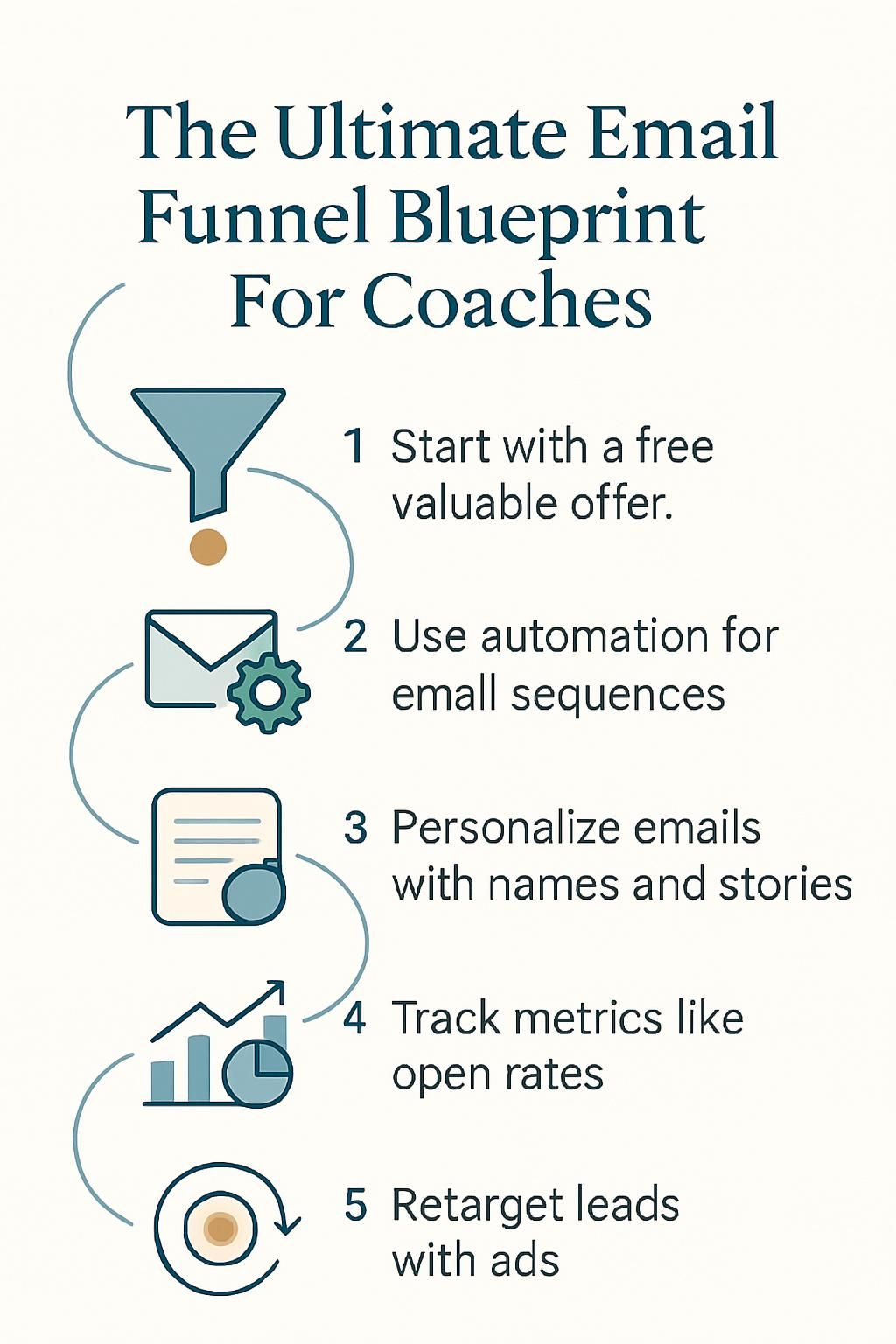
What is an Email Funnel for Coaches?
An email funnel helps you guide clients step by step. It turns strangers into loyal clients for your coaching business. Each email is part of a journey, starting with interest and ending with action.
You use it to share value, solve problems, and build trust.
At its core, the funnel is a system. You collect email addresses with a free offer, such as a guide or checklist. Then, you send a series of emails. These emails educate, inspire, and nudge leads toward booking your services.
Think of it as leading a conversation that deepens over time.
A strong email funnel lets you connect with clients in a personal, meaningful way.
Key Elements of a Successful Email Funnel
A strong email funnel helps you turn leads into paying clients. Focus on crafting each part carefully to guide them through the process.
Lead magnet creation
Offer something valuable that solves a problem for your audience. A free eBook, workbook, checklist, or video training works well as lead magnets.
Make sure it’s easy to access and directly connects to their needs. For example, if you’re a life coach, offer a guide like “10 Steps to Break Bad Habits.” This creates trust and makes people want more from you.
Opt-in forms and landing pages
Opt-in forms grab attention and collect emails. They should be simple, clear, and show the value of signing up. Add a strong headline, short text, and an easy-to-spot button. Use this to quickly grow your list for email marketing.
Landing pages help focus your audience on one action. Keep the design clean with just one call-to-action. Highlight your lead magnet or offer with clear benefits. Avoid clutter, so visitors don’t get distracted or confused.
Automated email sequences
Each opt-in form should connect to an automated sequence. These emails go out based on triggers, like when someone signs up or downloads your lead magnet.
Automated sequences save time and follow up with leads faster. Start with a welcome email, then share valuable tips or resources over time. Guide them step-by-step through the sales process, ending with a clear offer for your coaching services or programs.
Clear call-to-action (CTA)
Make your CTA simple and direct. Use action verbs like “Download,” “Sign up,” or “Start now” to guide readers. Place it where it’s easy to see, like at the end of an email or on a button.
Focus on one goal per email. Avoid crowding with too many requests. For example, ask readers to book a free call or access your lead magnet. Proper CTAs can boost conversion rates and move clients through the sales process.
Steps to Build the Ultimate Email Funnel for Coaches
Building an email funnel starts with knowing your audience and their struggles. Then, create a plan that guides them step-by-step to your offer.
Step 1: Define your ideal client and their pain points
Focus on who needs your coaching services most. Think about their goals, struggles, and daily challenges. Are they trying to grow a business, improve health, or navigate life changes? Knowing this helps you speak directly to them.
List their main pain points. Maybe they lack time, feel stuck in their careers, or want better habits. Address these problems in simple terms throughout your email funnel for stronger connections and higher engagement.
Step 2: Create a high-value lead magnet
Offer something helpful and free to attract leads. Create a guide, checklist, or short video that solves a key problem for your ideal client.
Keep it simple but useful. For example, if you’re a wellness coach, share “5 Easy Steps to Boost Energy Today.” Use this lead magnet to show value and build trust quickly.
Step 3: Set up an engaging opt-in page or form
Create a simple form or landing page. Use clear headlines to explain the value of your lead magnet. Add a short description to show how it solves a problem. Include a strong call-to-action button, like “Get My Free Guide” or “Sign Up Now.”.
Keep the design easy to follow. Use bright and eye-catching colors for buttons. Ask only for essential details, like a name and email. Simplicity helps get more sign-ups.
Now, focus on crafting an email sequence that builds trust.
Step 4: Develop a nurturing email sequence
Your opt-in form gathers leads, now guide them effectively. Start with a welcome email. Share who you are, what you do, and how you help. Keep the tone warm and friendly.
Follow up with 3-5 value-packed emails. Focus on their challenges and offer simple solutions. Use stories or examples to build trust. Add a clear call-to-action in every email, like booking a session or downloading a guide.
Space the emails a day or two apart to keep them engaged.
Step 5: Include a compelling offer in your emails
Make the offer clear and hard to ignore. Use action words to show how your coaching services solve problems or improve lives. Highlight benefits, not just features.
Add urgency or exclusivity. Limited-time discounts or bonuses can push clients to act faster. Use simple language to explain how they can grab the deal now.
Step 6: Schedule follow-ups to build relationships
Follow-ups help build trust and keep clients engaged. Schedule them regularly to show you care about their progress. Use email reminders or simple check-ins to maintain the connection.
Personalize each follow-up based on their needs. Offer value, like helpful tips or answers to questions, rather than pushing sales. This creates loyalty and keeps your email funnel strong.
Now focus on optimizing your emails for better results!
Best Practices for Email Funnel Optimization
Focus on making your emails personal and easy to understand. Use engaging stories and test what works best in subject lines and actions.
Personalize your emails for better engagement
Use the client’s name in your emails. Mention their goals or struggles that align with your coaching services. This shows you understand their needs and makes them feel valued.
Tailor content based on their interests or actions, like what they clicked on before. For example, if they downloaded a guide about fitness, focus future messages on health tips or resources.
Personal touches build trust and increase engagement rates.
Use storytelling to connect emotionally

Stories make emails personal and relatable. Share a client’s success story or a challenge they overcame with your coaching services. This builds trust and shows real results, helping your audience imagine their own journey.
Keep the story short but impactful. Highlight the problem, the action you took, and the outcome. This approach triggers emotions, making your email memorable and encouraging conversions in your email marketing strategy.
Segment your email list based on client needs
Divide your email list into smaller groups. Base these groups on client interests, goals, or challenges. A fitness coach might group clients by weight loss or muscle building. A business coach could focus on startups or scaling businesses.
Personalize your emails for each group. Use their problems and goals to craft your message. This boosts engagement and builds trust. Customized messages often lead to higher conversions and satisfied clients.
Test and refine subject lines and CTAs
Write clear subject lines. They should grab attention and match the email’s purpose. Use action words that drive curiosity or urgency, like “Don’t Miss Out” or “Boost Your Results Today.” Test different lengths to see what your audience opens more.
Your CTAs need focus too. Keep them short, direct, and specific, like “Get My Free Guide” or “Schedule Your Call Now.” Experiment with button colors and placement to find what converts best.
Use email tools to track results and adjust for better outcomes.
Examples of Effective Email Funnels for Coaches
A good email funnel can grow your coaching business fast. It keeps clients engaged and guides them to take action.
Health and wellness coaching funnel
Health and wellness coaches can use email funnels to guide clients toward better habits. Start by offering a free guide, meal plan, or workout tips as a lead magnet. This grabs attention and gets clients to sign up.
Use automated emails to share success stories, simple health tips, or encouragement. Add clear CTAs for booking free consultations or joining a program. This process builds trust and helps turn leads into paying clients.
Business and career coaching funnel
Business and career coaching funnels focus on helping professionals grow. These funnels attract clients seeking better jobs, leadership skills, or business success.
Offer a free guide like “10 Steps to Build a Profitable Business.” Use opt-in forms with strong CTAs like “Start Your Career Growth Today.” Send emails that share tips about productivity and decision-making.
End with an offer for one-on-one coaching programs or workshops.
High-ticket coaching funnel strategies
Focus on creating trust at every stage. Begin with a powerful lead magnet that solves a specific problem for your ideal client. Use opt-in forms or landing pages to collect their email.
Make the page simple, clear, and focused on benefits. Your goal is to grab attention and build interest quickly.
Follow up with personalized email sequences. Share valuable tips, success stories, or case studies to show your expertise. End each email with a clear call-to-action, like booking a free strategy session.
Offer limited-time deals to create urgency. Keep the process smooth and professional as you move to the next steps of your email funnel plan.
Frequently Made Email Funnel Mistakes and How to Avoid Them

Small errors can ruin your email funnel’s success. Fix common problems early to keep clients interested and boost conversions.
Lack of clarity in the offer
Confusing offers hurt your conversions. If your audience doesn’t understand your coaching services or the benefits, they won’t act. Avoid vague language like “improve your life” or “achieve success.” Be specific about what they’ll gain, like “lose 10 pounds in 30 days” or “land a new job in 60 days.”.
Use clear call-to-actions too. Tell them exactly what to do, such as “Sign up now for a free consultation” or “Download your guide today.” Clarity builds trust and prompts action.
Overloading emails with information
Too much information in one email confuses readers. It makes your message feel cluttered and hard to follow. Keep your emails short and direct. Focus on one clear goal or idea per email.
Giving too much detail can overwhelm your audience. Break complex topics into smaller, easy-to-read emails. This keeps readers interested and improves your email marketing strategy.
Ignoring email analytics and feedback
Ignoring email analytics hurts your email marketing. Metrics like open rates, click rates, and bounce rates show what works and what needs fixing. Without checking these, you miss chances to improve conversion strategies.
Feedback from clients is gold. It tells you if your coaching services meet their needs or fall short. Use this input to adjust your email funnel, improve client acquisition, and boost engagement.
Tools to Create and Manage Your Email Funnel
Use platforms that simplify email campaigns and track progress—explore these tools to boost your coaching business.
Email marketing platforms
Choose email marketing platforms that fit your coaching business. Popular options include Mailchimp, ConvertKit, and ActiveCampaign. These tools help you send automated emails, manage lists, and track results easily.
Look for features like segmentation to group clients by needs. Many platforms also offer templates to save time on design. Pick a tool that supports your funnel goals without costing too much.
Analytics tools for tracking performance
Use analytics tools to measure how well your funnel performs. Tools like Google Analytics and email platform dashboards can track open rates, click-through rates, and conversions. These numbers show what works and what needs fixing.
Track customer behavior with heatmaps or link tracking tools. See where people click most in your emails or landing pages. This helps you tweak designs for better results.
CRM software for client management
CRM software helps you organize client details. It stores contacts, tracks progress, and manages communication. With it, you can keep notes on client goals and update their profiles easily.
This makes client acquisition and retention more seamless.
You can also automate tasks like follow-ups or reminders. This saves time and avoids missed opportunities. Many CRM tools also track sales processes and client engagement, giving you clear data for funnel optimization.
How to Scale Your Email Funnel for Maximum Impact

Scaling your email funnel can grow your coaching business fast. Use smart tools to simplify processes and reach more clients easily.
Automate lead nurturing processes
Set up automated email sequences to save time. Use tools like Mailchimp or ActiveCampaign for this. These platforms send emails based on triggers, like signing up or clicking a link.
Automation keeps leads engaged with less effort.
Craft personalized messages for each step of the customer journey. Include helpful content and clear CTAs in your emails. Stay consistent but avoid overwhelming your audience. Next, explore upselling and cross-selling opportunities to boost revenue.
Leverage upsells and cross-sells
Automation frees up time for you to focus on increasing sales. Add upsells and cross-sells in your emails to boost revenue. Offer related coaching services or higher-tier packages within the customer journey.
Show clients how an upgrade meets their needs. For example, offer one-on-one sessions after group coaching programs. Suggest complementary tools or resources that align with their goals, like workbooks or digital courses.
Keep offers clear and valuable to drive conversions easily.
Expand your audience with retargeting ads
Retargeting ads help you reach people who showed interest in your coaching services but did not take action. These ads remind them of your offer, boosting chances of conversion. Platforms like Facebook and Google let you track visitor activity and serve targeted ads based on their behavior.
Use eye-catching content in your ads to draw attention. Highlight benefits and include a clear call-to-action. Offer something valuable, like a free guide or webinar, to re-engage them.
Retargeting increases visibility and keeps your business in front of potential clients.
Conclusion
An email funnel can change your coaching business. It helps you find clients, build trust, and boost sales. Focus on clear steps, like crafting a lead magnet, and use tools to automate the process.
Fine-tune your strategy, connect with your audience, and watch your business grow. Start today, and see the results!