Building Authority With Free Trainings And Lead Funnels

You want to stand out online, but it feels hard to get people to notice your brand. Studies show free trainings and lead funnels can boost lead generation and build trust with your target audience.
In this post, you will learn how to use content marketing tools like landing pages, email campaigns, and simple digital marketing strategy steps. Keep reading if you want a real edge in digital marketing.
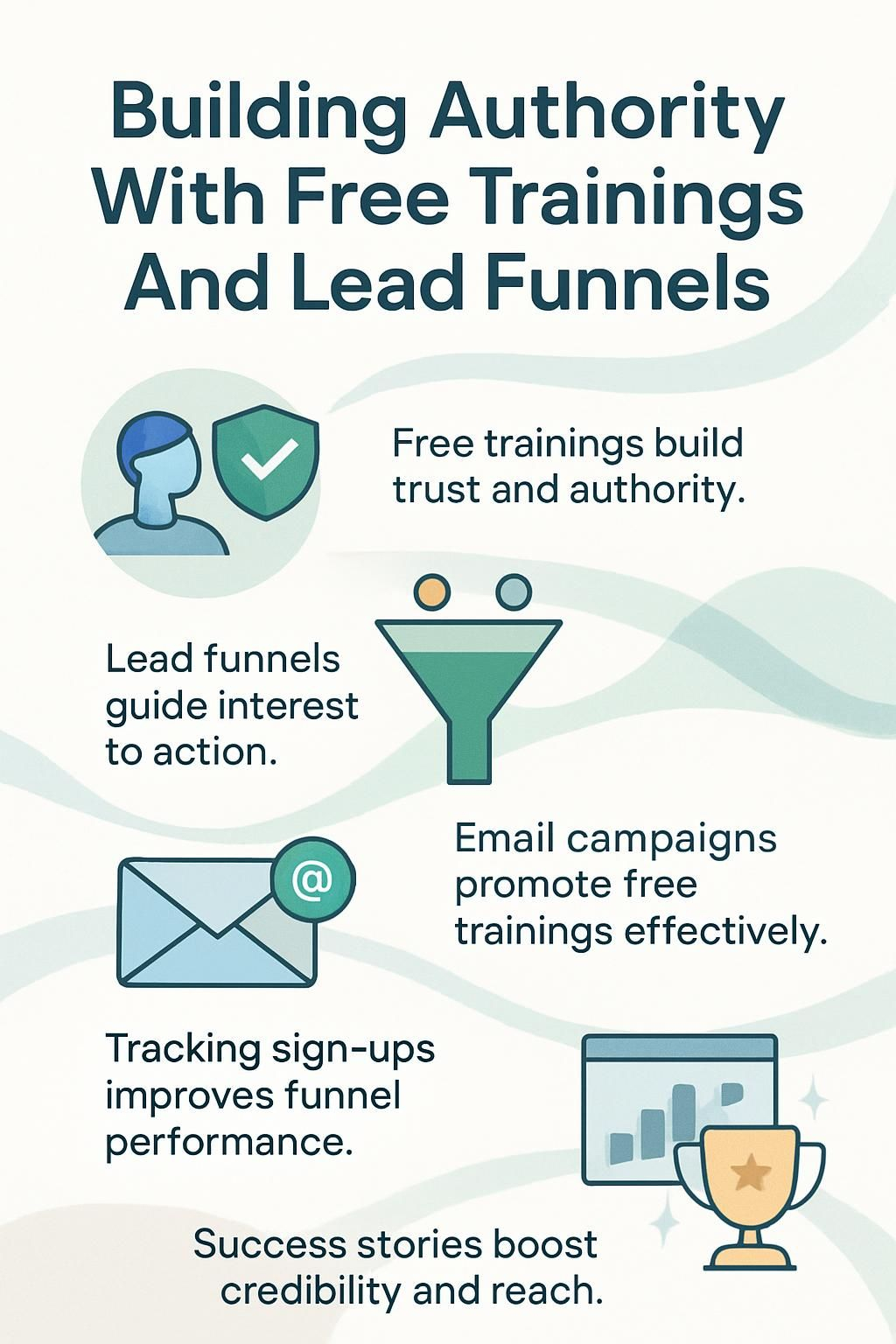
Understanding the Importance of Authority in Your Niche
To stand out in digital marketing, you need to build authority in your niche. People listen, share, and buy from those they see as leaders. If you offer free trainings or a strong lead magnet, your audience will pay attention.
High-quality content marketing sets you apart from others who just sell products or services. Tools like systeme.io and WordPress help you set up smart marketing funnels. These make your sales funnel smooth and build trust at every step.
Your authority grows every time people find answers or value in your online courses, case studies, and email campaigns. A strong presence on social media or good web development also plays a big part.
Big brands use strategies like a/b testing or dashboards to understand what works best. The more you help your target audience, the more they see you as an expert. This makes lead generation and conversion easier.
Customers start to see your business as the best choice in a crowded market.
Creating Effective Free Trainings
Creating effective free trainings is a smart move. It builds your authority and helps with lead generation. Here’s how you do it.
- Know your audience. Understand their needs, worries, and what they want to learn. This makes your content valuable.
- Choose the right topic. Pick something that shows off your expertise but is also interesting to your target audience.
- Use a clear structure. Start with basics and move to advanced topics. This makes learning easy.
- Include examples and case studies. Real-life stories make ideas stick.
- Make it interactive. Add quizzes and exercises so people can practice what they learn.
- Use simple tools for creation and delivery, like Systeme.io or similar platforms, for hosting your courses or trainings.
- Promote through email campaigns. Email lets you reach people directly in their inbox.
- Keep it short and engaging, so people can learn something useful quickly without getting bored.
- Ask for feedback at the end of your training to see how you can improve next time.
Next, let’s talk about setting up lead funnels to capture interest from your trainings.https://www.youtube.com/watch?v=SWgCnXydWSw
Setting Up Lead Funnels
After you create effective free trainings, it’s time to set up lead funnels. A lead funnel helps guide your audience from interest to action. This process is essential for lead generation.
Start by defining your target audience. Understand what they want and need. Create a landing page that offers value, like a free course or an engaging PDF. This acts as a strong lead magnet.
Use marketing automation tools like systeme.io to simplify sign-ups and emails.
Next, nurture leads with email campaigns and drip campaigns customized to their interests. Send helpful content that relates back to the training you offered; this builds confidence over time.
Keep track of how people move through the conversion funnel, so you can improve your strategies along the way.
Promoting Your Free Trainings
Promoting your free trainings is key to attracting your target audience. It helps grow your email list and boosts lead generation.
- Use social media platforms to share your training. Post engaging content that highlights the benefits of joining. Add links to sign up easily.
- Create eye-catching graphics for ads. Graphic design can attract more people to your free training. Use tools like Canva or Adobe Spark for quick designs.
- Write blog posts related to your training topic. This helps with content marketing and increases awareness of your offerings. Use keywords to improve search engine visibility.
- Send out email campaigns to subscribers about your free trainings. Craft clear messages that explain what attendees will learn, using personalization for better engagement.
- Collaborate with influencers in your niche. They can help promote your training through their channels, reaching a wider audience and improving trust in your brand.
- Consider using paid advertising on platforms like Facebook or Google Ads. Target specific demographics that match your ideal customers, ensuring you reach the right people.
- Leverage video marketing by creating short clips about the training course content. Share these videos on platforms like YouTube or TikTok, where many potential learners spend time.
- Utilize online communities and forums relevant to your niche. Share helpful tips and insights, then mention your free training as a resource without being overly promotional.
- Offer limited-time access to create urgency around signing up for the training sessions; this can encourage quicker decisions from potential participants.
- Collect testimonials from past attendees to showcase success stories in case studies; this builds credibility for future promotions and draws in new learners eager for results.
Measuring Success and Adjusting Strategies

You must measure how well your free trainings work. This helps you see what is working and what needs change.
- Track your engagement metrics, such as clicks and sign-ups. Use tools like email marketing software to gather this data easily.
- Analyze conversion rates from your sales funnel. Understand how many leads turn into customers.
- Gather feedback from participants through surveys or comments. Their insights can help you improve future trainings.
- Compare results against your goals regularly, like monthly or quarterly checks. This keeps you on track with your digital marketing strategy.
- Adjust your content based on performance data, refining topics or formats that resonate best with your target audience.
- Experiment with different lead magnets to see which ones attract more interest and boost lead generation efforts.
- Use case studies to show the real-life impact of your trainings, enhancing credibility and trust among potential customers.
- Keep a close eye on social media metrics as well; they can reveal how well your promotions are reaching people.
- Stay flexible and willing to change strategies as needed; the digital landscape shifts constantly, so adapt accordingly.
- Set up regular review meetings to discuss findings with your team for fresh ideas and perspectives moving forward into the next phase of creating effective free trainings and lead funnels.
Conclusion
Building authority takes time and effort. Free trainings are a great way to share your knowledge. These sessions attract your target audience and help them trust you. Lead funnels guide them smoothly from interest to action, like signing up for your courses or joining your email list.
Use tools like software for marketing automation, CRM systems, and online platforms to track success. Watch the results; adjust as needed to keep growing your influence in digital marketing!