10 Email Mistakes That Are Costing You Sales

Your email marketing might not be getting the sales you want, and poor open rates could be to blame. Studies show that weak subject lines or bad mobile optimization can cause emails to end up in the spam folder or ignored inboxes.
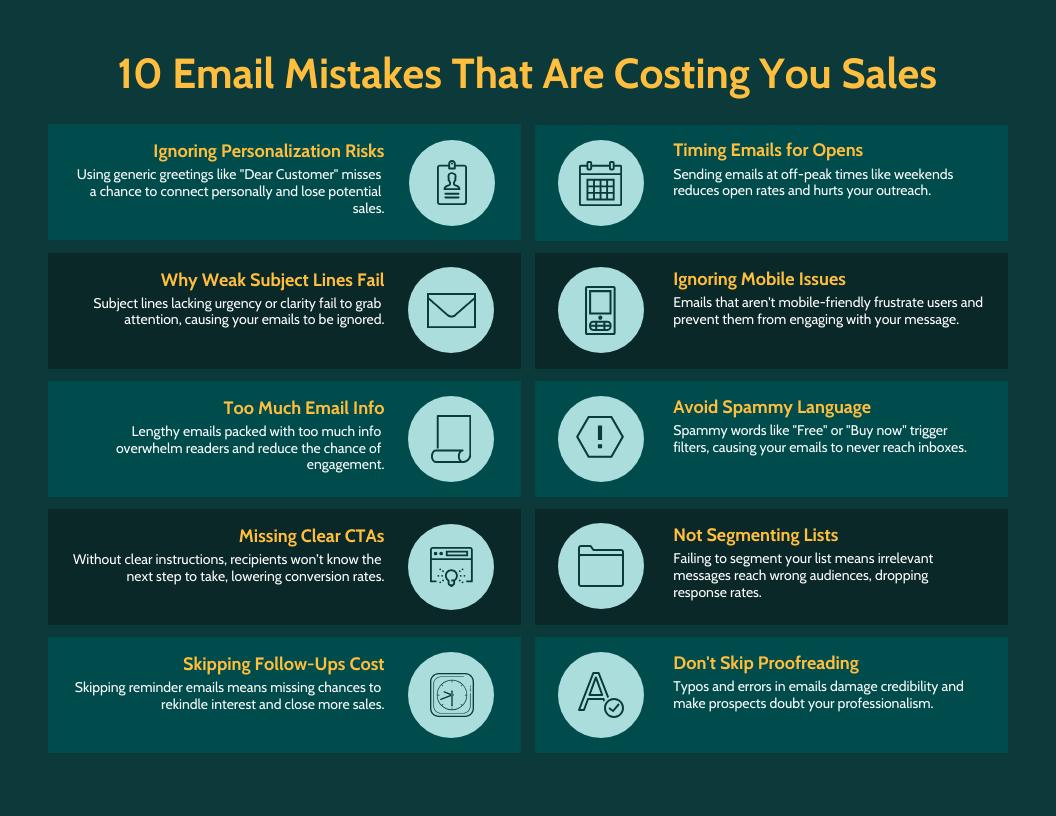
This post will highlight 10 common email mistakes like missing calls to action and lack of personalization, so you can fix them fast. Read on for tips that boost your click-through rates and help turn your emails into more sales.
Weak Subject Lines
Weak subject lines make your email campaigns easy to miss—open rates drop fast if you don’t grab attention right away. Use details from your CRM and audience data to craft clear, personal subject lines that boost click-throughs.
Generic and uninspired subject lines
Subject lines like “Newsletter Update” or “Monthly News” do little to grab attention. Many recipients will skip these emails, causing your open rates to drop fast. Uninspired subject lines make your email campaigns blend into the inbox clutter, hurting sales and customer engagement.
Personalized and creative subject lines boost email marketing results. Adding a recipient’s name or using details from CRM tools can help increase click-through rates by up to 26 percent, according to HubSpot in 2023.
Using words that match your target audience’s interests keeps emails out of the spam filter too. Effective subject lines connect with VIP customers and get more responses, which helps improve conversion rates for retailers and online stores alike.
Lack of personalization or relevance
Sending the same email to everyone can hurt your sales. This mistake often happens when marketers use generic messages. Without personalization, people feel less connected to your content.
They may ignore your emails altogether.
To boost engagement, you should focus on relevant topics for each group of customers. Segmenting your audience based on their interests or past behavior helps you craft specific messages that reach them better.
Targeted content can lead to higher open rates and better click-through rates (CTR). Make sure every message speaks directly to who they are; this is key for effective email marketing campaigns.
Ignoring Personalization and Segmentation
Ignoring personalization and segmentation can hurt your email sales. When you send the same message to everyone, it feels less special. Use tools like CRM systems to segment your audience by their interests or past behavior.
This way, you make emails that grab attention and drive engagement….
Sending generic emails to all recipients
Generic emails do not connect with your audience. They often feel bland and forgettable. Without a personal touch, many people ignore them. This absence of personalization can hurt your email campaigns.
You may lose potential sales and customer loyalty.
Segmenting your list can boost engagement. By sending individualized messages, you show that you understand your recipients’ needs. This method helps create stronger relationships with VIP customers in your target audience.
Personalized emails can lead to better open rates and higher click-through rates (CTR). In brief, customization is key to effective email marketing strategies.
Failing to segment based on audience behavior or interests
Sending the same email to everyone is a big mistake. It can make your messages feel bland and uninteresting. This lack of connection leads to low engagement rates. You miss chances for targeted marketing, which could help keep customers loyal.
When you fail to segment your audience, you overlook their specific needs and interests. Your emails may not resonate with them at all. By not personalizing content based on behaviors or likes, you’re missing out on key sales opportunities.
Better segmentation means better results in click-through rates and conversion rates in your email campaigns. Focus on what makes each group unique to boost customer satisfaction and loyalty!
Overloading Emails with Information
Emails can get crowded with too much info. Long and messy messages confuse readers and make them lose interest fast. Use bullet points or visuals to highlight key ideas. Clear, simple emails keep your audience engaged and help boost response rates.
Writing lengthy, unstructured emails
Long, messy emails can turn off your readers. They may feel overwhelmed and lose interest quickly. Keep your messages short and clear. Break up the text into small paragraphs. Use bullet points to highlight key ideas.
This makes it easy for your audience to grasp important information.
Highlight just 2-3 main benefits in each email. Avoid cramming too much content into one message; this can decrease your click-through rates (CTR) and response rates as people skim through long texts.
A well-organized email keeps readers engaged and focused on taking action, like clicking a link or making a purchase!
Failing to highlight key points with bullet points or visuals
Emails full of dense information can overwhelm your readers. This may lead to losing their interest. You should make emails easy to read. Use bullet points and visuals to highlight key points.
They help break up text and keep readers engaged.
Focus on 2-3 main benefits in each email; this improves clarity and retention. A clear layout makes it easier for your audience to understand your message. This practice boosts engagement rates and helps in guiding the reader toward action, like clicking a link or signing up for a service.
Weak or Missing Calls-to-Action (CTAs)
Weak or missing calls-to-action (CTAs) hurt your email marketing efforts. Without a clear action, readers get lost and may not respond. Make sure to guide them on what to do next, like clicking a link or signing up.
Multiple CTAs can confuse the reader too; keep it simple. Focus on one strong message that drives engagement and boosts your conversion rates!
No clear action for the recipient to take
A clear call-to-action (CTA) is essential. Your emails need one strong action for the reader to take. Without this, recipients may feel uncertain. They might not know what to do next.
This can affect your click-through rates (CTR) and conversion rates.
Many emails lack a defined CTA, which leads to inaction. Readers may overlook important messages or disregard them entirely. A well-placed CTA directs them to a specific goal, enhancing engagement and sales opportunities.
Make sure each email informs your audience what you want them to do next; it makes all the difference!
Multiple CTAs that confuse the reader
Having multiple calls-to-action (CTAs) in your email can confuse the reader. They may not know which action to take first. This leads to missed opportunities for sales and lower click-through rates.
Instead of giving clear choices, it creates doubt.
Focus on one strong CTA that stands out. Make it clear what you want them to do next: shop now, sign up, or get a free trial. This helps guide your readers and boosts engagement. A single, direct approach often works best in email marketing campaigns.
Ignoring Mobile Optimization
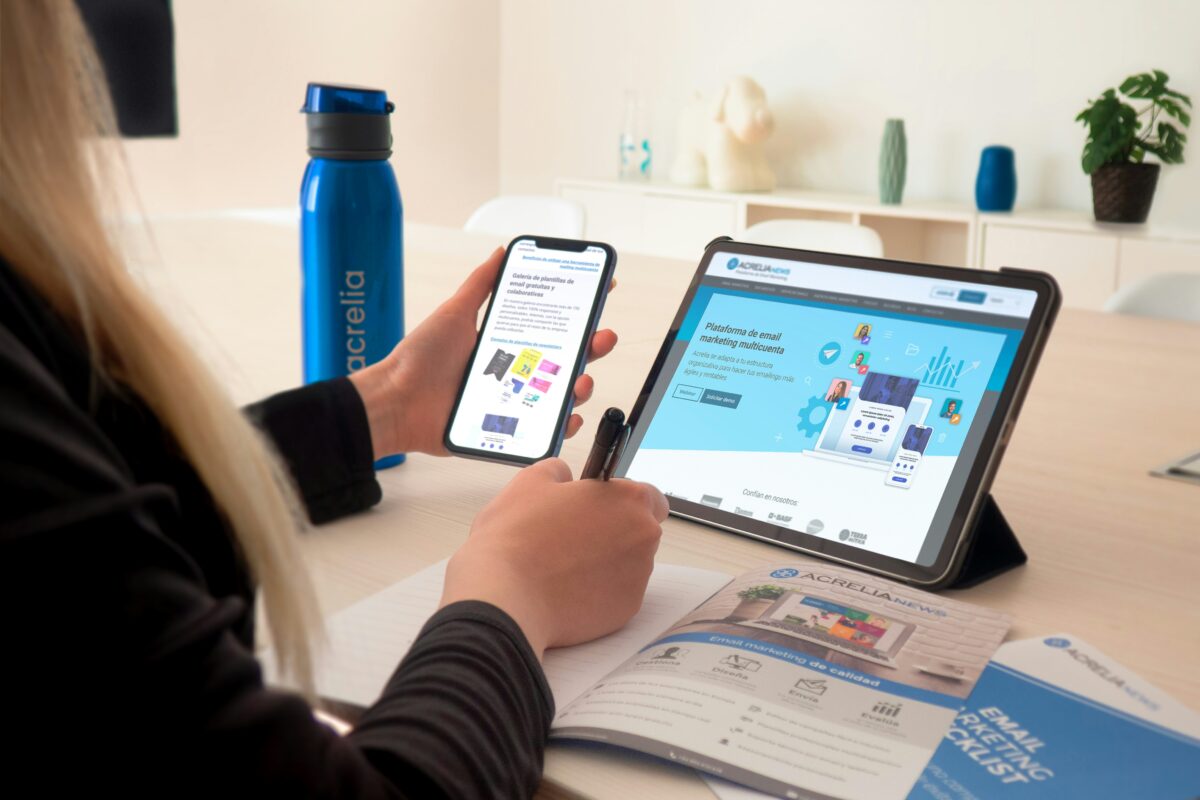
Many people check their emails on smartphones. If your email isn’t easy to read on small screens, you lose potential customers. Make sure your message fits well and looks good everywhere.
Use responsive design for better results in your email campaigns.
Emails that are not mobile-friendly
Emails that are not mobile-friendly can cause problems for your audience. Over 70% of people open emails on their smartphones. If your email looks bad on these devices, many will delete it right away.
Poor formatting makes it hard to read and navigate, which leads to lower engagement rates. This struggle can push potential customers away. Missing out on sales from these users is a serious issue.
Make sure your emails are easy to read and look great on phones. Use responsive design so they adjust well to various screen sizes. Now let’s talk about another common mistake: Lack of Testing Before Sending.
Poor formatting on smaller screens
Poor formatting on smaller screens can frustrate users. This issue hurts engagement and sales. Over 70% of people open emails on their phones. If your email is not mobile-friendly, you may see more deletions from readers using those devices.
Emails should look good on all screen sizes. Responsive design helps with this. Use concise content and clear navigation for a better user experience. Highlight key points with bullet points or visuals to grab attention quickly.
A clean layout keeps the reader focused and engaged, leading to higher click-through rates and conversion rates. Now, let’s move on to personalization in email marketing campaigns.
Lack of Testing Before Sending
Sending emails without testing can hurt your results. You might end up with broken links or awkward formatting. This leads to frustration for your recipients and lower click-through rates.
Always check how your email looks on different devices, like phones and tablets. Use tools like Google Analytics or A/B testing to see what works best before hitting send.
Sending emails with broken links or formatting errors
Broken links and formatting errors can ruin your email marketing efforts. They create a bad impression and hurt your credibility. Emails with such mistakes may result in lost sales and lower conversion rates.
A test send helps you check for these issues before hitting “send.” It ensures that all links work correctly, making it easier for customers to shop.
About 70% of people open emails on mobile devices. If your email is not formatted well, recipients may struggle to read it or click on the links. This confusion can decrease engagement, leading to fewer click-through rates (CTR).
Proper testing leads to cleaner designs and better customer satisfaction; now is the time to ensure your emails shine bright before they go out! Next up, let’s talk about how ignoring effective follow-ups can cost you even more sales.
Overlooking functionality across devices
Your emails need to work well on all devices. Emails that are not mobile-friendly can frustrate users. Over 70% of people open their emails on their phones. If your email is hard to read or navigate, they may delete it without a second thought.
Check how your message looks on different devices before you hit send. Look for broken links or formatting errors. Poor design leads to a bad user experience and lost sales. Effective email marketing depends on reaching your audience wherever they are, whether it’s Gmail or Outlook.
Next up, let’s talk about failing to follow up effectively.
Failing to Follow Up Effectively

Following up is key to keeping your audience engaged. Sending just one email isn’t enough. You need to reach out again with a fresh message that sparks interest. Using a CRM can help track who needs a nudge and when, so no customer slips through the cracks.
Create follow-ups that feel personal—not robotic—and watch your responses grow!
Sending only one email and giving up
Sending just one email and then stopping is a big mistake. Many potential customers need more than one message before they buy. If you give up too soon, you miss out on sales opportunities.
Research shows that early abandonment often happens without follow-up emails.
Using only generic messages can turn off recipients. Instead, create a structured follow-up plan that offers extra value. This keeps their interest alive and builds trust over time.
Focus on making your messages helpful and relevant to each person’s needs or interests in your target audience.
Using generic or repetitive follow-up messages
Generic follow-up messages can hurt your sales. Sending the same message to everyone will likely lead to lost opportunities. People want personal touches, not cookie-cutter emails.
If you use repetitive messages without adding value, recipients may feel overwhelmed and disengaged.
It’s important to provide a clear path for your audience. Generic reminders do not spark interest; they often cause early abandonment. Make sure your content is relevant and specific to each recipient’s needs or interests.
Engaging with customers in a meaningful way increases their loyalty and boosts response rates over time.
Overly Salesy Tone
Using an overly salesy tone can be a big turn-off for your audience. Focus on giving value, not just pushing products or services—this builds trust with your customers.
Focusing too much on selling rather than providing value
Focusing too much on selling can hurt your email campaigns. Emails that push sales are often seen as spammy or aggressive. This tone can turn off your target audience and make them ignore your messages.
Instead of concentrating solely on the sale, you should provide value first. Share insights, tips, or useful information that helps your readers.
Building rapport with recipients is essential for successful email marketing. Value-driven content fosters customer loyalty and makes people more likely to engage with you. Offer solutions to their problems rather than just asking for a purchase.
Striking a balance between sales content and helpful insights keeps readers interested and boosts conversion rates. By doing this, you will keep their attention as you progress in crafting effective emails—next up is the importance of having clear calls-to-action (CTAs).
Overusing urgency or pushy language
Overusing urgency or pushy language can hurt your email marketing. Many people see this as spammy. Too much pressure makes recipients feel uncomfortable, leading to higher unsubscribe rates.
Instead of rushing them, offer real value in your emails. Focus on benefits that matter to your audience.
Emails should build trust, not fear of missing out. Highlight what’s good for the reader without being aggressive. This way, you encourage better engagement and improve click-through rates (CTR).
Keep it friendly and helpful to keep customers loyal and happy with their experience.
Conclusion
You must avoid these email mistakes to boost your sales. Weak subject lines, lack of personalization, and cluttered emails turn readers away. Clear calls-to-action guide your audience toward what to do next.
Mobile-friendly designs keep users engaged on their phones. A little testing goes a long way in catching errors before you hit send. Fixing these issues can lead to better click-through rates and higher customer satisfaction.
Your sales will thank you for it!