Why Most Product Launches Fail (And How To Fix Yours)

You planned a new product launch, but nothing seems to stick. Studies show that over 80% of product launches flop because companies miss key steps like audience targeting and proper market research.
This guide will show you clear ways to fix these common mistakes using simple strategy tips, customer focus, and better preparation. Keep reading if you want your next launch to be a hit instead of a headache.
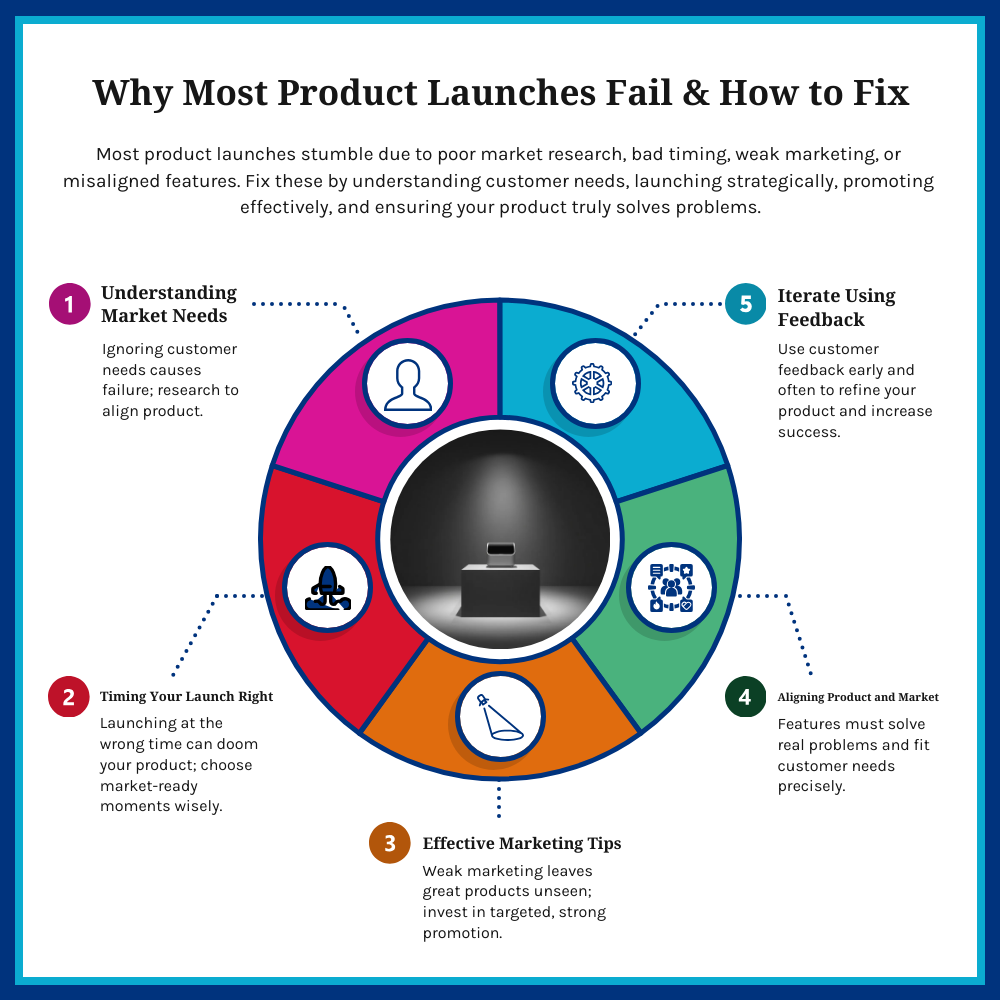
Common Reasons Product Launches Fail
You think you’ve got a great product, but the launch flops—sound familiar? Many teams miss their shot by skipping key steps like market research or goal setting, which leaves their whole plan wobbling.
Lack of clear goals and strategy
Teams often jump into a product launch with lots of excitement, but little clarity. Without clear goals and a strong market strategy, even the best ideas can flop. You might develop features no one needs or spend money in all the wrong places.
Confusion spreads fast if you don’t set targets that everyone understands, like hitting 1,000 sales in three months or getting feedback from 100 customers. Fail to map out steps for customer engagement and your team may pull in different directions.
Steve Blank says it best:
“No business plan survives first contact with customers.”
Goals should be measurable and simple, such as boosting audience targeting by 20% before launch day. If nobody knows how success will look or which metrics matter most, progress stops cold.
Teams then struggle to find their product market fit or show value to investors and buyers alike. You risk losing time, energy, and trust—before your idea even leaves the ground.
Poor understanding of the target audience
Knowing your target audience is key for a successful product launch. If you don’t understand their needs and preferences, it can lead to big problems. A study showed that 70% of failed products came from not knowing customer expectations.
This gap often leads to wasted time and money on marketing strategies that miss the mark.
To better connect with your audience, do some research. Talk to potential customers; listen to what they want and need. Use surveys or social media polls to gather insights about their behavior.
A strong market strategy focuses on customers’ desires and pain points; this helps create a product that truly resonates with them. Understanding consumer behavior is essential for aligning your goals with what the market demands.
Insufficient product differentiation
Insufficient product differentiation can sink your launch. If your product looks like everyone else’s, why would customers choose it? You must stand out in a crowded market. Think about what makes your offering special.
Highlight unique features that meet customer needs.
Understand your competition well. Conduct competitive analysis to see where you fit in the landscape. Is there a gap that you can fill? Use this insight to craft a compelling value proposition.
Focus on what adds real value for customers; make them feel they just can’t skip over your product! Tailor your marketing strategy around these points and watch engagement grow!
Failure to align sales and marketing teams

Insufficient product differentiation can lead to confusion in your market. If sales and marketing teams are not on the same page, it only adds to the problem. Sales need to know what marketing is promoting, and vice versa.
Both teams must share information about your target audience. They should understand customer behavior together. When there’s a gap between them, messages get mixed up or lost. This hurts your launch strategy and can cost you customers.
Aligning these teams fosters clear messaging and improves performance across both fronts.
Rushing to market without proper testing
Rushing to market can lead to disaster. Many companies skip testing their products. They want quick sales and fast profits. This often results in a product that fails to meet customer needs.
Proper testing helps you spot issues early on. It can show if your product really fits the market or not. Gathering feedback from real users gives you insights that no plan can predict.
Take your time with testing; it could save you from major losses down the road. Understanding how your audience reacts before launch is key for success in any competitive space, especially when aligning marketing and sales strategies effectively makes all the difference.
How to Fix a Failing Product Launch
To fix a failing product launch, start by setting clear and measurable goals. Knowing what you want to achieve helps in crafting the right plan. Next, dive deep into market research.
Understand your customers’ needs and desires; that’s where real value lies. Testing is key too! Make sure your product works well before it hits the shelves.
Don’t forget about alignment between sales and marketing teams. When they work together smoothly, success is more likely. Always keep an eye on how things are going after launch.
Adapt quickly if something isn’t working as planned; flexibility can turn around setbacks into victories!
Define measurable goals and objectives
Setting clear goals and objectives is key to a strong product launch. This step helps keep your focus sharp and your team aligned.
- Start with the end in mind. Ask yourself what success looks like for this launch. Define specific metrics, such as sales numbers or user engagement rates.
- Make sure your goals are achievable. Setting too high a bar can lead to frustration and confusion among your team.
- Use the SMART criteria for your goals: Specific, Measurable, Achievable, Relevant, and Time-bound. This framework ensures clarity and focus.
- Break down each goal into smaller tasks. Assign these tasks to team members to create accountability.
- Regularly review progress toward your goals. Hold meetings where you check if everyone is on track and make adjustments as needed.
- Celebrate small wins along the way! Recognizing achievements boosts morale and keeps everyone motivated during the product launch journey.
- Document everything! Keeping notes on what worked and what didn’t can guide future launches and prevent past mistakes from repeating.
Setting clear, measurable goals can help align your marketing strategy with customer needs while maintaining focus on performance throughout the process of launching your product successfully!
Conduct thorough market research
Market research is crucial for a successful product launch. It helps you understand your customers better and find your place in the market. Here are key steps to conduct effective market research:
- Identify your target audience. Know who will buy your product. This includes age, location, interests, and buying habits.
- Analyze competitors. Look at other brands in your industry. See what they offer and how they market their products.
- Use surveys and questionnaires. Ask potential customers about their needs and preferences. This direct feedback can guide your decisions.
- Examine social media trends. Check platforms where your audience spends time, like Instagram or Twitter, to see what they talk about and share.
- Review industry reports and studies. These documents provide insights into market trends and consumer behavior.
- Test the waters with prototypes or beta versions of your product. Gather reactions before a full launch to identify areas for improvement.
- Organize focus groups for in-depth discussions with potential users about their thoughts on the product concept.
- Monitor online reviews related to similar products to learn from both positive and negative experiences of consumers.
- Keep an eye on emerging technologies and trends that may impact customer needs or behaviors in the future.
- Make adjustments based on findings from your research to ensure strong customer engagement and effective marketing alignment before launching your product.
Focus on customer needs and value

Focusing on customer needs and value is key for a successful product launch. Understanding what your customers want helps you create the right product.
- Identify customer pain points. Talk to real people, and ask what problems they face. This gives you insight into their lives.
- Create a value proposition. Explain how your product solves their issues. Make it clear why they should choose your product over others.
- Use feedback to improve your product. Gather opinions from testers, and listen closely to what they say. They can help make your product better.
- Tailor features to meet demands. Design features based on what customers really want, not just what you think is cool.
- Engage with customers regularly. Use social media and surveys to keep in touch with them about their needs.
- Keep an eye on competitors’ offerings. See how other products perform in the market, then adjust yours as needed.
- Stay flexible during development phases. Be ready to change course if new insights arise or trends shift.
- Provide excellent customer service after the launch, addressing any concerns promptly can help maintain loyalty and trust.
Focusing on these aspects leads to a better connection with your audience, which boosts success in the long run!
Test extensively before launch
Testing your product before launch is key. It can save you from costly mistakes. Here’s how to do it:
- Create a prototype. This helps you see what works and what doesn’t.
- Conduct focus groups. Gather feedback from real users to find out their thoughts.
- Run beta testing. Invite a small group of customers to use the product early and provide insights.
- Analyze user experience. Watch how people interact with your product to spot issues and improvements.
- Use A/B testing for features. Compare two versions of a feature to see which one performs better.
- Fix bugs and glitches quickly. Addressing problems before launch keeps customers happy.
- Prepare for different devices or platforms, ensuring your product works well everywhere it’s used.
- Test marketing messages too; check if your advertising communicates effectively with your audience.
A solid testing phase establishes the foundation for success in your product launch, aligning it better with customer needs and preferences while enhancing the value proposition you offer them in their journey toward consumer engagement.
Create a cohesive marketing and sales strategy
A strong marketing and sales strategy is key for a successful product launch. It aligns your teams and creates a unified approach.
- Set clear communication lines between marketing and sales. This ensures that both teams share the same goals and messages.
- Identify your target audience together. Understanding who you are selling to helps shape your message.
- Develop a shared value proposition. Both teams should know what makes your product valuable to customers.
- Create joint campaigns that combine efforts from both teams. This leads to greater reach and impact in the market.
- Use data from market research to drive decisions. Sales can provide insights on customer behavior that improve marketing efforts.
- Establish regular meetings for updates and feedback between the two teams. This keeps everyone aligned and aware of changing needs.
- Train both teams on the product details, features, and benefits together. Knowledge empowers employees to communicate effectively with customers.
Building this strategy can help avoid challenges in launching products successfully, paving the way for strong customer engagement and smoother execution of your overall market strategy!
Monitor performance and adapt quickly

After creating a cohesive marketing and sales strategy, you must track how your product is doing. Monitoring performance helps you adjust quickly to any issues. This step is crucial for success.
- Keep an eye on key metrics. Look at sales numbers, customer feedback, and website traffic. These figures show how well your launch is doing.
- Use analytics tools to gather data. Tools like Google Analytics can help you see where customers are coming from and what they like.
- Stay in touch with your target audience. Ask them for feedback through surveys or social media. Their opinions offer valuable insights for improvement.
- Watch the competition closely. See what others are doing in the market. This helps you understand trends and improve your own strategy.
- Be ready to make changes fast. If sales are low, tweak your marketing messages or promotions quickly to boost interest.
- Set regular check-ins with your team to discuss progress. These meetings keep everyone aligned and informed about the latest developments.
- Adjust your goals as needed based on performance data. If a goal seems out of reach, be flexible and change it accordingly.
Monitoring performance while adapting quickly allows you to stay competitive in the marketplace and achieve better results for your product launch!
Conclusion
Launching a product isn’t easy. Many things can go wrong. You need a clear plan and know your audience well. Testing your product before the big day is key, too. Stay flexible and adjust as needed to make it work.
By focusing on these steps, you can increase your chances of success in the market!