The Perfect Webinar Script That Converts Viewers Into Buyers

You want more people to buy after your live webinars, but most scripts do not keep audience engagement high. A perfect webinar script uses a step-by-step structure that guides viewers from the introduction to the final call to action.
In this post, you will learn how to plan and deliver a webinar that builds trust, answers questions, and converts viewers into buyers using proven marketing strategy and strong webinar tools.
Keep reading if you are ready for better results on your next online event.
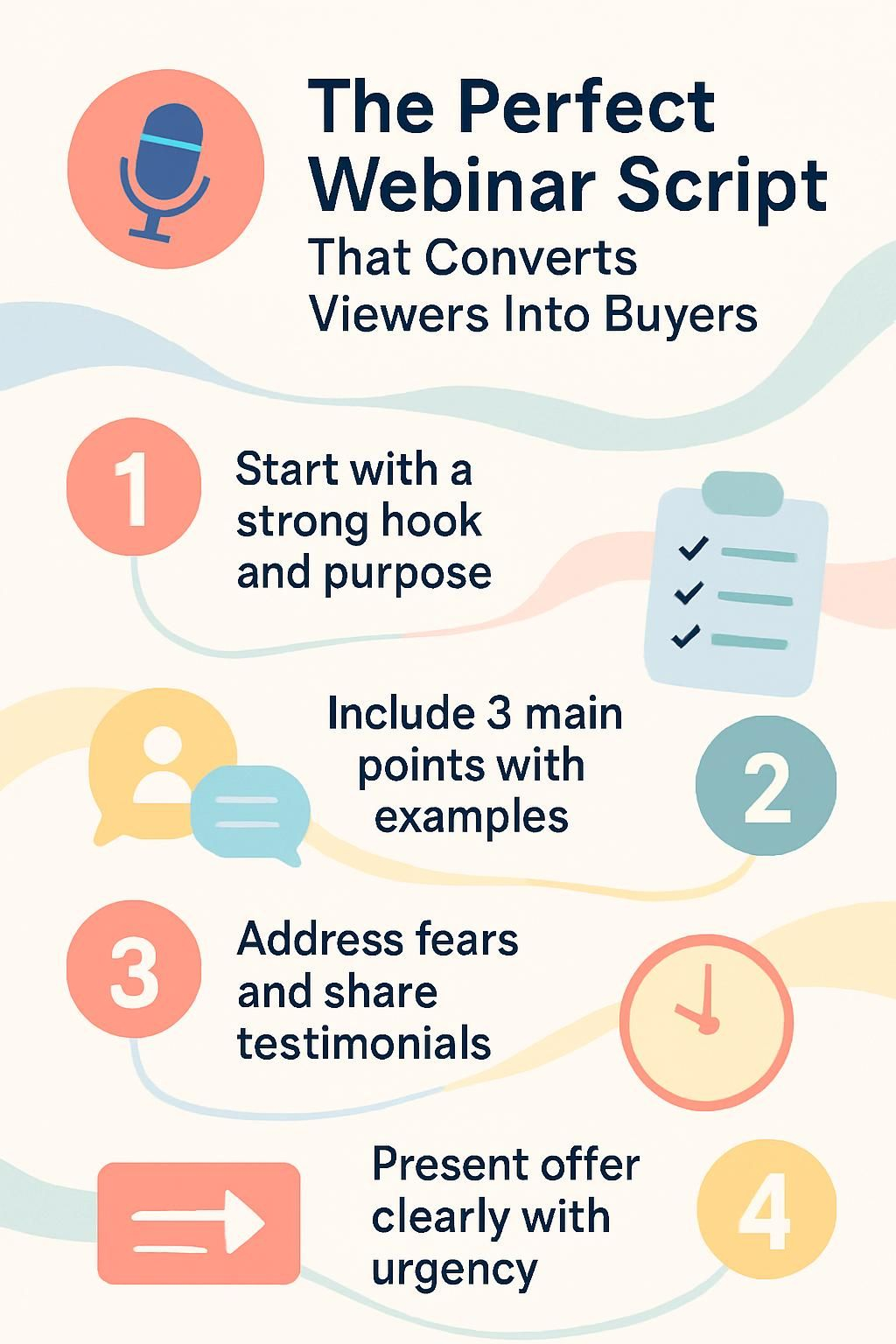
Key Components of the Perfect Webinar Script
You want your webinar script to keep people watching, learning, and ready to take action—this comes from careful planning and smart use of marketing tools like PowerPoints, visual aids, and audience research.
Great speakers on live webinars often mix stories with facts, social proof, and clear calls to action for real results.
Hook and Introduction
A strong webinar script starts with a bold hook. Share a quick story about how Russell Brunson increased customer acquisition by 30% using live webinars. You can also use surprising quantitative data, like “80% of viewers decide to buy in the first ten minutes.” Offer an incentive, such as free access to your best PowerPoint templates for those who stay until the end.
Set clear expectations right away. Tell your target audience what they will learn from this session. For example, promise three tips that boost marketing strategy fast. Briefly mention your own experience and results in social media marketing or running automated webinars for well-known brands.
This way, you show knowledge and build trust.
“Stay until the end for exclusive infographics proven to improve webinar engagement.”
Share credentials early so people know they are learning from someone skilled in strategic planning and webinar tools.
Building Rapport with the Audience
Building rapport with the audience is key to a successful webinar. Start by showing genuine interest in them. Speak directly to their needs and problems. Use simple language and clear examples they can relate to.
This helps create a connection.
Share personal stories or experiences that align with your topic. These stories add warmth and make you more relatable as a presenter. It also creates trust, which is vital for engagement.
Ask questions during the webinar to involve viewers actively; this keeps them alert and interested in what you have to say about customer acquisition and marketing channels. Engage your audience through interactive elements like polls or chats, too!
Establishing Credibility
Establishing credibility is key in your webinar script. Start by introducing yourself clearly. Share your credentials and relevant experience to build trust with the audience. Use stories that show your expertise.
This helps viewers see you as a knowledgeable source.
Mention any awards or achievements, like certifications or successful projects. Connect these points to the topic at hand. Show real-world examples in your education segment. Doing this makes you more relatable and trustworthy, which boosts audience engagement and interest in your offer.
The Educational Segment
The educational segment is where you show real value. Use clear facts and stories to keep your audience interested. Share three main points that matter most to them. This will help them connect with the content and see how it applies to their lives.
Visual aids can also make complex ideas easier to understand. They grab attention and help drive the message home, making your webinar more engaging.
Presenting Actionable Insights
Actionable insights are key in your webinar script. These insights give your audience real steps they can take right away. Use clear and simple advice, like proven tips or strategies that work well.
This helps to show that you have experience and know what you’re talking about.
Focus on three main points for maximum impact. Each point should deliver value and solutions to problems. Sharing relevant stories will keep the audience engaged, too. Those stories make your facts stick in their minds longer, which boosts audience engagement.
Your goal is to turn viewers into buyers by providing them with useful information they can apply immediately in their lives or businesses.
Structuring Content Around Three Main Points
You need to structure your content clearly. Three main points will help keep focus and clarity.
- Organize your key ideas into three main points. This makes it easier for your audience to follow along and understand your message.
- Support each point with stories and data. Relatable examples can enhance audience engagement and show real-life applications.
- Keep each point concise and relevant to the learning outcomes. This ensures the information stays on track, making it easier for viewers to grasp essential insights.
- Create a logical flow between the points. A smooth transition keeps viewers interested and connected throughout the presentation.
- Reinforce key takeaways with summaries during the webinar. Highlighting important messages helps solidify understanding for your audience.
- Address common fears or concerns linked to each point. This builds trust, as viewers see you acknowledge their doubts while providing solutions.
Using this method helps you engage effectively with your target audience, making it more likely they will convert into buyers using strategies found in perfect webinar scripts like those from Russell Brunson’s teaching.
Disclosure: I am an independent ClickFunnels Affiliate, not an employee. I receive referral payments from ClickFunnels. The opinions expressed here are my own and are not official statements of ClickFunnels or its parent company, Etison LLC.
Using Stories and Examples to Engage
Let’s move from structuring content to using stories and examples. Stories help your audience connect with the message. They make your points clear and memorable.
People love stories, especially when they relate to their lives. Use real-life examples that your target audience can understand. A great story or example can create a bond between you and your viewers.
It holds their attention and keeps them engaged throughout the webinar. For instance, sharing personal experiences or success stories gives credibility to your presentation. By doing this, you turn dry facts into something lively and relatable, which is key in an effective marketing strategy like the perfect webinar script.
The Transition to the Pitch
The transition to the pitch is key for a successful webinar. Start by summing up what your audience learned. This helps them see the value you’ve shared. Then, address their worries and doubts.
They might have questions about buying your product or service. Clear answers can ease their minds… This sets the stage for your offer, making it easier for them to say yes! Want tips on crafting that perfect pitch? Keep reading!
Summarizing Key Takeaways
Summarizing key takeaways helps your audience recall what they learned. Highlight the main points you covered in the webinar. This recap sets clear expectations and reinforces the value of your content.
Address fears and hesitations during this part. Share testimonials or success stories to build trust. By summarizing effectively, you ensure viewers feel confident about their next steps, leading them closer to becoming buyers.
Addressing Fears and Hesitations
Fears and hesitations can block your audience from buying. You must address these issues to help them feel at ease. Start by summarizing key takeaways from your presentation. This shows the value they have already gained.
Next, talk about common fears openly. Many people worry about wasting time or money. Acknowledge these concerns to show you understand.
Use proven systems for success to build trust. Highlight testimonials from past buyers who found value in your offer. These stories can calm doubts and inspire action. Offer a step-by-step breakdown of what they will get if they decide to buy now.
This clarity makes it easier for them to choose confidently, boosting customer acquisition through effective webinar engagement strategies.
The Pitch and Close
The pitch is your moment to shine. Present your offer clearly. Add bonuses that excite! Create a sense of urgency with limited-time deals. Don’t forget a strong call to action—it guides them on what to do next.
Want more tips? Keep reading!
Presenting the Offer and Bonuses

You want to make your offer shine. Start by clearly stating what you are selling. Show how it solves a problem for your audience. Make it clear why they need it now.
Add bonuses to sweeten the deal. These could be extra courses, one-on-one calls, or special tools that help them use what they just bought. Create urgency with countdown timers or limited-time offers.
This pushes viewers to act quickly and boosts customer acquisition. Your goal is to provide value and excitement at this stage of the webinar.
Creating Urgency with Limited-Time Deals
Creating urgency with limited-time deals helps boost your webinar sales. Use countdown timers to show time running out on offers. This adds excitement and pushes viewers to act fast.
Limited-time deals make your offer feel special and valuable. They encourage potential buyers to take immediate action, reducing the chance of them forgetting later.
When you highlight scarcity, such as a few spots left or limited products available, it can increase this sense of urgency even more. Using urgent messaging in promotions often leads to higher conversion rates.
It stirs up a fear of missing out among viewers, making them more likely to buy now instead of later. Next comes the pitch and close, where all these elements will shine through your offer.
Including a Clear Call to Action
After you create urgency with limited-time deals, it’s time to include a clear call to action. This step guides your viewers on what to do next. Make sure they understand their options.
You can prompt them to purchase your product or book a demo.
Highlight the call to action near the end of your webinar. Connect it with any incentives you offer, like discounts or bonuses. This connection encourages engagement and leads to higher conversions from viewers into buyers.
Keep in mind that urgency can spark immediate responses, so don’t wait too long!
Final Tips for an Effective Webinar
To make your webinar shine, practice your script. Know it inside and out. This builds confidence and helps you sound natural…
Prepare for Q&A sessions too. Think of common questions that might come up, and have clear answers ready.
Rehearsing Your Script
Rehearsing your script is key to a successful webinar. Practice helps you gain confidence. Go through each part of your presentation. Focus on the hook, rapport-building, and your pitch.
Use visual aids and interactive elements to keep viewers engaged.
Set aside time for practice sessions. You might want to record yourself. Listen for areas that need improvement, like pacing or clarity. Invite friends or family for a mock Q&A session; this will help prepare you for real questions during the live event.
A well-rehearsed script builds trust with your audience and enhances customer acquisition efforts through effective delivery.
Preparing for Q&A Sessions
After rehearsing your script, it’s time to get ready for the Q&A sessions. Engaging with your audience during this part is key.
- Anticipate common questions. Think about what your audience may want to know. Prepare answers for these questions ahead of time.
- Create a list of frequently asked questions. This list should include questions that often come up in webinars and your area of expertise.
- Encourage attendees to ask questions during the webinar. Use interactive elements like polls or chat boxes to get them involved.
- Stay calm and confident when answering questions. If you don’t know an answer, it’s okay to admit it and offer to follow up later.
- Use real examples from your experience when you respond. This will build credibility and connect with your audience on a personal level.
- Repeat or paraphrase questions before answering them. Doing this ensures everyone hears the question clearly and knows what you are addressing.
- Keep answers concise and focused on the problem at hand. Avoid going off-track so that everyone stays engaged during the session.
- Be respectful towards all participants, even if they have challenging questions or concerns for you. Each question is a chance to show your expertise.
- Invite final thoughts before closing the session. Ask if anyone has more questions or comments as you finish up.
- End with a strong call to action related to your pitch, ensuring viewers know what steps they can take next after the Q&A session concludes.
Conclusion
A perfect webinar script can change everything. It helps turn viewers into buyers. Use a strong hook to grab attention right away. Share your expertise and show them what they will learn.
As you present, share stories and examples that resonate with them. Remind the audience of their fears before making your pitch. Then, clearly lay out your offer and create urgency around it.
With these steps, you can build engagement and boost sales effectively!