The Power Of Follow-Up Funnels (and Why Most Businesses Ignore Them)

You spend hours on lead generation but still see slow sales. Studies show most businesses miss out by ignoring their follow-up funnels in the digital marketing process. This post will guide you to improve your customer journey, boost your conversion rates, and create a stronger follow-up strategy using tools like CRM platforms and clear calls to action.
Find out how small changes can turn missed chances into real profit.
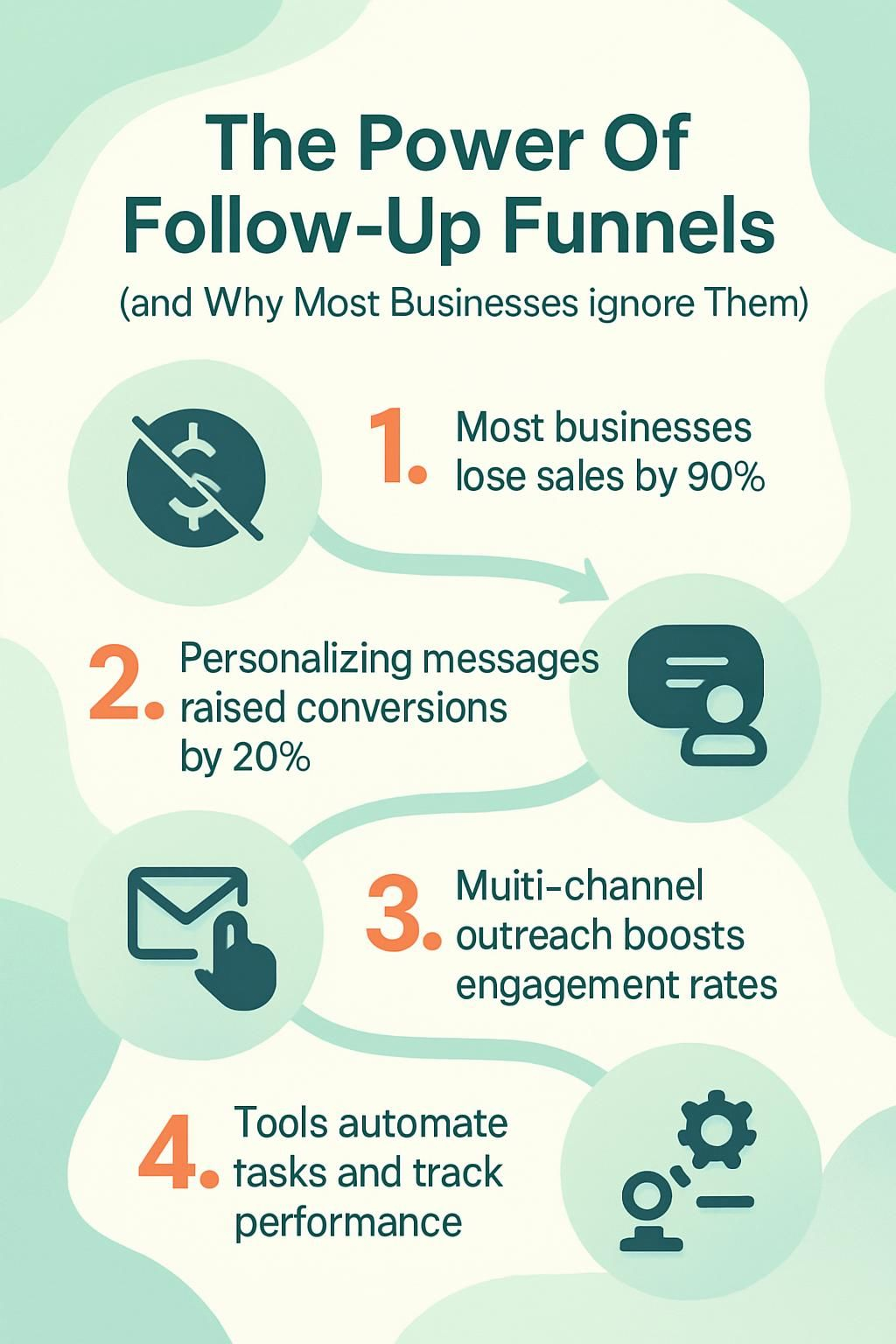
Why Follow-Up Funnels Are Essential for Business Growth
Follow-up funnels keep your leads warm and help you increase sales over time. Using tools like HubSpot or a good CRM platform, you can automate messages to reach people in their inbox at the right moment—boosting both response rates and customer loyalty.
Retaining prospects and nurturing leads
You build trust with your prospects by using a strong follow-up strategy. A simple message in their inbox can help keep your brand top-of-mind as they move through your marketing funnel.
Use tools like HubSpot or simple dashboards to track where each lead stands. This helps you send the right information at the right time, increasing open rates and response rates.
Share case studies or success stories that match each customer segment’s goals. Try using a mix of channels—social media, email, and sometimes even phone calls—to reach them where they are most active.
Sales reps who connect often turn more leads into buyers. Lead nurturing lifts conversion rates and supports long-term customer loyalty; this strengthens your reputation and increases lifetime value for every new client.
Increasing conversion rates
As you retain prospects and nurture leads, focus on increasing conversion rates. This step is vital for your business’s success. A well-crafted follow-up strategy can turn interested leads into paying customers.
Personalization makes a big difference here. Tailoring messages to each lead creates a stronger connection. It shows that you value their needs.
Using data analytics helps track what works best in your sales process. A/B testing allows you to try different messages or timing in your follow-ups. You can easily see what gets the best response rates from potential customers.
Customers who feel valued are more likely to convert and return, boosting customer loyalty too.
Your ability to engage with prospects can shape their buying decision.
Building long-term customer relationships
Building long-term customer relationships is key for your business. Happy customers return and refer others. A strong follow-up strategy helps you stay in touch. Use personalized messages, not just generic ones.
This shows you care about their experience.
Engaging with your customers builds loyalty and trust. Share success stories or invite them to exclusive events to keep interest high. These actions help nurture leads into loyal advocates.
Tools like CRM platforms can track interactions and measure performance effectively too, ensuring you know what works best for increasing conversion rates and retaining valuable clients.
Common Mistakes Businesses Make with Follow-Up Funnels
Many businesses skip follow-ups entirely. They miss chances to connect with leads and boost sales. Some use messages that feel too generic. This makes it hard for customers to relate to your brand.
In some cases, companies overwhelm prospects with too many messages all at once. Tracking how well these funnels perform is often ignored too, leaving teams guessing instead of knowing what works best.
Neglecting follow-up entirely
Neglecting follow-up can hurt your sales process. When you don’t reach out, leads may forget about you. This lost contact can mean lost sales opportunities. Your prospects might think they aren’t valued or seen.
Follow-ups help with lead nurturing and build trust. Without them, customers move on to other brands. They seek companies that show interest in their needs and concerns. If your competitors are following up while you aren’t, they’ll win more customers—and cost you more for customer acquisition in the long run.
Using generic, non-personalized messaging
Failing to follow up can lead to lost sales. Using generic, non-personalized messaging adds more problems. It makes your communication feel bland and uninviting. Prospects want to feel unique, not just like another name on a list.
Generic messages often miss the mark. They do not connect with leads on a personal level. This lack of connection can lower response rates and hurt conversion rates. You risk losing interest before you’ve even started nurturing those leads.
Focus on what makes each customer special; use their names or mention their interests in your messages instead of sending out the same old template each time. Personalization helps create stronger customer relationships over time, enhancing customer experiences and driving sales growth in the long run.
Overwhelming leads with excessive follow-ups

Too many follow-ups can hurt your chances of closing a sale. Sending endless messages or calls may annoy potential customers. They might feel overwhelmed and choose to ignore you altogether.
It is better to space out your contact points for better results.
Use a smart follow-up strategy. Personalize your approach to show you care about their needs. Find the right timing that works best for them, rather than bombarding them with constant communication.
Use tools like CRM platforms to track interactions and improve response rates without overwhelming leads.
Failing to track and measure performance
Not tracking and measuring your follow-up performance can hurt your business. Without clear data, you miss out on understanding what works. This means lost sales opportunities, higher customer acquisition costs, and wasted time.
Using tools like CRM platforms or analytics apps can help you see how well your follow-up strategies perform. You should check response rates and open rates regularly. This way, you can adjust plans based on real insights from actual customer behavior.
Focusing on these aspects will help improve conversion rates over time, leading to better results for your business.
The Financial Impact of Poor Follow-Ups
Inadequate follow-ups can impact your business financially. You might miss out on sales because prospects feel overlooked or unappreciated. Elevated customer acquisition costs are also a factor, as attracting new clients often requires more effort than maintaining current ones.
Utilizing tools like analytics can assist you in identifying issues and addressing them promptly. Keep in mind, every missed opportunity equates to lost revenue!
Lost sales opportunities
Poor follow-ups can lead to lost sales opportunities. Many businesses miss out on potential customers because they don’t keep in touch. This disconnect means your prospects may forget about you or choose a competitor instead.
Efficient follow-up strategies engage leads at the right time. They increase conversion rates and improve customer retention.
Your approach matters here. Generic messages won’t grab attention. Personalization helps build trust and loyalty with your audience. Tools like CRM platforms can track interactions, helping you connect better with leads.
By using these tools wisely, you reduce risks and boost your chances of closing deals.
Higher customer acquisition costs
High customer acquisition costs can hurt your business. When you don’t follow up with leads, you lose potential sales. This means more money spent trying to get new customers instead of keeping the ones you have.
Spending too much on ads and not nurturing leads raises these costs even higher.
Using tools like CRM platforms can help lower these costs. They track customer interactions and automate follow-ups. This way, you connect better with leads without spending a ton on advertising.
Emphasizing lead nurturing plays a big role too; it builds loyalty and cuts expenses over time.
How to Optimize Your Follow-Up Funnels
To make your follow-up funnels work better, focus on personal touch and smart automation. Use CRM tools to track interactions and AI tools to engage leads in a friendly way. Timing matters too—send messages at the right moments without flooding their inboxes.
Personalization vs. automation: striking the right balance
Personalization and automation both play key roles in follow-up funnels. You need to find a balance between the two. Personalizing your messages makes prospects feel valued. It shows you care about their needs.
Automated messages can save time, but they risk sounding impersonal. Using a platform like CRM helps track interactions with leads while also allowing for personalized touches.
Timing is crucial too. Send automated messages at just the right moments, yet include personal details to connect better with customers. This blend of personalization and automation can boost conversion rates significantly and nurture customer loyalty as well.
Next, let’s look at timing and frequency of follow-ups.
Timing and frequency of follow-ups
Timing and frequency matter in follow-up funnels. Reach out too soon, and you risk annoying your leads. Wait too long, though, and they might forget about you. Aim for a balance that keeps your prospects engaged without overwhelming them.
Use data analysis to find what works best for your audience. Track open rates and response rates to see how often they respond. Test different times and days with A/B testing; you may discover new patterns that boost engagement.
Regular touchpoints can strengthen customer relationships while maximizing lead nurturing efforts along the sales process.
Leveraging multi-channel communication
Using multiple channels is key for good follow-up funnels. It’s not enough to send an email or make one phone call. People have different preferences on how they want to communicate.
Some prefer texts, while others like social media messages. You should be where your leads are.
Mixing communication methods keeps your brand fresh in their minds. Consider using emails, texts, and even direct mail together. This approach helps increase open rates and response rates.
With the right tools, you can track these communications easily through CRM platforms or AI-powered tools. These tools help refine your marketing strategies too. Next, let’s explore creative follow-up strategies that truly work.
Aligning sales and marketing teams

Sales and marketing teams must work together for success. They should share goals and key data. This helps both teams understand leads better, improving your follow-up strategy. When salespeople know what marketers are doing, they can target customer segments more effectively.
Communication is vital. Regular meetings or updates keep everyone on the same page. With tools like CRM platforms, you can track lead nurturing efforts easily. This alignment increases conversion rates while building stronger customer loyalty over time.
Creative Follow-Up Strategies That Work
Creative follow-up strategies can really boost your engagement. Personalized video messages stand out and grab attention. Sharing success stories shows how you’ve helped others. Exclusive event invites make leads feel special, while retargeting ads keep your name fresh in their minds…
Curious to learn more?
Personalized video messages
Personalized video messages can grab attention fast. They stand out more than emails or texts. You can use them to connect with leads in a unique way. A short, friendly video makes your message more real and personal.
These videos help build trust and make you memorable. When potential customers see you speak directly to them, it feels different. This boosts engagement rates significantly. Plus, using tools like AI can help create smarter videos that fit your audience better.
Personalization improves lead nurturing and keeps prospects interested in your offer.
Case studies and success stories
Success stories show how follow-up funnels can boost your business. For example, one company improved their conversion rates by 20% after using personalized messaging in their follow-ups.
They shared case studies that highlighted positive customer experiences. This made prospects feel valued and increased their confidence in the brand.
Another story comes from a small online store that invited customers to exclusive events. This strategy led to better community engagement and higher customer loyalty. You can see how using real-life examples builds confidence and also assists with lead nurturing and retention efforts.
Exclusive event invitations
Case studies show that engaging your leads can take many forms. One effective method is sending exclusive event invitations. You create excitement when you invite prospects to special events.
These events can be webinars, workshops, or networking opportunities.
These invites make people feel valued. They also help build strong connections with your brand. Offering unique experiences can boost customer loyalty and retention too. Use tools like CRM platforms to track who attends and follow up after the event.
This way, you keep the conversation going and nurture those leads effectively!
Retargeting ads to stay top-of-mind
Retargeting ads keep your brand fresh in people’s minds. These ads show up again for users who visited your website but didn’t buy anything. By reminding potential customers of what they liked, you can boost your chances of conversions.
Using platforms like Google Ads or Facebook can make this easy. You set up a campaign that targets those visitors. This strategy helps maintain engagement and encourages them to return, improving customer experience and retention rates over time.
Tools and Technologies to Improve Follow-Up Funnels
To improve your follow-up funnels, use customer relationship management tools. These platforms help you track leads and automate messages, saving time and effort. Data analytics tools can fine-tune your strategies too.
They show what works best for your audience and boost response rates.
CRM platforms for tracking and automation
CRM platforms help you keep track of your leads and customers. They automate many tasks in the sales process. With these tools, you can easily manage customer information and interactions.
This makes it simpler to nurture leads and improve conversion rates.
Using a CRM means you can see how well your follow-up strategies are working. You can track open rates and response rates for your emails. Some platforms even offer features for A/B testing, so you can find out what messages work best.
Tools like Salesforce or HubSpot make it easier to streamline communication with prospects and build better relationships over time.
AI-powered tools for smarter engagement
AI-powered tools can help you connect better with your leads. These tools use machine learning to analyze data and understand customer behavior. By knowing what your customers want, you can create a follow-up strategy that feels personal.
These smart tools make it easy to track open rates and response rates. You can see which messages work best and adjust your approach on the fly. This means higher conversion rates and improved customer loyalty over time.
Using AI helps streamline your sales process, allowing for strong lead nurturing at every step.
Analytics tools for refining strategies
Analytics tools help you refine your follow-up strategies. They provide data on how well your emails perform, like open rates and response rates. By tracking these numbers, you can understand what works and what doesn’t.
You can use tools like CRM platforms to organize customer data. This helps you see patterns in customer behavior. For example, A/B testing lets you try different messages to find which one gets better results.
With the right analytics tools, you can make smart choices that improve conversion rates and boost lead nurturing efforts.
Conclusion
Follow-up funnels hold great power for your business. They help you keep in touch with leads and turn them into loyal customers. Many businesses miss this chance, wasting valuable opportunities.
Using the right tools can improve your follow-ups. Start today, and watch your sales grow!