How To Build A Sales Funnel That Converts (Without Being Salesy)

You want more sales but worry about being too pushy or annoying. Studies show that a smart sales funnel can boost your conversion rate and customer retention without turning people off.
This guide will show you clear steps for building a high-converting funnel using landing pages, lead magnets, and social proof on platforms like Instagram stories or TikTok’s reels.
Ready to make selling feel easy? Keep reading!
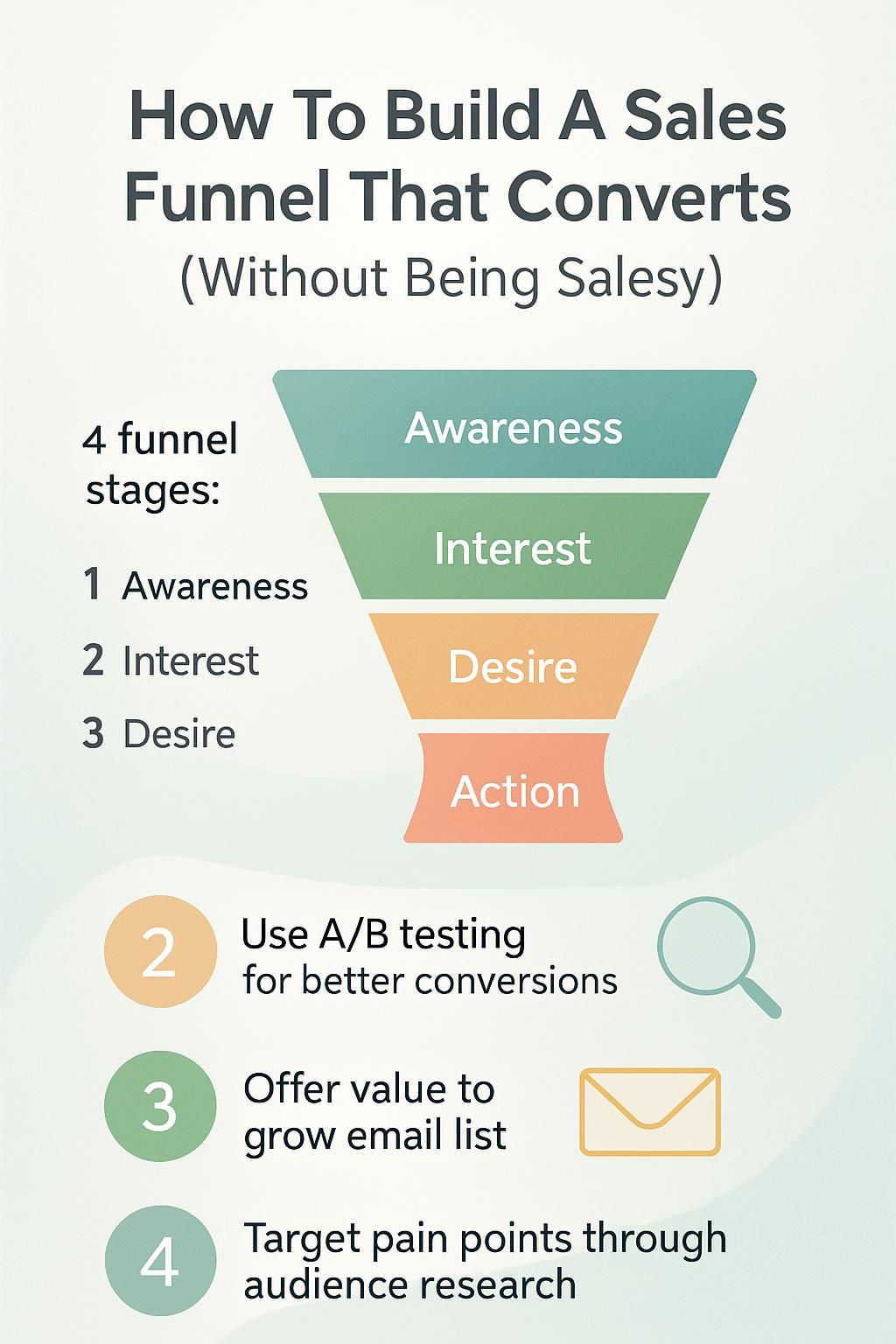
What Is a Sales Funnel?
A sales funnel is the path your target audience takes from learning about your brand to becoming loyal customers. It starts at the awareness stage, where people first see your advertisements or social media marketing content.
Next comes interest, as they check out landing pages and lead magnets like free guides or product demos. The best funnels show value early and often.
Brands like Shopify use automated email marketing with educational content, customer testimonials, and calls to action to nurture leads through each funnel step. Tools such as CRM software or Google Analytics track each visitor’s journey from prospect to checkout.
“Every stage in a sales funnel helps you turn strangers into subscribers,” says many online stores today.
Learn more about key stages of a sales funnel next—each one plays a part in getting higher conversion rates without feeling pushy.
Key Stages of a Sales Funnel
Every sales funnel has steps that guide someone from hearing about your brand to making a purchase. Tools like Shopify, Instagram, and email help move people through each stage—building interest and trust before you ask for action.
Awareness
Awareness is the first step in a sales funnel. It’s all about getting people to know who you are. You want them to see your brand and understand what you offer. This stage captures attention and sparks interest.
To do this, focus on your target audience. Find out their pain points and needs. Use social media platforms, blog posts, or even ads to reach them. Create engaging content that speaks directly to their concerns.
Once they notice you, they can move on to the next stage of the journey—where they want more information about your products or services.
Interest
After you create awareness, the next step is to build interest. This stage is key for turning curious leads into potential customers. You need to understand their pain points and needs.
Use your knowledge to share helpful content that catches their attention. Educational content like blog posts or product demos can spark engagement.
You can use lead magnets to offer value in exchange for contact information. For example, free guides or webinars give prospects something useful while collecting their emails. By showing how you can solve their problems, you encourage them to move further down the sales funnel.
These steps make it easier for leads to see why they should trust your brand and consider your products or services seriously.
Desire
Moving from interest to desire is crucial in your sales funnel. At this stage, you need to show potential customers why they want your product or service. This means highlighting their pain points and showing how you can solve them.
Use clear messages that connect with their needs. Share customer testimonials that show real-life benefits. Creating a strong unique selling proposition helps too; it makes your offer stand out against the competition.
Use engaging content like case studies or product demos to build excitement and trust in what you offer.
Action
The action stage is where prospects become customers. They make a choice to buy from you. Focus on making this decision easy and clear. Use strong calls to action (CTAs) on your landing pages.
A good CTA tells them exactly what to do next, like “Buy Now” or “Start Your Free Trial”.
Incorporate social proof here too; show customer testimonials or reviews that highlight how others benefited from your product. This builds trust and can boost your conversion rate.
Make the purchase process smooth and quick for an excellent customer experience. Use tools like CRMs to track their journey easily and provide support as needed.
Defining Your Target Audience
Knowing your target audience is key to success. Identify their needs and pain points. Think about where they start their journey as customers. Use tools like audience research and customer data platforms to help you understand them better.
Understanding this helps shape your marketing strategy and make stronger connections with potential buyers.
Identify their pain points and needs
Understanding your audience is essential. You need to know their problems and what they want. This helps you create content that speaks directly to them. Here are some important points to keep in mind:
- People seek solutions for common issues. Identify their pain points by looking at their questions online.
- Consider what your target market is struggling with daily. This will help you craft messages that address their concerns.
- Use audience research tools to gather data about potential customers. Understand who they are and what they value.
- Analyze customer reviews to learn about real experiences. Look for trends in feedback to see where your offerings can help.
- Map out the customer journey, from interest stage to purchase stage. This shows how they move from being a prospect to becoming a loyal customer.
- Create educational content that answers common questions or provides useful tips related to their needs.
- Offer lead magnets like free guides or webinars customized to what your audience wants most.
- Personalize your communications based on the data you collect about potential customers and their behavior.
Use these strategies to connect deeply with your audience, building confidence and increasing conversion rates over time.
Map their journey from prospect to customer
Understanding a customer’s journey is key for your sales funnel. This helps turn prospects into loyal customers.
- Start at the awareness stage. Prospects learn about your brand through ads or social media. They see your value and become interested.
- Move to the interest stage. Here, they actively seek more information. They check out your lead magnet, like guides or webinars.
- Next is the desire stage. Prospects feel a strong need for your product or service. Share customer testimonials and success stories to build trust.
- Enter the action stage with a clear call to action (CTA). This drives prospects to make a purchase or sign up for your service.
- Use tools like dashboards to track their progress through these stages. This helps you see where they might need extra support.
- Offer personalized content during their journey, making them feel valued and understood.
- Keep nurturing leads with automated email sequences that deliver educational content related to their needs.
- Map this entire journey clearly on landing pages, so prospects know what to expect next.
This process makes it easier for prospects to become happy customers and supports customer retention along the way… now let’s explore how you can create a compelling lead magnet!
Creating a Compelling Lead Magnet

Creating a great lead magnet means giving something valuable. You can offer free guides, webinars, or templates to grab attention and get contact info. This simple step can grow your audience and boost interest in your brand!
Offer value in exchange for contact information
You need to give your audience something valuable if you want their contact information. A great way to do this is by creating a lead magnet. This could be a free guide, webinar, or template that helps them with their problems.
By offering useful content, you show that you care about their needs.
When people feel they gain something real in return, they are more likely to share their email addresses or phone numbers. Use customer success stories and case studies in your lead magnet.
These add social proof and build trust with your target audience. The clearer the value you provide, the better your chances of turning prospects into customers.
Examples: Free guides, webinars, or templates
Creating a great lead magnet helps you get contact information. Here are some ideas for free guides, webinars, or templates that your audience will love.
- Free Guides: Offer a simple guide on a topic your audience cares about. This could be about using your product effectively or solving a common problem they face. A clear and concise guide shows your expertise.
- Webinars: Host live events where you teach something valuable. You can share tips or answer questions. This builds trust and connects you with your audience.
- Templates: Provide ready-to-use templates that save time. These could be anything from budgeting tools to content calendars. Templates make it easy for users to implement what they learn from you.
- Resource Lists: Compile a list of helpful tools, books, or websites related to your industry. This shows you understand their needs and want to help them succeed.
- Challenges: Create short challenges that encourage action over a few days or weeks. For example, a 5-day social media challenge can engage users while showing how much you care about their growth.
- Checklists: Design checklists that help streamline tasks or processes related to their goals. These quick-reference tools simplify decision-making and keep people organized.
- Case Studies: Share success stories of customers who used your product or service effectively. Real-life examples help potential leads see the benefits clearly while providing social proof.
Offering valuable resources helps you build trust with potential customers and attract more leads into your sales funnel successfully!
Building a High-Converting Landing Page
Disclosure: I am an independent ClickFunnels Affiliate, not an employee. I receive referral payments from ClickFunnels. The opinions expressed here are my own and are not official statements of ClickFunnels or its parent company, Etison LLC.
A strong landing page grabs attention right away. Use clear headlines and strong calls to action to guide visitors. Include real customer reviews and testimonials to build trust. Make it easy for people to sign up or learn more!
Use clear headlines and CTAs
Clear headlines guide your readers. They grab attention and tell them what to expect. Use strong words that attract interest. A great headline speaks directly to problems your audience faces.
It should be simple and straightforward.
CTAs, or calls-to-action, are important too. These buttons or links tell visitors what to do next. Make them clear and inviting, like “Download Now” or “Get Your Free Guide.” Good CTAs help boost conversion rates by guiding users easily through the sales funnel.
Always test different headlines and CTAs to see which ones work best for you!
Include social proof and testimonials
Use clear headlines and CTAs to guide your audience. After that, add social proof and testimonials. These tools can build trust with your leads. Customer reviews show how others value your product.
They help reduce doubts in the minds of potential buyers.
Incorporating success stories into emails or landing pages strengthens your brand’s credibility. People like to see what worked for others, especially when making decisions. Displaying testimonials creates a feeling of community among customers.
This social proof enhances the perceived value of what you offer, making it easier for prospects to take action in their purchasing journey.
Nurturing Leads with Automated Email Sequences
Nurturing leads with automated email sequences is a smart move. You can send helpful content, like guides or videos, right to their inboxes. This keeps them engaged and builds trust over time…
By sharing customer stories or useful tips, you show your value without being pushy.
Share educational and value-driven content
Sharing educational content is key to keeping your leads interested. You can send them guides, tips, or videos that help solve their problems. This makes you a trusted source of information.
Use customer success stories and testimonials in your emails too. These examples show how others benefited from your products or services.
Provide value-driven content that answers questions your audience has. This builds trust and encourages them to engage with you more. With the right approach, they will move closer to becoming customers…
Next, we’ll discuss how to optimize your funnel for better conversions.
Incorporate customer success stories and case studies
Share educational and value-driven content. This builds trust with your leads. Use customer success stories and case studies to show real-life results. These examples help potential customers see the benefits of what you offer.
Highlight how a previous client solved their problem using your product or service. Include testimonials from happy customers, too. Sharing these stories can increase brand awareness and improve conversion rates.
Social proof helps people feel more confident in their decisions, boosting customer loyalty over time.
Optimizing Your Funnel for Conversions
To make your sales funnel work better, test different buttons and headlines. Use A/B testing to find out what your audience prefers. Check how colors and layouts affect choices too.
The goal is to boost your conversion rate… so keep tweaking until you see great results!
Test CTAs, headlines, and visual elements

Testing CTAs, headlines, and visual elements helps you find what works best. It also boosts your conversion rate.
- Examine your CTAs. Clear calls-to-action guide prospects on what to do next. Make them strong and direct.
- Change up your headlines. Test different wording to see which gets more clicks. A good headline grabs attention fast.
- Evaluate your visuals. Images and colors can affect how people feel about your brand. Use appealing designs that match your message.
- Track performance regularly. Check which changes lead to better outcomes and adapt as needed.
- Conduct A/B testing on key elements. Split your audience and show each group a slightly different version of the same element, then compare results.
Use these steps to polish your sales funnel for higher conversions!
Use A/B testing to improve performance
Test CTAs, headlines, and visual elements. A/B testing helps you find what works best. You can try different versions of your landing pages or emails. For example, change the wording on a call-to-action button or use different images.
This method shows you which version gets more clicks.
Continuous testing boosts conversion rates over time. Each test provides you with new insights about your audience’s preferences. Use the data to make informed decisions that improve your sales funnel’s performance.
By using A/B tests effectively, you’ll optimize each stage of the customer journey and enhance your strategy for customer acquisition and retention.
Avoiding Common Funnel Mistakes
Many people get lost in their sales funnels. They forget to keep things clear and simple. Always focus on what your audience needs. Don’t make them jump through too many hoops. Use social proof, like customer reviews, to build trust.
If they see others are happy with your offer, they may feel more comfortable moving forward… So, stay focused and make it easy for them!
Focus on clarity and simplicity
Clarity and simplicity are key in your sales funnel. Make sure each step is easy to understand. Avoid using complicated language or too many choices. This helps prospects feel comfortable as they move along their journey from awareness to action.
Clear calls-to-action guide your leads effectively. Show them what to do next without confusion. Use direct headlines that reflect the value of your lead magnets, like free guides or webinars.
Focus on making everything straightforward so your audience can engage easily with your content and offers.
Don’t overwhelm leads with too many steps
Make your sales funnel easy to navigate. If you add too many steps, leads may feel lost and give up. Focus on clarity and simplicity instead. Offer one valuable resource as a lead magnet, like a free guide or template.
This keeps it simple for them to sign up.
Keep your landing page clear and direct. Use strong headlines and simple calls to action (CTAs). Social proof is important too; show customer testimonials without cluttering the page with too much info.
This builds trust quickly while allowing leads to move forward easily in their journey from prospects to customers.
Conclusion
Building a sales funnel is key to turning leads into customers. Focus on understanding their needs and pain points. Offer value through lead magnets like free guides or webinars. Use landing pages that are clear and simple, with strong calls-to-action.
Nurture your leads with helpful emails and show them real customer success stories. Keep testing your approach to improve results and boost conversions over time. You can create a friendly space for people to explore your products without feeling pressured to buy right away.