Why Your Landing Page Isn’t Converting (And How To Fix It)

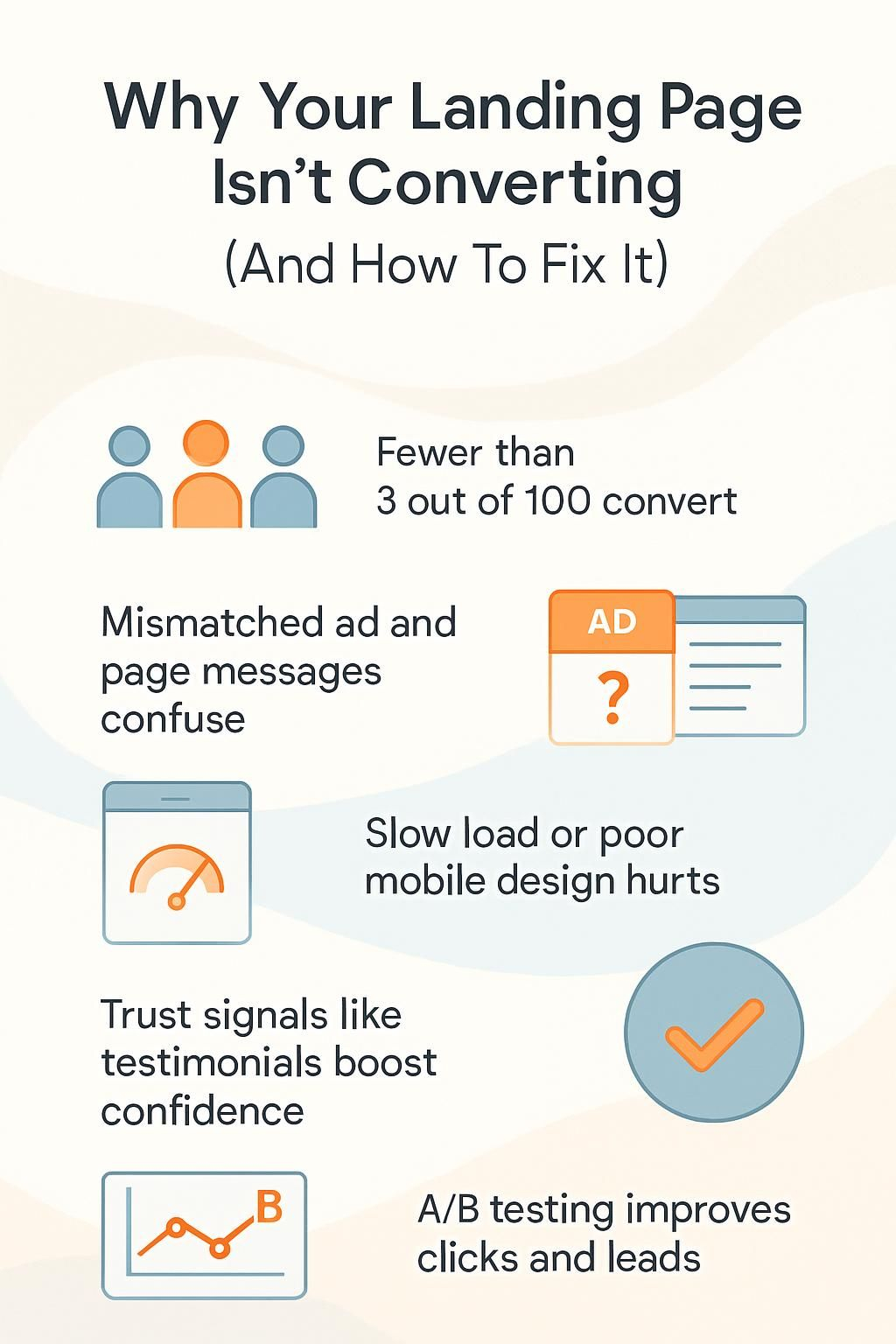
You spend a lot on ads, but your landing page just gets clicks without results. Studies show most landing pages convert less than 3 out of every 100 visitors. This post will help you spot what’s going wrong with your call-to-action and user experience, plus give tips to boost conversion rates using social proof and clear messaging.
Want more leads from your marketing campaigns? Keep reading.
Common Reasons Your Landing Page Isn’t Converting

Many landing pages miss their goals because something small gets overlooked—user behavior changes fast, and digital marketing tools keep evolving. Simple errors in your web design or content can hurt your conversion rates, so spotting these issues early is key if you want more leads from your campaigns.
Targeting the Wrong Audience
You might show ads to a wide group, but only a small slice cares about your offer or call-to-action (CTA). Your landing page conversion rate drops if you miss the true target audience.
Think of buyer personas—know their pain points and goals. Digital marketing works best when you match your messaging with what these people want.
Market research helps you find who wants your product. Build user profiles using simple data like age, job, or interests. Avoid technical jargon that confuses visitors outside your niche.
Even strong star ratings or client logos won’t help if they reach the wrong crowd. Focus on reaching people ready to click through and take action for real landing page optimization success.
Mismatched Messaging Between Ads and Landing Page
Moving on from targeting the wrong audience, mismatched messaging can confuse your visitors. If your ads promise one thing, but your landing page shows another, you may lose potential customers.
For example, if an ad talks about a limited-time offer and the landing page lacks that information, visitors might feel misled.
Clear messaging is essential for good user experience (UX). Use consistent language between ads and landing pages. This helps build trust with your target audience. Make sure your call-to-action (CTA) matches what you advertised.
Keep it simple; keep it honest! Social proof like customer testimonials or star ratings can also strengthen this connection.
Consistency builds trust.
Unclear or Uninspiring Call-to-Action (CTA)
Your call-to-action (CTA) matters a lot. If it’s unclear, you lose potential customers. A great CTA tells people exactly what to do next. Phrases like “Buy Now” or “Join Today” are strong and simple.
They inspire action.
An uninspiring CTA can confuse visitors. Make sure it stands out on your landing page. Use bold colors and larger fonts to grab attention. Offer value too—like discounts or free trials—to entice users further.
Focus on making your CTAs clear and engaging to boost those conversion rates! Next up, let’s look at how design and user experience issues can affect your results.
Too Many Distractions on the Page
Too many distractions on your landing page can hurt conversions. Flashy ads, pop-ups, and cluttered layouts pull attention away from what matters. A visitor’s focus should be on the call-to-action (CTA).
If they see too much stuff, they may leave without taking action.
Clear design helps guide users to their goal. Use white space wisely to make your content easy to read. Remove extra links and images that don’t support your main message. Aim for a simple layout that leads visitors right where you want them—toward signing up or buying something.
Lack of Trust Elements
Trust is crucial for your landing page. If visitors don’t feel safe, they will leave quickly. Use elements like customer testimonials and client logos to build confidence. Seeing others who had good experiences can help visitors trust you more.
Star ratings also add credibility; people often look for these before making a decision.
Social proof can make a big difference too. Show how many users love your product or service. Adding a countdown timer for a limited-time offer creates urgency and encourages action.
Make sure your call-to-action stands out as well; it should be clear what you want your audience to do next. Building this trust with the right elements can significantly boost conversion rates on your landing page.
Design and User Experience Issues
Design and user experience can make or break your landing page. Slow load times can drive people away, while a page that doesn’t work well on phones frustrates users.
Slow Page Load Times
Slow page load times can hurt your landing page’s success. Users expect quick results. If your site takes too long to load, they may leave before seeing what you offer. A delay of just a few seconds can increase bounce rates and make visitors frustrated.
Optimizing page load speed is key for good user experience (UX). Compress images and minimize code to help the page load faster. Check your web host’s performance, too; a reliable provider boosts speed.
With these changes, you improve conversion rates, making it easier for potential customers to engage with your content and calls-to-action (CTAs).
Not Mobile-Friendly
Your landing page may not convert well if it’s not mobile-friendly. Many people use their phones to browse the internet. If your page looks bad on a small screen, they might leave quickly.
This increases your bounce rate and hurts your conversion rates.
Make sure your design adapts to different devices. Use larger buttons for calls to action so users can tap easily. Keep text clear and concise, fitting it on smaller screens without clutter.
Checking page load speed is key too; slow pages turn visitors away fast!
Overwhelming Text or Content
Too much text can scare visitors away. A busy landing page may confuse them. Long paragraphs and heavy blocks of content make it hard to find the main message. Keep your text simple and clear.
Use short sentences and bullet points when possible.
Visitors want quick information, not a lot of reading. Think about adding images or videos to break up the text. Show important details using headings or subheadings. This helps create a better user experience (UX) on your landing page, which can improve conversion rates too!
Poor Visual Hierarchy
Overwhelming text or content can lead to confusion. Poor visual hierarchy adds to that confusion. Your landing page needs a clear structure. Start with important elements at the top.
Make sure your call-to-action stands out. Use size and color to draw attention where it matters most.
Images and headings should guide users through the page. Small text or cluttered areas make it hard for visitors to focus on key points. Keep visuals balanced and easy to understand.
A good design helps boost conversion rates by making information easy to find and follow, keeping user engagement high as they navigate your content smoothly.
Key Fixes to Boost Landing Page Conversions
To boost your landing page conversions, focus on the right audience and clear messaging. Add trust signals like customer testimonials or star ratings. Make your page easy to read and navigate…
Keep it simple! Use tools like A/B testing to find what works best for you. Want to learn more? Keep reading!
Refine Your Audience Targeting
Your audience matters. Get to know them well. Use buyer personas to focus on the right people. Think about their needs and interests. Research where they hang out online, like Instagram or search engines.
Targeting the wrong audience can hurt your conversion rates. Align your landing page content with what they want to see. Speak directly to them with clear messaging and a strong call-to-action (CTA).
Show customer testimonials or star ratings for added trust, especially if they fit your target market’s profile. This way, you can turn visitors into leads more effectively!
Align Your Ad Copy with Your Landing Page Messaging
Ads need to match your landing page. If they don’t, you may confuse visitors. For example, if an ad promises a free trial but the landing page talks about a paid plan, people will leave.
Keep your messages clear and consistent.
Use the same tone and style in both ads and landing pages. This helps build trust with your audience. Clear call-to-action buttons can guide users easily to what they expect from the ad.
Aligning these elements can boost conversion rates and reduce bounce rate on your site.
Simplify Your Page Layout and Reduce Distractions
Aligning your ad copy with your landing page messaging is key. Next, it’s time to simplify your page layout and reduce distractions. A clean design helps visitors focus on what matters most.
Remove clutter like extra text or images that don’t support your message.
Use clear headings and short paragraphs. This makes reading easier and keeps people engaged. Place the call-to-action (CTA) where users can see it right away. Bright colors for CTAs can help them stand out too.
Add trust signals like customer testimonials or star ratings; these elements build confidence in what you offer. A simple layout enhances user experience and boosts conversion rates by guiding visitors smoothly through their journey on your site.
Add Social Proof and Trust Signals
Adding social proof can greatly help your landing page. Show customer testimonials, star ratings, or client logos to build trust. When potential customers see others liking your service, they feel more confident to act.
Trust signals are key too. Use security badges and clear privacy policies. These elements show you care about user safety and data protection. A simple “as seen on” section can also boost credibility.
All these factors may lead to higher conversion rates for your landing page!
Create Urgency with Limited-Time Offers or Scarcity
Adding urgency can boost your landing page conversions. Limited-time offers or scarce items create a sense of need. Offer discounts that last only a short time. This makes visitors feel they must act quickly to not miss out.
You can also use countdown timers. A timer shows how much time is left for the offer. This simple tool increases excitement and encourages quick decisions. Use these tactics in your marketing campaigns, and watch your conversion rates rise!
Optimize for Mobile Users
Next, focus on optimizing for mobile users. Many people browse the internet using their phones. If your landing page is not easy to use on a small screen, visitors will leave quickly.
A slow page load speed can frustrate them and increase your bounce rate.
Make sure your design fits mobile screens well. Use bigger buttons for calls-to-action (CTAs) that are easy to tap. Shorter text works best too. Keep things simple so users can find what they need without scrolling too much.
Adding social proof like customer testimonials or client logos helps build trust right away on mobile devices as well!
Use A/B Testing to Analyze and Improve
After optimizing for mobile users, you should consider A/B testing. This method helps you see what works best on your landing page. You compare two versions of a page to find out which one gets more clicks and leads.
Start by changing one thing at a time, like the call-to-action (CTA) button or the headline. Check if people respond better to one version over the other. Use tools that track user behavior and conversion rates.
Look closely at how each change affects your bounce rate too. A clear picture of what resonates with your target audience will help boost conversions effectively.
Conclusion
Your landing page needs to work hard for conversions. If it’s not making the grade, you have ways to change that. Focus on your audience and clear messaging first. Add social proof, like customer testimonials or star ratings; these build trust.
Make sure your page loads fast and looks good on mobile devices too. With some simple tweaks and A/B testing, you can boost those conversion rates in no time!