What Is A Sales Funnel (and Why Every Online Business Needs One)
You work hard, but your online sales still feel stuck. Many businesses struggle because they do not have a clear sales funnel to guide website visitors from the awareness stage to purchase.
This blog post explains how a simple marketing funnel can help you boost conversion rates and grow your email list using digital marketing strategies and content marketing tools like landing pages or lead magnets.
Keep reading if you want more control over your customer journey—step by step.
What Is a Sales Funnel?
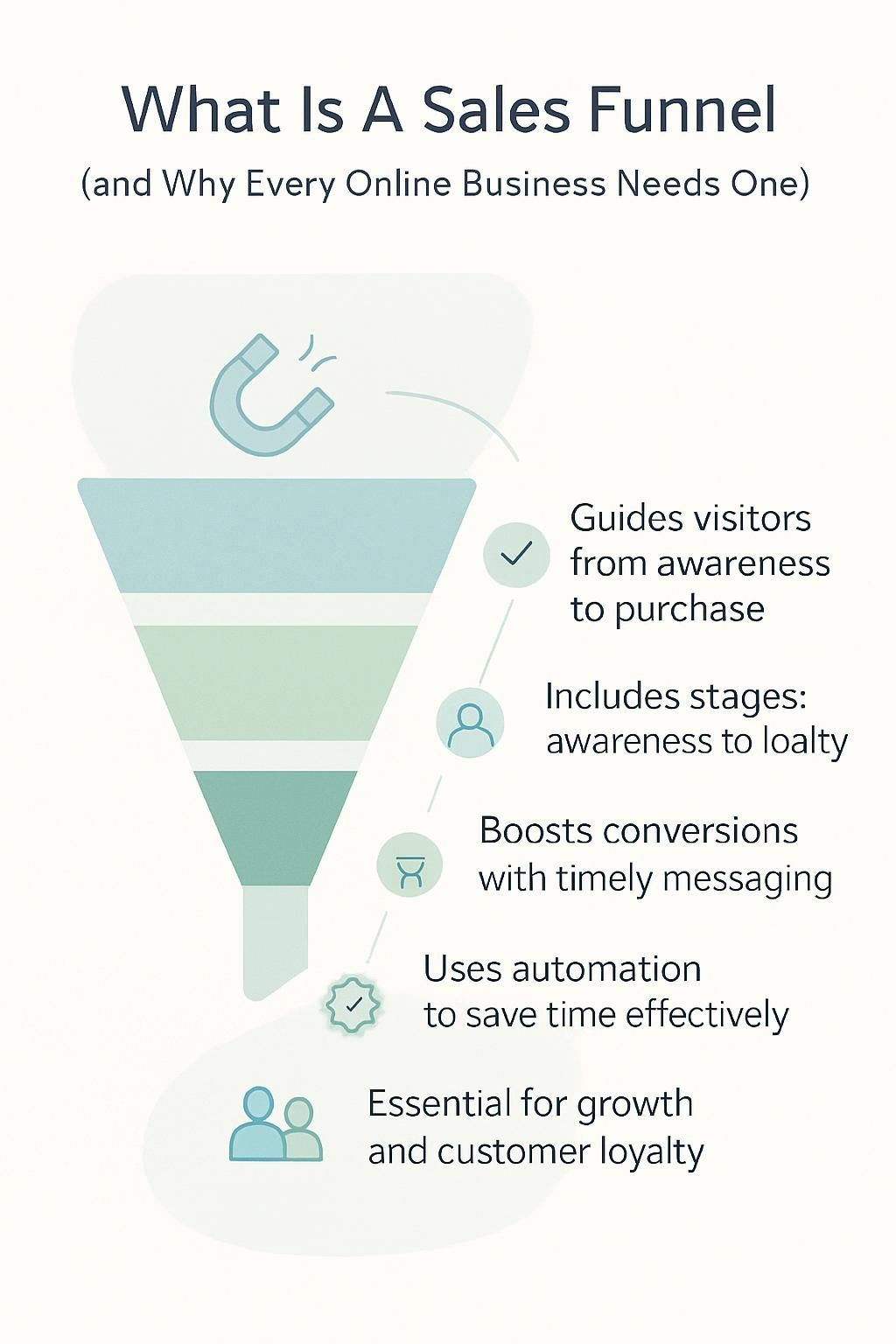
After understanding why online businesses need clear steps for growth, it is time to see how a sales funnel helps with this process. Think of the sales funnel as a map that shows each part of the customer journey.
It starts wide at the top with lots of website visitors who first hear about your brand through awareness stage activities like advertising campaigns or social media posts. As people move deeper, fewer remain…
but those who do are more likely to become subscribers on your email list or take action by clicking call-to-action buttons on landing pages.
A digital sales funnel gives you a way to track leads from interest stage blog posts or lead magnets all the way down to checkout and even after—into loyalty building. Every step offers chances for targeted messaging and content marketing.
This approach makes it possible to spot where customers drop out so you can use funnel optimization tools like A/B testing, audience segmentation, and cookies for better results. Marketers rely on these insights not just for higher conversion rates but also for stronger customer retention and smart revenue generation strategies.
Key Stages of a Sales Funnel
Every sales funnel moves people step by step, turning website visitors into loyal buyers. Each stage uses smart tools—like email campaigns and landing pages—to keep your target audience interested and moving forward.
Awareness
The awareness stage is the first step in your sales funnel. It introduces potential customers to your brand. You can use different channels like social media, ads, and blogs. This helps create brand awareness and attract visitors to your site.
Targeted messaging is key here. It improves customer engagement by speaking directly to their needs and interests. By building strong awareness, you make it easier for people to enter the next stage of their journey with you: interest.
Awareness is the first spark that leads a customer down the path of loyalty.
Interest
The interest stage is a key moment in your sales funnel. At this point, potential customers have already learned about your product or service. Now, they want to know more. You need to capture their attention and spark curiosity.
To do this, share useful information that connects with their interests. Use educational resources like blog posts or newsletters that can keep them engaged. Targeted ads also work well here; they remind leads why they showed initial interest.
Positive experiences now can lead them to the next steps in the sales process and increase chances for conversion rates later on.
Consideration
Moving on from the interest stage, you enter the consideration stage. Here, prospects take a closer look at your offerings. They assess your product against competitors’ choices. Customers often review detailed content like testimonials or webinars.
This information helps them decide which option is best.
Effective strategies during this phase increase your chances of conversions. Relevant information guides potential buyers toward making a purchase. Automated steps in your sales funnel can also help lead prospects smoothly through this stage.
Understanding how customers behave here opens doors for marketing optimization opportunities.
Action
Action is the moment when potential customers make a purchase or take a desired step. This stage is key in your sales funnel. Effective calls-to-action (CTAs) can boost conversion rates here.
You might offer limited-time promotions or discounts to encourage quick decisions from customers.
A simple checkout process helps reduce barriers to buying. Clear communication of what you offer motivates customers to act. Follow up with leads who show interest; it can lead to more conversions and higher action rates.
Use landing pages that guide users seamlessly to their goal, improving their customer experience along the way.
Loyalty
After taking action, the next step is loyalty. This stage is essential for keeping customers coming back. Loyal customers are great for business. They buy more often and might even share your brand with others.
Building confidence and familiarity with these customers helps you retain them.
To grow customer loyalty, use targeted messaging that aligns with their needs. Keep demonstrating why they chose you initially. Effective post-purchase strategies also matter here; they encourage repeat visits and sales.
Keep in mind, loyal customers can be powerful advocates for your brand, influencing new buyers along the way!
How Sales Funnels Work
Sales funnels work like a path for your customers. They start at the awareness stage, where people learn about your brand or product. This is your chance to catch their attention and make them interested.
You can use ads, blog posts, or social media to reach a wide audience. Most people won’t buy right away; instead, they move deeper into the funnel if they find what you offer appealing.
Once they show interest, you guide them to the consideration stage. Here, potential customers learn more about what you sell and how it solves their problems. Using targeted messaging keeps them engaged and helps build trust.
For example, lead magnets like free guides or email newsletters draw in website visitors and grow your email list. As customers move toward action—where they make a purchase—you provide strong calls to action that encourage them to decide quickly and easily.
The funnel narrows as only those most likely to buy remain until loyalty forms after the sale is made.
Benefits of a Sales Funnel for Online Businesses
Sales funnels help online businesses in many ways. They make the customer journey smooth and clear. You can send targeted messages to the right people. This boosts your conversion rates, turning visitors into buyers.
Plus, it helps keep customers coming back for more… Customer loyalty grows when you engage well! Want to discover how these benefits work? Let’s explore further!
Streamlined Customer Journey
A sales funnel makes the customer journey smooth. It starts with a broad audience and guides them to make a purchase. Each stage of the funnel, from awareness to action, helps you connect with potential buyers.
You provide targeted messaging that fits their needs at every point. This approach builds trust and creates value in your interactions.
With a streamlined process, customers feel more engaged. They know what to expect as they move through the funnel. By using effective content marketing like blog posts or case studies, you keep their interest alive.
That means higher conversion rates for your online business too!
Targeted Messaging
Targeted messaging is key at each stage of your sales funnel. It helps you connect with your customers better. By customizing your communication, you meet their needs and behaviors.
This builds confidence as you offer value in every interaction.
When leads feel understood, they are more likely to convert into paying customers. Effective messages speed up the sales process by focusing on the most promising leads. You can also identify bottlenecks in the customer journey and make improvements based on insights from these customized approaches.
Personalized content boosts engagement and can lead to higher conversion rates for your online business too.
Improved Conversion Rates
Sales funnels can greatly boost your conversion rates. They guide potential customers through each stage of the buying process. At every step, you use targeted messaging to connect with them.
This approach keeps customers engaged and interested in your products or services.
By providing value-driven interactions, sales funnels help build trust. When people feel valued, they are more likely to make a purchase. An organized sales process leads to measurable results too.
You can see what works and adjust your marketing strategy for better outcomes. Higher conversions mean more success for your online business!
Enhanced Customer Retention
A good sales funnel helps keep customers coming back. It builds loyalty through great experiences. You can guide your audience in the customer journey, from their first visit to becoming repeat buyers.
This means using targeted messaging that speaks directly to them.
Content marketing plays a big role here. Engaging blog posts and email marketing keep your brand on their minds. A strong email list allows you to properly nurture leads and maintain relationships.
With each successful interaction, customers feel connected and valued, which boosts customer retention more than any ad campaign can achieve alone.
How to Build an Effective Sales Funnel
To build an effective sales funnel, start by knowing your audience. Create content that grabs their attention at every stage. Use tools like landing pages and email marketing to keep them engaged.
Don’t forget to segment your audience for better results too!
Identify Your Audience
Identifying your audience is key for a successful sales funnel. Knowing who you are talking to helps you create messages that hit home. You can tailor your marketing strategy based on their needs and preferences.
This leads to better customer engagement, which boosts conversion rates.
Focus on audience segmentation to sort people into groups based on interests or behaviors. Use tools like polls or surveys to gather data about them. The more you understand your audience, the easier it becomes to keep them loyal.
Building an email list from these insights allows for targeted messaging in the consideration stage, making every step of the sales process smoother and more effective.
Create Engaging Content for Each Stage
After you identify your audience, it’s time to create engaging content for each stage of the sales funnel. This content will guide your potential customers from awareness to action.
- For the awareness stage, use blog posts or videos. These should provide helpful information and raise brand awareness. Consider answering common questions that relate to your product or service.
- In the interest stage, share case studies or testimonials. Show how your product has helped others. This builds confidence in your brand and keeps visitors interested.
- During the consideration stage, offer lead magnets like free eBooks or checklists. These tools can help potential customers see the value of what you offer and assist them in their decision-making process.
- At the action stage, use clear calls to action on landing pages or squeeze pages. Make it easy for visitors to take that next step, such as signing up for an email list or making a purchase.
- For the loyalty stage, continue engaging with customers through email marketing and exclusive offers. Keep them feeling valued and connected to encourage long-term customer retention and loyalty.
Creating customized content at each phase will enhance engagement and boost conversion rates throughout your sales process!
Use Automation Tools
Automation tools simplify the management of your sales funnel. These tools assist you in sending targeted messages at each stage of the funnel, increasing conversion rates. They track customer behavior, providing insights into what works best.
This information helps refine your marketing efforts.
Utilizing automation saves time by reducing manual tasks. You can concentrate on strategic initiatives instead. With these tools, you create a consistent and dependable experience for customers throughout the sales process.
They improve your efficiency and enhance customer engagement as they progress through your funnel.
Conclusion
Sales funnels are key to online business success. They guide customers from first learning about your brand to making a purchase. With each stage, you can build trust and keep them engaged.
A strong sales funnel means better conversion rates and more loyal customers. By focusing on understanding your audience, you create clear paths for growth in your business.