ClickFunnels Vs. Kajabi: Best For Online Courses?

Choosing the right platform for your online courses can feel overwhelming. Kajabi and ClickFunnels are two popular tools, each offering unique features for course creators. This blog will break down their differences, from course creation to marketing tools, helping you decide which fits your needs best.
Keep reading to find out which is better for you!
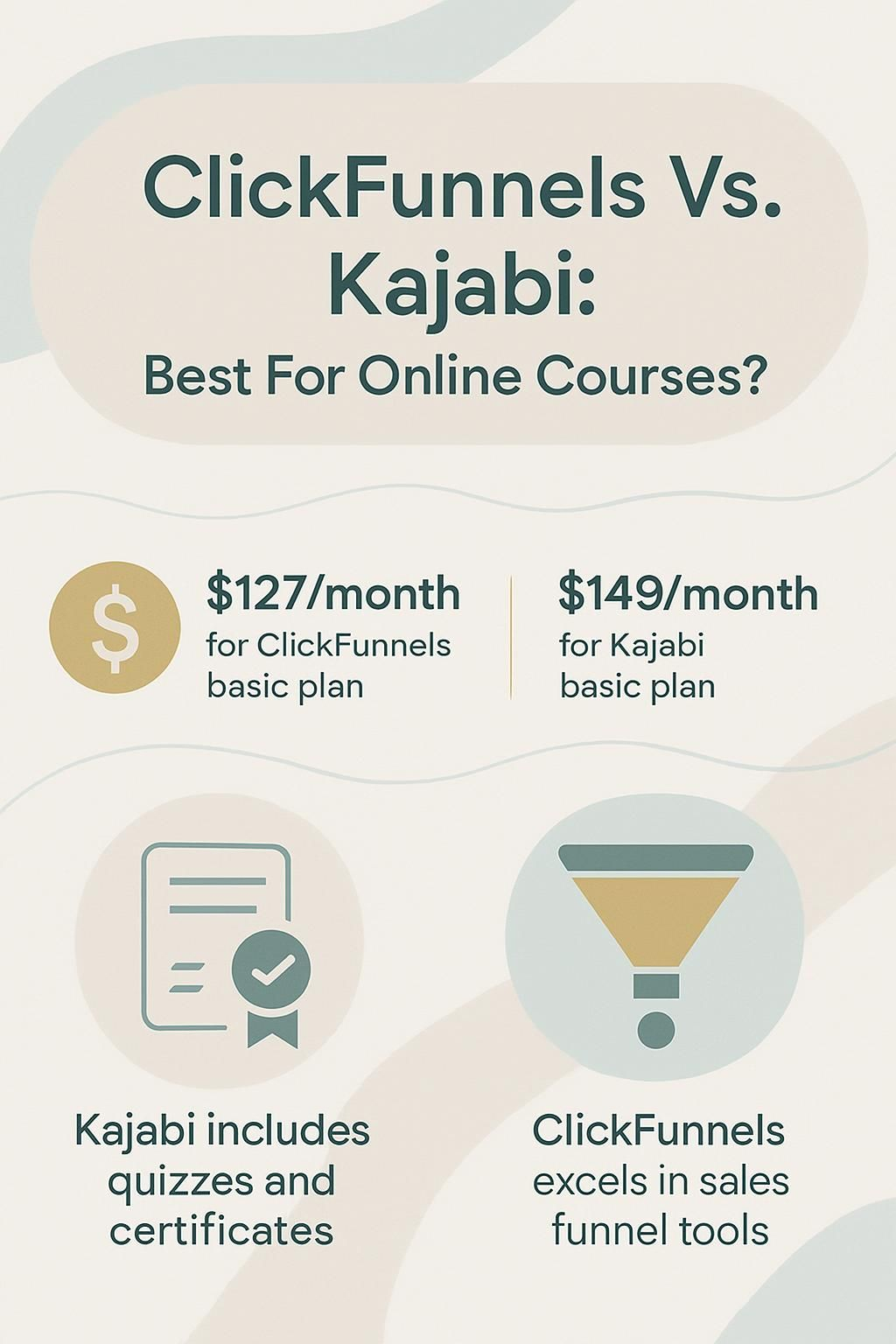
Exploring the Key Differences Between ClickFunnels and Kajabi
ClickFunnels focuses on building sales funnels, while Kajabi offers a full platform for courses and memberships. Each tool serves different goals, so your choice depends on what you need.
Sales Funnels Versus All-in-One Platform Analysis
ClickFunnels focuses on sales funnels to turn visitors into buyers. It offers pre-made templates and tools for landing pages, upsells, and checkout processes. This helps you guide leads step by step toward buying your digital products or courses.
Kajabi works as an all-in-one platform. It combines course creation, email marketing, CRM tools, and membership site management in one place. If you’re looking for a complete content delivery system with built-in marketing tools, it can be the right fit for online courses.
Now let’s compare their course creation features!
Comparing Course Creation Tools
Both ClickFunnels and Kajabi offer tools for building and delivering online courses, but they approach the process differently. Here’s a quick comparison of their course creation tools to help you see where each platform stands.
| Features | Kajabi | ClickFunnels |
|---|---|---|
| Focus | Built specifically for course creators and membership sites. | Designed for sales funnels with basic course hosting features. |
| User Interface | Simple and intuitive. Offers drag-and-drop course builder. | Less focused on course creation, more on customizing funnels. |
| Content Upload | Supports video, audio, text, and downloadable files. Organize by categories. | Allows multimedia uploads, but lacks advanced structuring options. |
| Quizzes & Assessments | Integrated quiz builder for student engagement and tracking. | No built-in quiz tools. Requires third-party integrations. |
| Certifications | Offers certificates of completion natively. | No native support for certificates. Needs external help. |
| Customization | Strong design tools for branding and personal touches. | Basic customization for course pages. |
| Student Experience | Interactive experience with progress tracking and community features. | Limited student engagement tools. |
Kajabi stands out for detailed course creation while ClickFunnels leans heavily into marketing. Next, you’ll explore how their marketing and sales tools stack up against each other.
Assessing Which Platform Excels in Course Creation
Both platforms offer tools to build and share courses, but they differ in focus. One shines with student features, while the other focuses on delivery methods.
Analyzing Kajabi’s Course Creation and Student Engagement Features
Kajabi makes course creation easy. You can upload videos, PDFs, and quizzes with just a few clicks. It also offers pre-designed templates to build your courses faster. You don’t need tech skills to create professional-looking content for online learning.
Students stay engaged through features like progress tracking and automated emails. Drip content lets you release lessons on a schedule, keeping them motivated to complete the course.
Built-in discussion boards give learners a space to ask questions or share ideas directly in the platform.
Reviewing ClickFunnels’ Course Delivery Capabilities
ClickFunnels focuses on helping you sell courses more than creating them. Their course delivery tools are basic compared to other platforms. You can use the Membership Site feature to host and share lessons, but it lacks detailed options for interactive learning.
The dashboard is simple but does not track student progress deeply or offer quizzes.
You get strong sales funnel features tied to your course delivery system. This helps you attract customers with upsells or offers while they learn. Video hosting works well, allowing smooth content access without extra software.
To see how marketing tools compare, explore their advanced sales systems next!
Comparing Marketing and Sales Features of ClickFunnels and Kajabi
Both platforms offer tools for selling and promoting courses. ClickFunnels shines with its detailed sales funnel options, while Kajabi focuses on email campaigns and automation.
Overview of ClickFunnels’ Advanced Sales Funnel Tools
ClickFunnels offers powerful tools for building fast and effective sales funnels. You can create landing pages, upsells, downsells, and order forms to guide buyers step by step. These tools help boost your course or digital product sales.
Its drag-and-drop editor makes designing easy. Pre-built funnel templates save time while offering professional layouts. With A/B testing, you can test different versions of pages to see what works best.
This helps improve conversions without guesswork.
Exploring Kajabi’s Email Marketing and Automation Options
Kajabi simplifies email marketing. You can create and send newsletters, promotions, or course updates with ease. Its drag-and-drop builder helps you design emails that look professional without coding skills.
Pre-made templates save time and ensure your messages stand out.
Automation is a strong feature in Kajabi’s toolkit. Set up sequences to welcome new students, remind them of deadlines, or offer discounts automatically. This reduces manual work while keeping users engaged.
Tracking tools let you see open rates and clicks to improve future campaigns.
Evaluating Pricing and Scalability for Both Platforms
Both platforms offer different price plans based on your needs. Think about your budget and how much you plan to grow over time.
Detailed Look at ClickFunnels’ Pricing Structure
ClickFunnels has two main pricing plans. The basic plan costs $127 per month and gives you tools for building sales funnels, creating landing pages, and managing leads. It allows up to 20 funnels and handles up to 10,000 contacts.
The higher-tier plan is $157 per month. This offers advanced features like affiliate management tools and priority support. If you need more customization or handle large-scale digital products, this plan is a better fit.
Both options come with a free trial so you can explore before committing.
Understanding Kajabi’s Pricing Options
Kajabi offers three pricing tiers. These are Basic, Growth, and Pro plans. The Basic plan costs $149 per month. It supports 3 products and 3 pipelines with a single admin user.
The Growth plan is $199 per month and includes more options like 15 products, 15 pipelines, and up to 10 users. For advanced needs, the Pro plan costs $399 monthly. It allows for up to 100 products and pipelines along with extra features like code editor access for customization.
Options for Integration and Customization in ClickFunnels and Kajabi
Both ClickFunnels and Kajabi offer ways to integrate tools and customize features. These options help you build a system that fits your online course needs.
- ClickFunnels allows integrations with email marketing platforms like Mailchimp or ActiveCampaign. This helps you manage leads and communicate easily with students.
- You can use third-party tools like Zapier to connect ClickFunnels with apps like Google Sheets or Slack for smooth workflows.
- It offers custom domain support, letting you present a branded website for your courses.
- Kajabi connects with services such as PayPal and Stripe for payment processing to manage subscriptions or one-time payments.
- It supports CRM tools, making it easier to track student behavior and engagement in real time.
- With Kajabi, you can adjust website themes using pre-built templates or custom code for a unique look.
Conclusion
Choosing between ClickFunnels and Kajabi depends on your needs. If you want strong sales funnels, ClickFunnels shines. For all-in-one tools and course creation, Kajabi is better. Focus on what will help grow your online course business faster.
Both platforms offer great value in their unique ways!
Disclosure: I am an independent ClickFunnels Affiliate, not an employee. I receive referral payments from ClickFunnels. The opinions expressed here are my own and are not official statements of ClickFunnels or its parent company, Etison LLC.